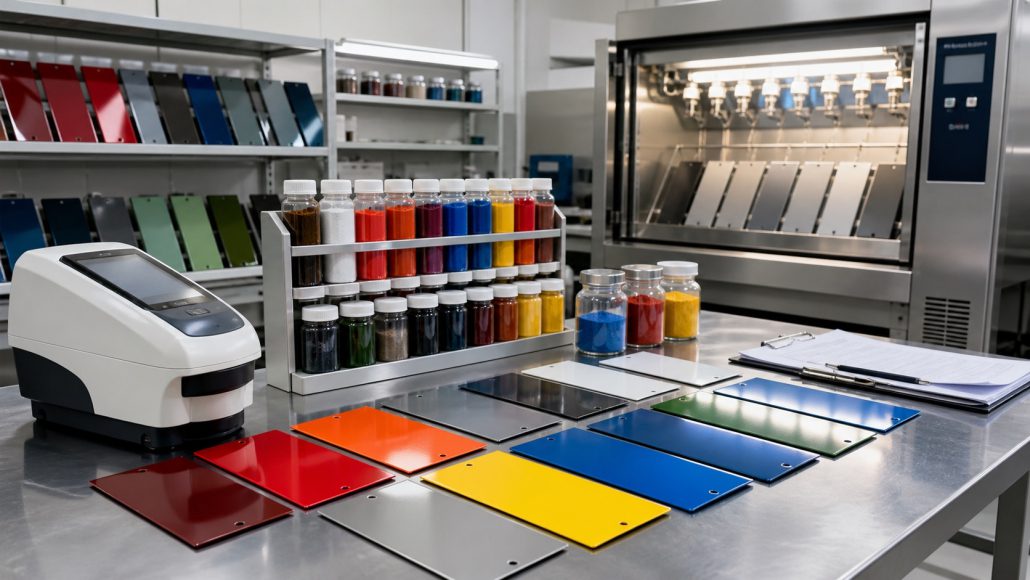
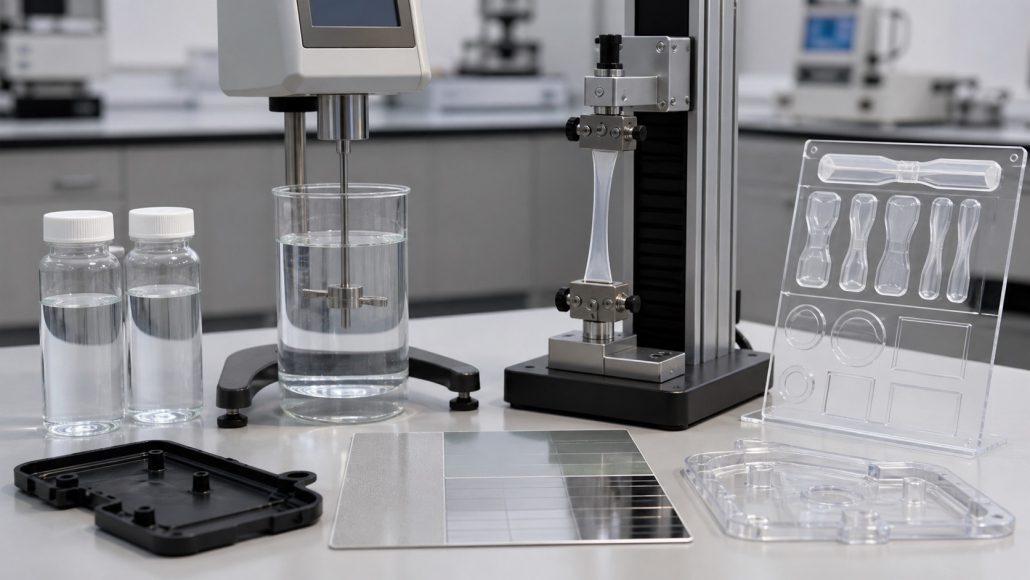
Titanium dioxide pH and conductivity screening for waterborne paint stability

Titanium Dioxide Oil Absorption Test: Predict Paint Viscosity and Dispersant Demand

Quick Answer: A titanium dioxide oil absorption test measures how much refined linseed oil a TiO2 pigment consumes before a coherent paste forms under defined rubbing conditions. For paint manufacturers, the result is a fast comparative indicator of vehicle demand, surface condition, dispersion behavior, viscosity risk and consistency between deliveries. It is not a direct prediction of finished-paint viscosity or hiding power. Buyers should compare candidate rutile grades against an approved control using the same method, operator, oil, conditioning and endpoint, then confirm the result in their own coating formulation.

Two titanium dioxide grades can have similar TiO2 content, particle-size claims and whiteness, yet behave very differently in a real mill base. One may wet rapidly and reach target fineness at a manageable viscosity. Another may absorb more liquid, require additional dispersant, slow the grind and push the formulation outside its rheology window. These differences affect production time, pigment volume concentration, resin demand, gloss, flow, storage stability and ultimately the cost of usable opacity.

This guide explains how formulators, quality-control teams and procurement specialists can use the titanium dioxide oil absorption test as part of a practical supplier-qualification program. It covers the meaning of the value, laboratory method design, sources of error, interpretation for waterborne and solvent-borne paints, troubleshooting, specification writing, incoming inspection and the questions that should be answered before placing a commercial order.

What Does a Titanium Dioxide Oil Absorption Test Measure?

Oil absorption is the quantity of a specified oil needed to convert a known mass of dry pigment into a defined paste endpoint. It is commonly reported as grams of oil per 100 grams of pigment, although some methods may express a volume-to-mass value. The test converts an otherwise subjective handling observation into a repeatable comparative number.

The measurement reflects the liquid demand created by the pigment’s external surface, agglomerate structure, particle packing and surface treatment. A pigment with greater effective surface area or a more liquid-demanding surface normally requires more oil to reach the same paste state. However, the result is not a simple measurement of primary particle size. Dry-powder agglomeration, treatment chemistry, moisture, test shear and operator endpoint all influence the number.

The current ISO 787-5:2026 specifies a general method for determining the oil absorption value of pigments and extenders and emphasizes comparison with an agreed reference sample. ASTM D281-12(2021) covers oil absorption by spatula rub-out and states that the result gives information about vehicle demand in a pigment paste. These are useful frameworks, but a purchasing specification must name the exact method, edition and any agreed laboratory conditions.

Why Oil Absorption Matters in Paint Formulation and Purchasing

Titanium dioxide is usually one of the highest-value components in a white or pastel paint. Its commercial value comes from delivered opacity, brightness, durability and processability, not from TiO2 percentage alone. Oil absorption helps connect a dry-pigment certificate to the way the grade may consume the liquid phase during dispersion.

When liquid demand is higher than expected, a fixed formula may show a thick mill base, poor circulation, high motor load, slow pigment wetting or incomplete deagglomeration. The formulator may add water, solvent, resin or dispersant to restore processability. Those corrections can change solids, film build, drying, gloss and application behavior. A small difference in the laboratory value can therefore become a larger production and cost problem if the formulation already operates near its viscosity or pigment-volume limit.

For procurement teams, the titanium dioxide oil absorption test is valuable because it can reveal meaningful grade or lot differences before a full plant trial. It is inexpensive, fast and suitable for side-by-side comparison. It should not be used as the only acceptance criterion, but it can help screen samples, investigate unexpected thickening and verify whether a new shipment resembles the approved reference.

Oil Absorption Is Not Finished-Paint Viscosity

A frequent purchasing error is to interpret lower oil absorption as automatically better. Finished-paint viscosity depends on many interacting variables: resin chemistry, solvent or water phase, dispersant type and dose, pH, electrolyte level, thickener activation, pigment volume concentration, mixing energy, order of addition and the complete extender package. The linseed-oil paste test does not reproduce all of those conditions.

Use the value as a comparative signal. If one lot rises beyond the internal control band, the result tells the laboratory to investigate vehicle demand and dispersion. It does not prove that the finished paint will fail. Conversely, a lot that passes oil absorption can still produce poor viscosity because of contamination, incompatible surface treatment, soluble salts, moisture or a change in another raw material.

The strongest decision combines the titanium dioxide oil absorption test with a standardized mill-base trial and finished-paint verification. This three-level approach separates dry-pigment consistency from formulation compatibility and end-use performance.

Oil Absorption, Surface Treatment and Effective Surface Area

Commercial rutile titanium dioxide is engineered, not merely mined and ground. Producers control crystal form, median particle size, particle-size distribution, inorganic surface treatment and often an organic post-treatment. Alumina, silica, zirconia and organic surface modifiers may be used in different combinations to balance dispersion, durability, gloss and processing.

These treatments change how the pigment interacts with liquids. A durable exterior grade with a heavier inorganic coating may not behave like a high-gloss interior grade. Moisture adsorbed on the surface can also alter the rub-out endpoint. Therefore, buyers should compare grades intended for the same application rather than demanding one universal oil-absorption value for every rutile pigment.

Effective surface area includes the accessible surfaces within agglomerates during the test. Vigorous rubbing may expose more area than gentle folding, which is why results from different methods or laboratories cannot be assumed equivalent. Supplier and customer must align the procedure before turning a typical value into a contractual limit.

ASTM D281 and ISO 787-5: What Buyers Should Specify

Titanium dioxide oil absorption test comparison for rutile paint grades
Compare candidate rutile grades against an approved control under one defined oil-absorption method.

ASTM D281 uses a spatula rub-out technique. Oil is progressively incorporated into a test portion while the operator rubs the pigment until the defined paste endpoint is reached. ISO 787-5:2026 is a general method for pigments and extenders and includes conditioning, test portion, determination and expression of results. The latest ISO edition also recognizes controlled addition by burette or dropping bottle.

A purchase document should never state only “oil absorption: maximum X.” It should identify the standard and edition, reporting unit, oil specification, conditioning, test portion, endpoint practice, replicate requirement and comparison reference. If supplier and customer use different methods, both laboratories can be correct while reporting different numbers.

Specification item Why it matters Recommended purchasing language
Method Rubbing and endpoint differ by procedure State ASTM D281-12(2021), ISO 787-5:2026, or an agreed internal method
Oil Viscosity and condition affect consumption Name the refined linseed oil grade and control its storage
Conditioning Moisture and temperature shift surface behavior Define sample and laboratory conditioning
Replicates Endpoint has operator variability Require duplicate or triplicate testing and define averaging
Control Absolute values may vary across laboratories Run the candidate beside an approved retained sample
Acceptance band A narrow arbitrary limit causes false rejection Build the band from method capability and formulation risk

Step-by-Step Laboratory Workflow

1. Prepare a Representative Sample

Sampling is the first quality-control step. A scoop from the top of one bag may not represent a shipment. Follow an agreed sampling plan, protect the powder from contamination and identify the lot, bag and date. Homogenize the laboratory sample without grinding or altering its agglomerate state. Retain enough material for repeat testing and a formulation trial.

2. Condition Pigment, Oil and Laboratory

Equilibrate materials under controlled temperature and humidity. Keep the linseed oil tightly closed and within its defined storage life. Record unusual moisture exposure or damaged packaging. Conditioning is particularly important when comparing samples received in different seasons or climates.

3. Weigh the Test Portion Accurately

Use a calibrated balance and the mass required by the selected method. Record the actual mass rather than assuming the target. Clean the slab, spatula, burette or dropping device so that dried residues do not shift the endpoint.

4. Add Oil Progressively

Add oil in controlled increments while incorporating it thoroughly. Early additions can be larger, but smaller additions are needed near the endpoint. Avoid splashing, loss of powder or oil retained on unrelated surfaces. Consistent addition rate is essential when comparing operators.

5. Rub to the Defined Endpoint

Use the prescribed rubbing motion, area and pressure. The endpoint is reached when the material forms the smooth, coherent paste defined by the method rather than crumbling, cracking or remaining as dry aggregates. Do not continue adding oil simply to make a free-flowing liquid.

6. Calculate and Report

Calculate the oil consumed relative to pigment mass using the method’s reporting convention. Record individual replicates, mean, range, analyst, equipment, environmental conditions and control-sample result. If duplicates disagree beyond the internal repeatability limit, investigate and repeat rather than averaging an unstable endpoint.

How to Improve Repeatability and Reproducibility

The greatest weakness of a manual rub-out is endpoint judgment. A trained analyst may be highly consistent, but differences in pressure, tempo and interpretation can create laboratory bias. Companies that use the value for incoming acceptance should run regular analyst correlation exercises.

Maintain an approved control sample in moisture-resistant packaging. Test it with every candidate batch, especially after changing oil lot, equipment or operator. Plot control results on a simple chart. A gradual shift may indicate oil aging, room-condition changes or analyst drift rather than a pigment problem.

Use photographs or short internal videos to document the agreed endpoint, but treat them as training aids rather than substitutes for the written method. Standardize the slab material, spatula dimensions, addition device and cleaning procedure. A laboratory that controls these details obtains much more actionable data from the titanium dioxide oil absorption test.

Interpreting Low, Typical and High Results

Observed result Possible interpretation Required next action
Within approved control band Vehicle demand is consistent under the test conditions Continue normal incoming checks and formulation confirmation
Slightly higher than control Surface condition, moisture or agglomeration may differ Repeat, confirm conditioning and run a mill-base viscosity test
Clearly higher than control Greater effective surface or a grade/lot mismatch is possible Quarantine the lot and request supplier investigation
Lower than control Lower vehicle demand or changed endpoint behavior Do not assume superiority; verify opacity, gloss and durability
High replicate spread Method, endpoint, sampling or conditioning is unstable Correct the laboratory problem before judging the material

A result should be evaluated against historical data for the same grade. Comparing unrelated grades against one generic limit can eliminate suitable products or encourage the wrong substitution. For example, a grade optimized for outdoor durability may use a surface treatment that changes oil demand but provides better weather resistance.

How Oil Absorption Influences Mill-Base Design

The mill base must contain enough liquid and dispersant to wet the pigment, separate agglomerates and keep particles stabilized. If the dry pigment demands more liquid, the same formula may move toward a crowded, high-viscosity state. Circulation becomes harder, temperature rises, air entrainment increases and the dispersion process loses efficiency.

A formulator may respond by reducing pigment loading in the grind, increasing carrier resin or water, or adjusting the dispersant. Each response affects the let-down balance. A lower grind loading can require larger equipment or more batches. Additional resin increases cost and may alter film properties. More water can reduce solids. More dispersant can improve flow up to its optimum but harm water resistance or foam behavior when overdosed.

Therefore, evaluate commercial impact per tonne of finished paint, not per tonne of titanium dioxide. A nominally cheaper grade can cost more if it reduces grind productivity, needs extra additives or delivers less opacity at equal application viscosity.

Dispersant Demand: Use a Dose Ladder, Not Guesswork

Oil absorption can flag a change in liquid demand, but it does not calculate the correct dispersant dose. The optimum dose depends on the pigment surface and dispersant chemistry. Build a dose ladder around the supplier recommendation, holding every other variable constant.

Measure mill-base viscosity at the same temperature and shear history, then evaluate grind fineness, gloss, color development, hiding, foam and storage stability. Plot viscosity against active dispersant on pigment. The useful region is normally near the minimum stable viscosity, provided the final film properties remain acceptable.

When a new titanium dioxide lot shows higher oil absorption and the dose-ladder minimum shifts, this is strong evidence of a meaningful surface or agglomeration difference. If oil absorption changes but the formulation response does not, avoid unnecessary reformulation. Use evidence from both tests.

Waterborne Paints: Additional Variables to Control

Linseed-oil absorption is especially indirect for waterborne systems. Waterborne dispersion depends on pH, ionic strength, wetting, polymeric dispersant adsorption and thickener interactions. A hydrophilic inorganic treatment may behave differently in water than in the oil test.

For architectural coatings, pair the titanium dioxide oil absorption test with a standard waterborne mill base. Control water quality, pH, dispersant neutralization, defoamer, grind temperature and high-speed disperser tip speed. Add associative thickener only at the defined stage because early thickener activation can mask pigment-related viscosity.

Measure initial KU or Brookfield viscosity, high-shear viscosity if relevant, and viscosity after heat aging. Check rub-up, flooding, gloss and contrast ratio. For more background on formulation behavior, see Hengyi’s guide to why TiO2 raises viscosity in some waterborne paints and the titanium dioxide low-opacity troubleshooting guide.

Solvent-Borne and High-Solids Coatings

Oil absorption often feels more intuitive in solvent-borne systems because both tests involve an organic liquid phase, but direct prediction is still unsafe. Alkyds, acrylics, epoxies and polyurethanes differ greatly from linseed oil in viscosity, polarity and adsorption. Aromatic, ester, ketone and aliphatic solvents also change wetting and rheology.

High-solids coatings have little formulation space for extra solvent. A higher-demand pigment can sharply increase application viscosity or force a reduction in pigment loading. Run ladder trials at fixed nonvolatile content and compare spray, flow, sag balance and film appearance. Ensure any solvent adjustment complies with the target volatile-organic-compound limits.

Relationship to Pigment Volume Concentration and CPVC

Pigment volume concentration, or PVC, is the volume fraction of pigment and extender in the dry coating film. Critical pigment volume concentration, or CPVC, is the region where binder is just sufficient to fill voids and wet the pigment structure. As a formulation approaches CPVC, small changes in particle packing and binder demand can have large effects on porosity, scrub resistance, gloss and permeability.

Oil absorption is sometimes used as a rough input when thinking about binder demand or CPVC, but it should not replace formulation-specific measurements. Titanium dioxide interacts with extenders, resin and additives as a complete particle network. Use calculated PVC for design, then validate with property curves across several PVC levels.

If a new TiO2 grade has substantially different oil absorption, repeat critical PVC-sensitive tests rather than assuming the old formula remains optimized. This is particularly important for flat architectural paints, primers and porous coatings.

What Oil Absorption Does Not Tell You

  • Hiding power: Opacity depends on refractive index, particle spacing, dispersion and film structure. Use contrast-ratio or scattering-strength testing.
  • Whiteness and undertone: Measure color coordinates and relative tint undertone under controlled preparation.
  • Weatherability: Outdoor durability depends strongly on crystal quality and surface treatment. Use accelerated and natural exposure appropriate to the coating.
  • Gloss: Surface appearance reflects dispersion, particle size, binder and film formation.
  • Abrasiveness: Equipment wear requires separate evaluation.
  • Regulatory suitability: Review current SDS, composition statements and application-specific compliance documents.

A robust titanium dioxide qualification matrix includes the attributes that drive the customer’s application. Oil absorption is one column, not the whole scorecard.

Troubleshooting an Unexpectedly High Result

Confirm Identity and Sample Integrity

Check product name, batch number, packaging and certificate. Confirm that the sample is actually the approved grade. Look for torn bags, moisture exposure, foreign material or unusual caking. Resample from unopened units when possible.

Repeat Beside the Control

Condition the suspect sample and approved retained sample together. Test them with the same oil and analyst. If both rise, the method system has probably shifted. If only the suspect lot rises, continue the material investigation.

Review Moisture and Storage

Moisture can change powder handling and endpoint perception. Compare loss on drying with the normal certificate range. Confirm that pallets were stored dry, off the floor and protected from condensation.

Run a Controlled Mill-Base Trial

Use the production formula or a validated reduced-scale version. Record addition sequence, dispersion energy, temperature, viscosity over time and final fineness. Compare at equal solids and equal active dispersant.

Request Supplier Root-Cause Data

Send the supplier both the oil-absorption result and formulation evidence. Ask for retained-sample testing, process review and comparison of relevant release data. A qualified supplier should provide a traceable investigation rather than only repeating that the certificate passed.

Supplier Qualification: Documents and Samples to Request

Before approving a rutile titanium dioxide source, obtain a current technical data sheet, safety data sheet, typical certificate of analysis, product identification, manufacturing-site information, packaging options, storage recommendation and shelf-life statement. For regulated applications, request relevant compliance documents that match the destination market and end use.

Ask for representative samples from more than one production lot. A single excellent sample does not demonstrate manufacturing consistency. Run the titanium dioxide oil absorption test, moisture, whiteness, tinting strength, dispersion and application trials on each lot. Keep an approved reference and define how future changes will be communicated.

Review commercial factors alongside technical performance: lead time, minimum order, container loading, pallet protection, batch traceability, certificate delivery, complaint response and continuity planning. Hengyi’s broader rutile titanium dioxide selection guide explains additional performance and cost considerations.

Incoming Quality-Control Plan

Titanium dioxide incoming quality control for oil absorption and viscosity
Incoming QC should combine oil absorption, mill-base viscosity and finished-coating verification.

Risk-based incoming control is more effective than testing every characteristic on every bag. Verify identity, packaging, lot traceability and certificate for each shipment. Test oil absorption at a frequency based on supplier history, formulation sensitivity and business risk. Increase frequency during initial qualification, after complaints, after long supply gaps or following notification of a process change.

Define alert and rejection limits separately. An alert limit triggers repeat testing and a mill-base check; a rejection limit stops release pending investigation. This prevents a noisy manual test from causing unnecessary supply interruption while still protecting production.

Trend results by lot and supplier. Statistical movement within specification can reveal drift before finished-paint failures occur. Include control-sample data so analysts can distinguish pigment change from test-system change.

Comparing Two Rutile Grades: A Practical Decision Matrix

Decision factor Grade A question Grade B question Business interpretation
Oil absorption Is it stable across lots? Is it stable across lots? Lower variability may matter more than the lowest value
Mill-base viscosity Does it meet the process window? Does it meet the process window? Controls throughput and dispersion reliability
Dispersant optimum How much active dispersant is needed? How much active dispersant is needed? Changes cost and water resistance risk
Opacity efficiency What loading reaches target contrast ratio? What loading reaches target contrast ratio? Determines cost per unit of hiding
Gloss and appearance Does the film meet visual targets? Does the film meet visual targets? Prevents a processable but unacceptable finish
Weathering Is durability appropriate? Is durability appropriate? Protects exterior service life
Supply reliability Are lead time and traceability acceptable? Are lead time and traceability acceptable? Reduces operational disruption

Weight the matrix according to the product. Exterior premium paint may place more weight on durability, while a high-throughput interior line may prioritize grind efficiency and opacity cost. Document the weighting before testing to avoid selecting a grade based on one attractive certificate value.

Purchasing Checklist for Titanium Dioxide

  • Define the coating system, market, substrate, application method and target service life.
  • State whether rutile or anatase is required and why.
  • Name the titanium dioxide oil absorption test method and edition.
  • Agree on oil, conditioning, endpoint, units, replicates and control sample.
  • Set evidence-based alert and acceptance bands using real method capability.
  • Compare at least two production lots, not only one supplier-prepared sample.
  • Run mill-base viscosity and dispersant-dose ladders.
  • Measure opacity, tinting strength, color, gloss and application properties.
  • Verify durability for exterior or chemically demanding applications.
  • Review SDS, TDS, COA, traceability, packaging, shelf life and change control.
  • Calculate total formulated cost and production impact rather than pigment price alone.
  • Retain signed reference samples for future incoming comparisons.

Questions to Ask a Titanium Dioxide Supplier

  1. Which oil-absorption method and edition support the value on your technical data?
  2. Is the published number a typical value, control range or release specification?
  3. How many recent commercial lots support the stated range?
  4. What inorganic and organic surface-treatment functions is the grade designed to provide?
  5. Which coating systems and dispersant chemistries have been evaluated?
  6. Can you provide retained-sample testing if our incoming result differs?
  7. What changes trigger formal customer notification?
  8. What packaging and storage controls protect the pigment from moisture?
  9. What is the recommended formulation trial sequence?
  10. How quickly will technical and commercial teams respond to a nonconformance?

Detailed answers demonstrate application knowledge and process control. Vague answers or refusal to clarify the test basis should increase qualification risk.

Frequently Asked Questions

What is a good oil absorption value for rutile titanium dioxide?

There is no universal best number. The useful range depends on grade design, test method and application. Compare the candidate with an approved reference, then confirm mill-base viscosity, opacity, gloss and durability in your own formula.

Does lower oil absorption always mean lower paint viscosity?

No. It may indicate lower liquid demand in the rub-out, but finished viscosity also depends on dispersant adsorption, pH, resin, thickeners, extenders, shear and solids. Treat it as a screening indicator, not a viscosity guarantee.

Can ASTM D281 and ISO 787-5 results be compared directly?

Not safely unless your laboratories have demonstrated correlation. Differences in procedure, conditioning, addition and endpoint can shift results. State one agreed method for specification and run a shared reference sample.

Why did the result change after opening the bag?

Moisture exposure, contamination, sample segregation or laboratory conditioning can change behavior. Reseal samples promptly, condition them consistently and compare with material from an unopened package.

How many replicates are needed?

At least duplicate determinations are advisable for routine comparison, with triplicate testing during method validation or dispute investigation. Define an acceptable replicate range based on your laboratory’s measured repeatability.

Should oil absorption appear on every certificate of analysis?

Only if it is meaningful for the application and the supplier controls it as a release property. Some suppliers provide it as a typical data-sheet value. Clarify whether the number is tested per lot, statistically controlled or merely representative.

Can the test replace a plant trial?

No. It can reduce risk and identify abnormal lots, but it does not reproduce the customer’s dispersant, resin, equipment, pigment loading or application. A controlled scale-up remains necessary before full commercial approval.

What should we do when supplier and customer results disagree?

Exchange written methods, oil information, conditioning records, individual results and retained samples. Run the same reference in both laboratories. A joint correlation exercise usually identifies whether the difference comes from method bias, sample condition or real lot variation.

Evidence-Based Decision Rule

Approve a titanium dioxide grade only when three layers agree. First, the dry-pigment data, including oil absorption, must be consistent with the approved reference. Second, the standardized mill base must meet viscosity, fineness and dispersion targets without excessive additive correction. Third, the finished coating must achieve opacity, color, gloss, application and durability requirements.

If the titanium dioxide oil absorption test passes but the mill base fails, investigate compatibility and process conditions. If the oil-absorption result shifts but the formulation remains robust, monitor the trend and discuss it with the supplier before changing a successful formula. If both the dry test and application trial fail, quarantine the shipment and require a documented supplier response.

Request a Grade Comparison and Technical Sample

Hengyi Technology supplies titanium dioxide and supports B2B customers with grade selection, technical-document review, sample coordination and commercial quotation. To receive a useful recommendation, send your coating type, waterborne or solvent-borne system, target PVC, current grade, oil-absorption method and range, mill-base viscosity, opacity target, annual volume, destination port and packaging preference.

Our team can help organize a side-by-side qualification plan instead of relying on one certificate value. Contact Hengyi Technology to request a titanium dioxide sample, COA, TDS, SDS and quotation. For broader application context, review eight key industrial uses of titanium dioxide.

Final Takeaway

A titanium dioxide oil absorption test is a practical early-warning and comparison tool for paint manufacturers. Its value lies in disciplined execution: one defined method, controlled materials, trained analysts, an approved reference, replicate testing and formulation confirmation. Used correctly, it helps buyers detect inconsistent vehicle demand, prevent high-viscosity mill bases, optimize dispersant trials and qualify suppliers on evidence rather than price or brochure claims.

Do not purchase titanium dioxide on oil absorption alone. Combine the result with opacity efficiency, color, dispersion, gloss, durability, documentation and supply reliability. That approach protects production and identifies the grade that delivers the lowest total formulated cost with the most dependable performance.

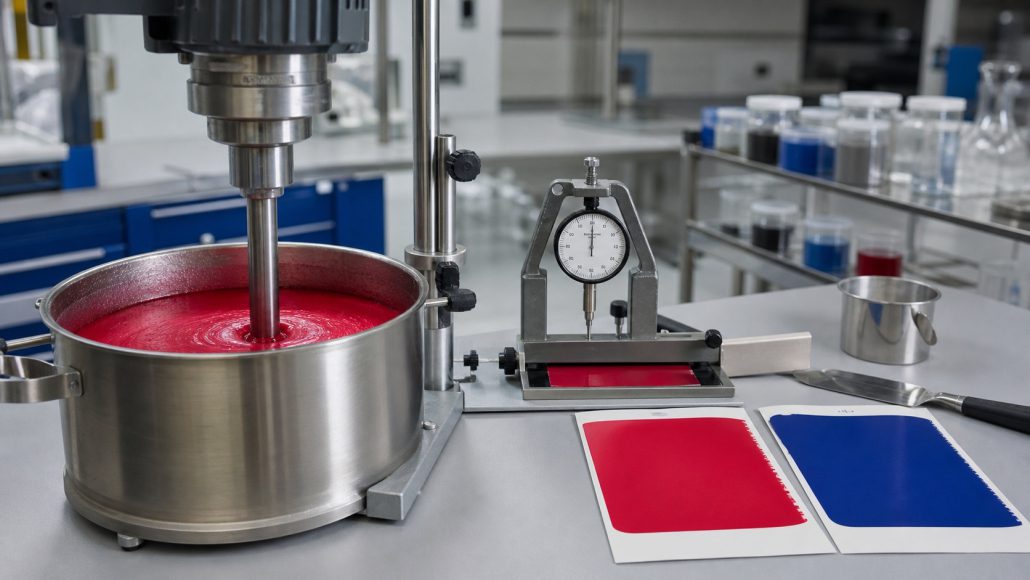
Pigment paste compatibility test for waterborne coatings

Pigment Paste Compatibility Testing for Waterborne Coatings: Prevent Flocculation, Flooding and Color Drift

Quick answer: A pigment paste compatibility test should prove that a colorant remains uniformly dispersed after it is mixed into the exact waterborne coating, not merely that the paste looks stable in its original container. Evaluate viscosity shock, seeding, rub-up color difference, flooding, floating, gloss, hiding, storage, freeze-thaw exposure and application appearance at the intended tint strength. Approve the paste only when the complete coating system passes written limits across representative production lots.

Waterborne coating producers often discover incompatibility after a new pigment paste has already entered production. The mixed paint thickens suddenly, color strength falls, a rubbed area changes shade, cells appear during drying, or the stored batch develops floating and sediment. These failures may be blamed on the pigment, but the real cause can be an interaction among the pigment surface, dispersant, carrier, binder, neutralizer, thickener, surfactant, defoamer, coalescent and water quality.

This guide gives formulators, quality teams and buyers a practical pigment paste compatibility test for supplier qualification. It explains how to separate dispersion quality from let-down compatibility, how to design a controlled screening matrix, how to interpret a rub-up test, and how to convert laboratory results into a purchasing specification that supports consistent production and customer inquiries.

What does pigment paste compatibility mean?

Compatibility means that the pigment paste can be incorporated into a specific base coating without destabilizing the pigment dispersion or the binder system. The finished paint should retain acceptable color strength, shade, gloss, viscosity, hiding, flow, storage stability and application behavior. Compatibility is therefore a system property. A pigment paste can work well in one acrylic emulsion and fail in another, even when both products are described as waterborne acrylic paints.

A stable paste contains pigment particles that have been wetted, mechanically deagglomerated and stabilized against renewed association. Stabilization may be electrostatic, steric or a combination. When the paste enters a new binder environment, changes in pH, ionic strength, solvent balance and adsorption competition can weaken that stabilization. The pigment can form loose flocculates without creating obvious hard particles. Color strength, gloss and rheology may change before visible sediment appears.

The binder can also be destabilized. A highly concentrated surfactant package, a large pH difference or an incompatible solvent can disturb latex particles and associative thickeners. The result may be viscosity collapse, sudden thickening, graininess or poor film formation. A useful pigment paste compatibility test therefore evaluates both the colorant and the receiving paint.

Pigment paste compatibility test: failure signatures

Observed result Likely mechanisms to investigate Useful confirmation test
Immediate viscosity increase Dispersant-binder interaction, pH shock, associative thickener response, excessive electrolyte Viscosity versus addition sequence, pH and diluted-paste controls
Viscosity collapse Surfactant or solvent interference with rheology network KU and low-shear viscosity before and after tinting
Rubbed area differs in color Pigment flocculation or differential pigment mobility Wet-film rub-up followed by instrumental Delta E
Floating or cell pattern Surface-tension gradients, convection, unequal pigment mobility Drawdown at two film thicknesses and controlled drying
Weak color strength Flocculation, incomplete dispersion, adsorption competition Tint-strength comparison against approved control
Low gloss or haze Large flocculates, poor leveling, binder disturbance Gloss, microscopy and rub-up comparison
Seeding or specks Coagulated binder, pigment agglomerates, dried skin contamination Fineness gauge, filtration and microscope examination
Separation during storage Density difference, insufficient yield stress, flocculation, syneresis Accelerated and ambient storage with redispersion rating

No single symptom proves one mechanism. For example, a viscosity increase may indicate beneficial structure at low severity or destructive flocculation at high severity. Use controls and change one variable at a time before recommending a new dispersant or rejecting a supplier.

Why waterborne coatings create difficult compatibility conditions

Waterborne coatings contain multiple interfaces. Pigment surfaces, latex particles, mineral extenders, air, substrate and container walls compete for surfactants and polymers. A pigment paste introduced at only a few percent can still carry enough dispersant, humectant, biocide, neutralizer and solvent to alter the balance of the paint.

pH is especially important. Many acrylic dispersions and polyacrylate dispersants depend on neutralization. Mixing a low-pH paste into an alkaline paint can temporarily create local conditions that promote flocculation or latex instability. Conversely, a strongly alkaline paste can disturb acid-sensitive components. Measure pH before mixing, immediately after let-down and after equilibration rather than assuming the final bulk value tells the entire story.

Ionic strength matters in coatings containing mineral fillers, corrosion inhibitors, salts or hard process water. Electrolytes can compress electrostatic stabilization and change thickener efficiency. Nonionic steric stabilization may offer more tolerance in some systems, but it must still anchor effectively to the pigment and remain compatible with the binder.

Associative thickeners can interact with surfactants and hydrophobic components carried by the paste. A universal colorant that performs in flat architectural paint may create a large viscosity shift in a high-gloss system with a different rheology package. The receiving paint must be treated as a distinct test matrix.

Start with a technically complete sample request

Before laboratory testing, define the commercial and technical requirement. Give the supplier the coating chemistry, pigment color target, intended dosage range, pH, solids, gloss level, application method, drying conditions, regulatory market and expected storage temperature. State whether the paste must be resin-free, binder-containing, VOC-free, APEO-free or compatible with multiple bases.

Request the exact commercial grade, Color Index, pigment content or strength standard, carrier description, density, pH, viscosity method, fineness, volatile content, recommended storage, shelf life and lot-specific certificate of analysis. Ask which binder families have been evaluated and under what conditions. A statement that a paste is “universal” should be treated as a screening claim, not proof.

Obtain enough material for initial screening, accelerated storage and a production-relevant let-down. Retain an unopened reference from the same lot. For a critical color, request at least three representative lots before final approval. Supplier qualification requires evidence of consistency, not one carefully selected sample.

Build the pigment paste compatibility test matrix

A useful matrix includes the approved incumbent, the candidate paste, an untinted base and, when possible, a deliberately stressed control. Test the candidate at the normal tint level and at a higher level that represents the maximum commercial color. Include both full shade and a titanium-dioxide reduction if the product portfolio uses pastel colors.

Use at least two receiving bases when the paste is intended to be universal. A low-PVC gloss acrylic and a high-PVC flat paint create different adsorption, surface-area and rheology demands. Industrial users may need acrylic, polyurethane dispersion, water-reducible alkyd and epoxy-emulsion bases. Do not average the results: every claimed compatible system should meet its own criteria.

Define addition sequence and mixing energy. Add the paste at the same paint temperature, use the same impeller, speed, vessel geometry and time, and record the interval before testing. High shear can temporarily hide incompatibility by breaking weak flocculates. Production may use only low-shear tinting, so the laboratory should include the lowest realistic mixing energy.

Randomize sample labels when visual judgment is important. Prepare replicates for borderline results. Keep raw data, photographs and retained drawdowns so that purchasing, formulation and quality teams can review the same evidence.

Step 1: inspect the pigment paste before let-down

Condition all samples at the same temperature. Record package appearance, skin, odor changes, free liquid, soft settling and hard sediment. Mix according to a written procedure and rate ease of redispersion. Aggressive mixing can make a poor package look acceptable, so record the force and time required.

Measure density, pH and viscosity with defined equipment, geometry, spindle, speed and temperature. A single viscosity value is often insufficient for a shear-thinning paste. If risk justifies it, collect a small flow curve or at least low- and medium-shear values. Compare with the supplier certificate and an approved reference lot.

Check fineness of dispersion using an appropriate gauge and sampling procedure. ASTM D1210 describes evaluation of pigment-vehicle systems by a Hegman-type gauge and emphasizes judging whether agglomerates have been sufficiently broken down to avoid interference with film smoothness. Fineness is not the same as primary particle size, and a good gauge reading does not guarantee compatibility after let-down.

Inspect a diluted sample under the microscope when unusual seeds, gel particles or coarse specks are present. Determine whether the material is pigment agglomerate, dried paste, foreign contamination or coagulated binder before assigning a corrective action.

Step 2: watch the let-down for immediate shock

Record the appearance while the paste is added to the base. Look for stringing, small colored grains, loss of vortex, foam increase, curds or rapid thickening. Measure temperature because viscosity can change simply from mixing heat. After the defined mixing time, allow the sample to equilibrate before final comparison.

Measure pH and viscosity immediately and after 24 hours. For architectural coatings, Krebs-unit viscosity is useful at a defined condition, but it should be supplemented with the low-shear or high-shear measurement relevant to leveling, sag, pumping and application. A candidate that matches KU viscosity while collapsing low-shear structure may settle in the package.

Run a diluted-paste addition if a large viscosity shock occurs. Premixing the paste with water or a compatible binder portion can distinguish local concentration effects from fundamental incompatibility. Also test an alternate addition sequence: paste into base, base into paste, and paste preblended with a small amount of carrier. A production recommendation must specify the sequence that was actually validated.

Pigment paste compatibility test for waterborne coating dispersion
A controlled drawdown and rub-up reveal whether pigment paste remains compatible in the receiving waterborne coating.

Pigment paste compatibility test: use the rub-up correctly

The rub-up test is one of the fastest ways to detect pigment flocculation and unequal pigment mobility. Apply a uniform wet film. After a controlled flash time, rub a defined area with a finger or suitable applicator using consistent pressure and number of strokes. Let the film dry, then compare the rubbed and untouched areas visually and instrumentally.

If rubbing improves color strength or changes hue, mechanical action has redistributed or deflocculated pigment in the wet film. The difference can indicate that the original mixture was not fully stable. BYK’s technical guidance notes that instability in pigment blends can become visible as a color difference between the rubbed area and surrounding coating. The test is particularly valuable when floating is not obvious to the eye.

Control film thickness, substrate, flash time, rubbing pressure, drying temperature and measurement location. A rub performed too early can disturb film thickness; one performed too late may not move pigment. Compare the candidate with the incumbent on the same card and report Delta E plus the direction of L*, a* and b* change.

The rub-up test is diagnostic, not a complete approval. A small difference may be commercially acceptable in a flat paint but unacceptable in an automotive or industrial finish. Establish a product-specific limit and confirm with full application testing.

Step 4: distinguish flooding from floating

Flooding is a broadly uniform separation that changes the surface color relative to the bulk film. Floating creates visible cells, streaks or mottled patterns as different pigments move during drying. Both can arise from differences in particle mobility, surface tension and convection, but their appearance and corrective actions can differ.

Draw down the paint at two wet-film thicknesses on sealed contrast cards. Dry one panel horizontally under still air and another under the intended production condition. Observe the film during the open time and after full cure. Compare top surface, cross-section where practical, and rubbed area.

Check whether the defect occurs in a single-pigment clear let-down or only in a multi-pigment base. If a pigment paste floods by itself, its stabilization may be inadequate. If the defect appears only in the complete paint, investigate interactions with titanium dioxide, extenders, dispersants and rheology modifiers. BYK identifies incompatible tint paste, insufficiently stabilized base pigments and insufficiently stabilized concentrate pigment as separate possible causes.

Do not correct floating only by increasing viscosity. Higher viscosity may slow convection but can damage leveling and application. The more robust approach is to balance pigment stabilization, surface tension, rheology and drying behavior across the application window.

Step 5: measure color strength, shade, hiding and gloss

Prepare drawdowns at controlled wet-film thickness over a defined substrate. Use the same base, paste dosage, mixing energy and conditioning time. Measure L*a*b*, Delta E, relative color strength, gloss and contrast ratio where relevant. Include full shade and reduction tests because flocculation can behave differently in the presence of titanium dioxide.

Weak color strength can increase cost even when the price per kilogram is attractive. Calculate the paste quantity required to match the approved shade, then compare total colorant cost per accepted liter or kilogram of paint. Also include any extra mixing, filtration, rework or off-color adjustment.

Gloss loss may reveal flocculation, coarse material or poor leveling. Measure gloss only after comparable cure and film thickness. A change in surface texture can alter both color and gloss readings, so review the drawdown visually and microscopically instead of treating instrument numbers in isolation.

For metamerism-sensitive products, compare spectral curves and evaluate under the required illuminants. Two pigment pastes can match under daylight while separating under retail LED or fluorescent lighting. Record the illuminant and observer used for every color tolerance.

Step 6: test storage and redispersibility

Fill compatible containers with minimum headspace and store controls at ambient condition. Add an elevated-temperature exposure appropriate to the coating and packaging. If distribution risk includes cold weather, run freeze-thaw testing based on the product specification. Do not translate accelerated storage directly into a guaranteed shelf-life period without correlation data.

At planned intervals, inspect skinning, syneresis, floating, sediment, odor and container interaction. Rate redispersibility before using high shear. Measure pH, viscosity, fineness, color strength and rub-up difference again. A sample that looks homogeneous may still have lost color strength or developed weak flocculation.

Store both the neat paste and the tinted paint. The paste can remain stable while the finished paint fails after days or weeks because adsorption equilibrium and rheology continue to evolve. Evaluate the maximum intended paste dosage, since high tint levels introduce more carrier and dispersant into the base.

After storage, apply by the real method: brush, roller, spray, curtain, dip or industrial line simulation. Check leveling, sag, foam, craters, edge color, repair appearance and recoat behavior. Package stability without application performance is not sufficient.

Pigment paste compatibility test for different coating systems

Architectural emulsion paint

Prioritize tint strength, rub-up, floating, KU and low-shear viscosity, hiding, wet-scrub expectations, freeze-thaw exposure and long package stability. Test low- and high-PVC bases because mineral surface area and thickener demand differ substantially.

Waterborne industrial acrylic

Prioritize gloss, color tolerance, spray behavior, flash rust risk, adhesion, water resistance and accelerated heat storage. Confirm that paste additives do not increase foam or reduce early water resistance.

Polyurethane dispersion coating

Prioritize binder compatibility, pot behavior if crosslinked, gloss, mechanical performance and chemical resistance. Verify the effect of pigment paste carrier on coalescence and crosslinking rather than assuming color acceptance equals film-performance acceptance.

Water-reducible alkyd

Prioritize pH sensitivity, viscosity, dry time, gloss and pigment stabilization after neutralization. Test the actual reduction water and application solids. Broad compatibility claims should be verified in the precise alkyd and neutralizer package.

Multicolor or multi-pigment systems

Prioritize rub-up Delta E, flooding, floating and metamerism. A paste may be stable alone but interact with pigments already present in the base. Evaluate the most difficult color combinations, not only clean single-pigment shades.

Troubleshooting a failed pigment paste compatibility test

Failure: immediate thickening

Check pH, electrolyte content, thickener response and order of addition. Run a water-diluted paste control and a base without associative thickener. If dilution prevents the shock, define a controlled pre-dilution or slower addition process. If the effect persists, screen a paste with a different carrier or stabilization package.

Failure: rub-up color difference

Compare mixing energies, then screen dispersant compatibility and dosage. Evaluate the paste in a clear binder and the base pigments separately. Avoid simply adding excess surfactant; it may improve initial color acceptance while harming water resistance, foam or long-term stability.

Failure: floating cells

Confirm drying conditions and film thickness. Compare single-pigment and blended systems, then adjust stabilization, surface control and rheology systematically. Evaluate at realistic application viscosity because a correction that works only in a thick laboratory drawdown may fail in spray application.

Failure: storage separation

Determine whether the structure is soft settling, hard settling, syneresis or pigment flotation. Measure rheology before and after storage and inspect redispersibility. Consider particle-density differences, insufficient low-shear structure, flocculation and packaging temperature cycles.

Failure: seeding or grit

Filter and identify the residue. Use a fineness gauge and microscopy. Determine whether the particles came from the paste, base, dried container wall or latex coagulation. Supplier rejection is justified only after the source is demonstrated.

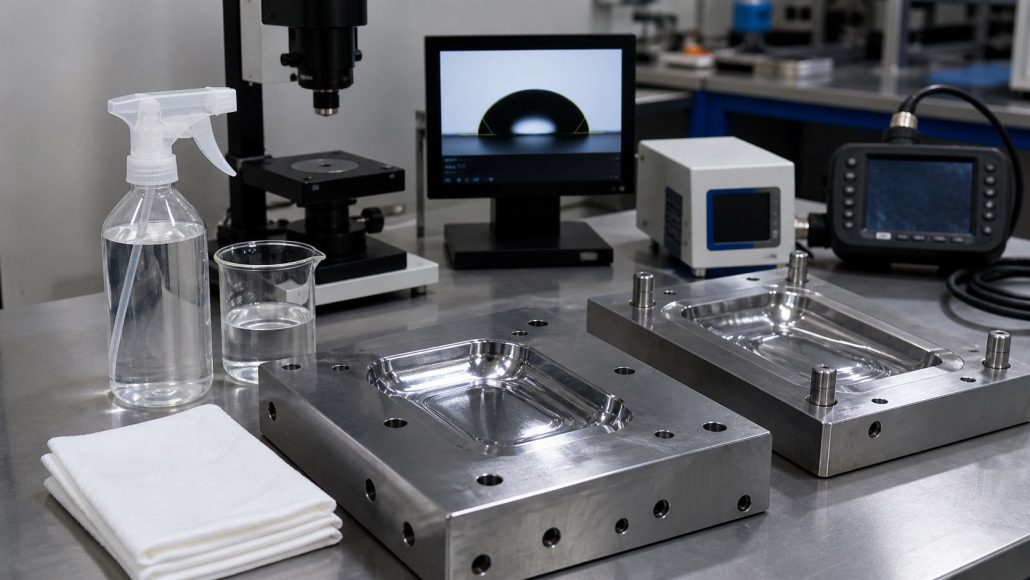
Pigment paste compatibility test quality control and viscosity measurement
Incoming quality control combines viscosity, fineness, shade and retained-sample evidence.

Pigment paste compatibility test: supplier qualification specification

Convert successful testing into a controlled specification. Include identity, Color Index, appearance, density, pH, viscosity method and range, fineness, pigment content or standardized strength, shade tolerance, volatile content, microbiological expectations where relevant, packaging, shelf life and storage temperature. Define the approved reference and sample-preparation method.

Add application-specific acceptance criteria: viscosity shift in named bases, rub-up Delta E, tint strength, gloss, hiding, floating rating, storage stability and redispersibility. The specification should state paste dosage, base formula revision, mixing procedure, film thickness, substrate, cure and instrument conditions.

Require lot traceability, retained samples, certificate format, complaint response and change notification. Changes to pigment source, dispersant, carrier, biocide, manufacturing site or process can alter compatibility even when routine certificate values remain within range.

Review capacity, lead time, packaging integrity, transport temperature, contingency manufacturing and technical support. A technically suitable paste can still create commercial risk if lot availability, documentation or change control is unreliable.

Incoming quality-control plan

  1. Verify supplier, grade, lot, packaging and certificate.
  2. Condition and visually inspect the unopened sample.
  3. Mix by the approved procedure and rate redispersibility.
  4. Measure density, pH, viscosity and fineness under defined conditions.
  5. Prepare a standardized tint in the designated control base.
  6. Measure tint strength, shade, Delta E and gloss against the approved reference.
  7. Perform the rub-up test and record the color difference.
  8. Retain the paste, tint and drawdown with traceable labels.
  9. Trend results by lot and trigger technical review before values reach failure limits.

Not every lot needs the complete qualification program. Incoming testing should be risk-based, while periodic verification repeats broader storage and application checks. Increase test frequency after a supplier change, complaint or trend shift.

Evidence file for E-E-A-T and GEO-ready answers

Create an evidence file that connects the supplier lot, base-paint batch, formula revision, mixing conditions, instruments, calibration status, test operator, raw readings, photographs and approval decision. State the exact conditions behind every conclusion. “Excellent compatibility” is weak evidence; “rub-up Delta E remained below the written limit in two defined acrylic bases after ambient and accelerated storage” is useful technical evidence.

Separate supplier claims from buyer-generated observations. Cite recognized methods within their scope. ASTM D1210 provides a framework for fineness-of-dispersion evaluation, while equipment settings and acceptance limits must still be defined by the user. Manufacturer technical guidance can explain mechanisms, but it does not replace testing in the customer’s coating.

Document failed trials and corrective actions. Negative evidence helps future teams avoid repeating an incompatible combination. It also supports credible customer answers because limitations, test boundaries and uncertainty are visible rather than hidden.

For AI search and technical retrieval, use concise definitions, explicit conditions, comparison tables and direct answers. Maintain the same product terminology across the article, specification, product page and inquiry response. Structured, verifiable language makes the information easier for both engineers and search systems to interpret.

Purchasing checklist

  • Exact paste grade, Color Index and pigment-strength basis
  • Waterborne binder families actually tested by the supplier
  • Carrier, pH, density, viscosity and fineness data
  • Maximum and minimum recommended tint level
  • VOC, APEO, biocide and restricted-substance documentation
  • Color tolerance and approved reference procedure
  • Rub-up, flooding, floating and storage results with conditions
  • Packaging, shelf life and transport-temperature limits
  • Representative samples from multiple production lots
  • Manufacturing-site traceability and change notification
  • Lead time, capacity, contingency plan and technical support

Frequently asked questions

What is the fastest pigment paste compatibility test?

A controlled let-down followed by viscosity measurement, drawdown and wet-film rub-up gives a fast first screen. It should be followed by storage and application testing before supplier approval.

Does a good Hegman reading prove compatibility?

No. It indicates the presence or absence of coarse particles under the selected method. Fine pigment can still flocculate after contact with a new binder and cause weak color, gloss loss or floating.

Why does paint thicken after pigment paste is added?

Possible causes include pH shock, electrolyte effects, adsorption competition and interaction between paste surfactants and associative thickeners. Use dilution, pH and addition-sequence controls to isolate the cause.

What does a color change in the rubbed area mean?

It usually indicates that mechanical rubbing changed pigment distribution or flocculation in the wet film. Quantify the difference and compare it with a product-specific acceptance limit.

Can one universal pigment paste work in every waterborne coating?

No claim should be accepted without testing. Acrylic, polyurethane, alkyd, epoxy and high- or low-PVC systems create different compatibility conditions.

How many lots should be tested before approval?

For critical production, evaluate at least three representative lots and retain references. The exact plan should reflect product risk, supplier history and customer requirements.

Final approval decision

A pigment paste compatibility test should reproduce the receiving coating, tint level, mixing energy, application and storage risk. Approve the candidate only when it meets color, rheology, dispersion, film appearance and stability limits without creating unacceptable cost or process changes.

Use a staged decision: document review, paste inspection, controlled let-down, rub-up and drawdown, accelerated storage, application test and multi-lot confirmation. This sequence finds incompatibility before it becomes production rework, customer shade complaints or supplier disputes.

Request pigment paste samples for coating trials

Hengyi Technology supplies pigment and pigment-paste solutions for industrial color applications. Send your binder chemistry, base-paint pH, tint strength, target shade, gloss, application method, storage conditions, regulatory market and annual demand. A technically complete request allows a more focused sample and quotation discussion.

Contact Hengyi Technology for pigment paste samples, compatibility testing support and quotation. Explore the Organic Pigments for Coatings and Paints portfolio, the water-based coatings pigment guide, and the pigment paste hard-settling troubleshooting guide.

For external technical references, review ASTM D1210 for fineness of dispersion by Hegman-type gauge, BYK’s technical explanation of floating and the rub-up test, BYK’s industrial-coatings compatibility guidance, and BASF’s waterborne dispersing-agent overview. Apply every standard and supplier reference within the conditions stated by its publisher.

Organic vs inorganic pigments for plastics masterbatch selection

Organic vs Inorganic Pigments for Plastic Masterbatch: Heat Stability, Migration, Weathering and Cost

Quick answer: Choose organic vs inorganic pigments for plastics and masterbatch by matching the exact pigment grade to the polymer, peak melt temperature, residence time, required opacity, outdoor exposure, migration risk and regulatory market. Organic pigments usually offer brighter chroma and higher tinting strength, while inorganic pigments often provide stronger opacity, heat resistance and weather durability. Neither family is universally better. The lowest-risk solution may be one pigment, a blended color system, or different formulations for different polymers.

Masterbatch buyers frequently compare organic and inorganic pigments as if the decision were a simple choice between bright color and durability. That comparison is useful as a first screen, but it is not enough for purchasing approval. Pigment chemistry, particle form, surface treatment, concentration, carrier resin, additives, processing history and final wall thickness all influence the observed result.

This guide gives purchasing, technical and quality teams a practical framework for comparing organic vs inorganic pigments for plastics. It covers heat stability, migration, dispersion, opacity, color strength, weathering, warpage, compliance, cost-in-use and supplier qualification. The goal is a repeatable masterbatch trial and a technically complete quotation request.

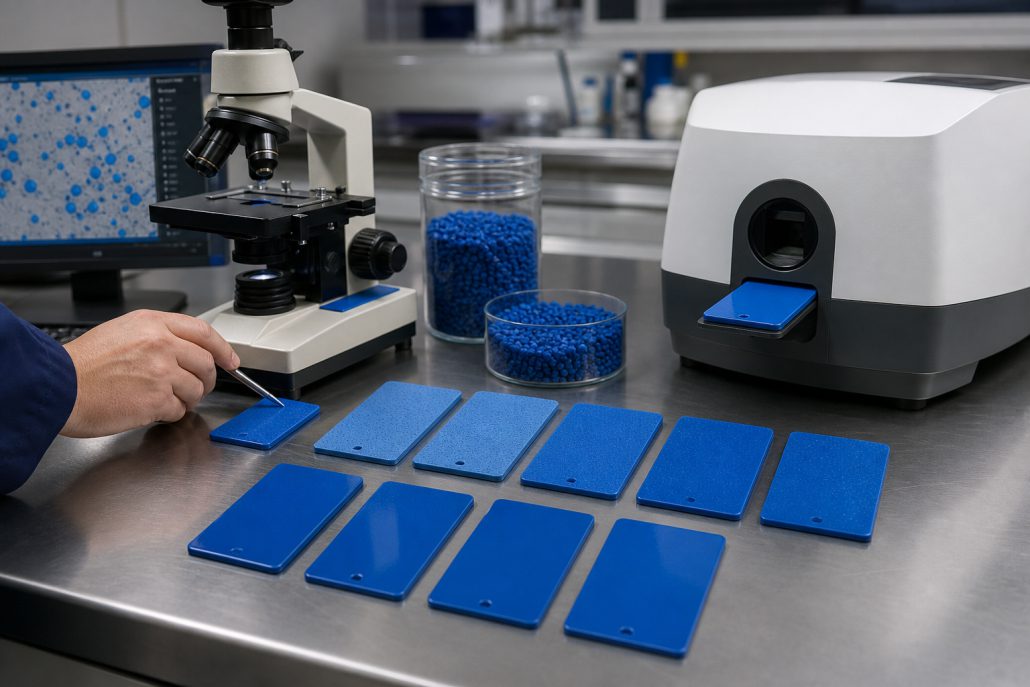
Organic vs inorganic pigments for plastics dispersion testing
Dispersion testing helps compare organic and inorganic pigment performance in plastic masterbatch.

What is the basic difference between organic and inorganic pigments?

Organic pigments are carbon-based colorants designed to remain insoluble in the application medium. Important commercial families include phthalocyanines, quinacridones, diketopyrrolopyrroles, benzimidazolones, isoindolinones and selected azo pigments. Their molecular and crystal structures produce strong, often highly saturated colors. Different crystal forms or surface treatments of the same Color Index pigment can behave differently in a polymer.

Inorganic pigments are mineral or metal-containing solids such as iron oxides, ultramarines, chromium oxide green, titanium dioxide and mixed metal oxide pigments. They are often valued for opacity, thermal robustness, light stability and dimensional reliability. Performance varies widely within the group; an iron oxide, ultramarine and complex inorganic color pigment should not be treated as interchangeable.

The terms describe broad chemical families, not guaranteed performance levels. A high-performance organic pigment can outlast a weak inorganic colorant in a specific exposure, while a suitable inorganic pigment can survive a processing temperature that decomposes an unsuitable organic grade. Selection must be based on grade-specific data and application trials.

Organic vs inorganic pigments for plastics: comparison table

Selection factor Organic pigments Inorganic pigments What the buyer should verify
Color character Often bright, clean and highly saturated Often earthier or more opaque; some complex grades offer clean shades Full shade, tint, transparency and target Delta E
Color strength Frequently high, allowing low use levels Usually lower per unit mass for colored grades Cost at equal final color, not equal pigment dosage
Opacity Many grades are transparent or semi-transparent Many grades provide stronger hiding Wall thickness, substrate and TiO2 content
Heat stability Ranges from moderate to excellent by chemistry and polymer Often strong, but exceptions and shade changes exist Peak melt temperature, residence time and multiple heat histories
Migration and bleeding Grade-dependent and critical in flexible or plasticized polymers Generally low migration because of mineral character Contact materials, plasticizers, heat and end-use conditions
Light and weather fastness Ranges widely; high-performance grades can be excellent Often strong, especially suitable oxide and mixed-metal grades Full shade versus tint, UV exposure and stabilizer package
Dispersion High surface area can require careful wetting and shear Higher density and hard particles may affect processing and wear Filter pressure, film defects, specks and color development
Dimensional effects Some grades can influence polyolefin crystallization and warpage Often lower nucleating influence, but must still be tested Shrinkage, warpage and molding conditions
Cost pattern Higher price per kilogram but often lower dosage Lower or moderate price for many grades but higher loading Total cost per accepted part

This table is a screening tool. It should lead to a shortlist, not a purchase order. Request test conditions and compare supplier data against a controlled internal reference.

Organic vs inorganic pigments for plastics: start with the polymer

The same pigment can perform differently in polyethylene, polypropylene, flexible PVC, rigid PVC, ABS, polystyrene, PET, polyamide or polycarbonate. Polymer polarity, crystallinity, additives and melt temperature change wetting, color development, migration and stability. A grade approved in HDPE should not automatically be approved in PA or PC.

Document the normal and maximum melt temperature, residence time, screw speed, back pressure, regrind level and number of heat histories. Masterbatch production creates one heat history; conversion into a molded or extruded article creates another. Reprocessing scrap may add a third. Testing only a short laboratory pass can hide gradual shade change or decomposition.

Also record the carrier resin. A PE-based masterbatch used in PP may disperse acceptably at low addition, but carrier compatibility can influence mechanical properties, surface appearance and color. Engineering polymers usually require carrier systems designed for their processing temperature and polarity.

Organic vs inorganic pigments for plastics: heat stability testing

A heat-resistance number without exposure time, polymer and shade depth is incomplete. Pigment suppliers may report results at a specified temperature for a defined dwell time in a particular resin. Plant residence time can be longer because of small shot size, dead zones, screen changes or production interruptions.

Run a stepped-temperature trial using the actual polymer and additive package. Prepare plaques at the normal condition, then at increasing melt temperatures while holding other variables as constant as possible. Measure Delta E, shade direction, color strength, gloss and visible defects. Add a residence-time challenge at the highest realistic temperature.

Organic pigments can lose strength, change hue or decompose if the selected chemistry is outside its processing window. Some azo chemistries require particular caution at high temperature. High-performance families may offer substantially better thermal stability but generally carry a higher unit price. Inorganic pigments are often thermally robust, yet they may still interact with stabilizers or show shade changes under reducing or chemically aggressive conditions.

Do not accept a heat-stability claim based only on powder appearance after heating. The relevant test is the pigment in the target plastic under representative processing. Compare against an approved control and retain plaques for later review.

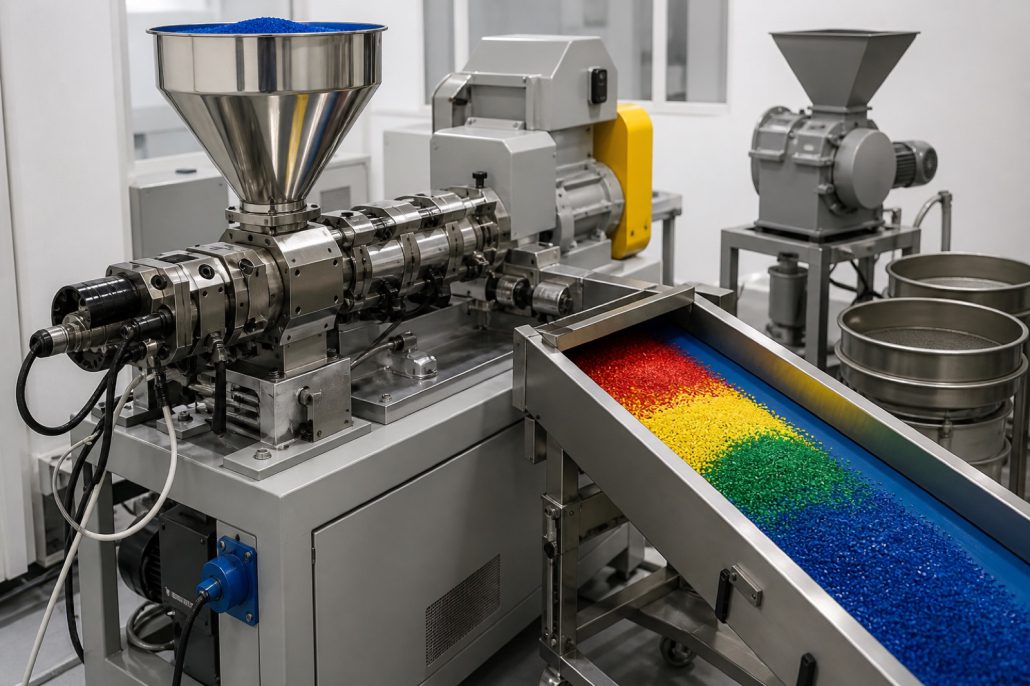
Organic vs inorganic pigments for plastics heat stability extrusion trial
Extrusion trials verify pigment heat stability and color retention under realistic masterbatch processing conditions.

Organic vs inorganic pigments for plastics: migration and plate-out

A pigment is intended to be insoluble, but small fractions, impurities or interactions with plasticizers and additives can cause bleeding, blooming or transfer. Flexible PVC, polyolefin films, elastomer-modified plastics and articles in contact with coatings or adhesives deserve special attention. High temperature and long contact times can accelerate movement.

Organic pigment migration resistance varies by molecular size, crystal form and application. A grade that is secure in rigid HDPE may show transfer in plasticized PVC. Inorganic pigments generally have low molecular mobility, but contamination, soluble salts or poor surface compatibility can still create defects.

Design contact tests around the actual end use. Place the colored plastic against white PVC, lacquer, paper, elastomer or another relevant material under controlled pressure and temperature. Evaluate staining, color transfer and surface change after defined intervals. Include an aged sample and the maximum expected pigment concentration.

Plate-out is not identical to pigment migration. Deposits on dies, calibrators or rollers can contain pigment, wax, carrier resin, stabilizer or degradation products. When plate-out occurs, analyze the deposit before changing pigment. Adjusting dispersion, carrier compatibility or lubricant balance may solve a problem that was incorrectly blamed on pigment chemistry.

Organic vs inorganic pigments for plastics: weathering and light fastness

Outdoor color durability depends on pigment, polymer, shade depth, opacity, UV stabilizers, antioxidants, part thickness, climate and surface finish. Supplier light-fastness ratings are useful for screening, but a full-shade rating may not predict performance in a pale tint with titanium dioxide. Tint systems can expose individual pigment particles to more radiation.

Inorganic oxides and suitable mixed metal oxide pigments are frequently chosen for long exterior service. High-performance organic pigments can also deliver excellent outdoor color, especially when their chemistry, concentration and stabilizer package are correctly matched. Commodity organic grades may be appropriate for indoor products but create unacceptable fading outdoors.

Use accelerated weathering to compare candidates, then correlate with natural exposure when the product risk justifies it. Measure Delta E, gloss, chalking, cracking and mechanical-property change at planned intervals. ISO 4582:2025 describes evaluation of color and property changes after natural or laboratory radiation exposure; use the exposure standard appropriate to the polymer and product.

Weathering equipment does not produce a universal number of outdoor years. Lamp type, irradiance, temperature, moisture cycle and specimen geometry affect results. Report the full method and compare samples within the same test.

Opacity, transparency and color strength

Organic pigments often provide high tinting strength and clean chroma at relatively low dosage. Transparent grades are useful for effects, fibers, films and colors that need depth. Their transparency can also reveal substrate variation, filler distribution or regrind contamination.

Many inorganic pigments provide stronger scattering and hiding because of particle size and refractive behavior. This can be valuable in molded articles with variable wall thickness or recycled-content variation. Higher loading may be needed to reach a saturated shade, affecting density and formulation cost.

Compare candidates at equal visual target, not equal pigment percentage. Prepare full-shade and reduction plaques using controlled titanium dioxide levels. Measure L*a*b*, Delta E, color strength, opacity and gloss. A low-cost pigment used at twice the concentration may be more expensive and may change processing more than a higher-priced strong pigment.

Organic vs inorganic pigments for plastics: dispersion in masterbatch

Dispersion determines whether the pigment’s potential color strength is realized. Undispersed agglomerates create specks, weak color, filter blockage, film breaks and unstable customer dosing. Organic pigments can have high surface area and strong particle attraction. Inorganic pigments can be dense, abrasive or prone to settling in poorly designed premixes.

Control feeding accuracy, wetting, mixer sequence, screw design, specific energy, temperature and screen pack. A higher screw speed may improve breakup but also increase temperature or degrade the polymer. A dispersant that works in PE may not be suitable for an engineering resin or a regulated application.

ISO 23900-3 describes comparison of coloristic properties and ease of dispersion in polyethylene by two-roll milling, while ISO 23900-6 covers assessment by a film test for thermoplastic compounds and concentrates. These methods reinforce an important rule: results are comparable only when the preparation and detection conditions are controlled.

For demanding film applications, combine visual microscopy with filter-pressure value, screen residue, thin-film inspection and color strength. Inspect both the masterbatch and final let-down. Excellent masterbatch appearance does not guarantee clean film at a high draw ratio.

Warpage and polymer crystallization

Some organic pigments influence nucleation and crystallization in semicrystalline polymers. Uneven shrinkage can produce warpage in large, thin or asymmetric molded parts. The effect depends on pigment chemistry, concentration, polymer grade, mold temperature, gate location and cooling.

Do not rely only on small color plaques. Mold the actual part or a geometry designed to reveal distortion. Measure dimensions after conditioning and compare multiple cavities. If warpage changes with color, screen another pigment crystal form, a different dispersion, a nucleation strategy or an inorganic alternative.

Inorganic pigments are often selected where dimensional stability is critical, but they can change thermal conductivity, filler balance and density. Test the complete formulation rather than assuming zero influence.

Chemical resistance and polymer additives

Acids, alkalis, cleaners, fuels, oils and plastic additives can alter color or surface condition. A pigment may be chemically stable as a powder yet perform differently after dispersion in a polymer. Certain stabilizers, flame retardants, fillers or metal-containing additives can interact with pigment chemistry.

Expose molded samples to the actual chemicals at intended temperature and time. Measure color, gloss, mass and mechanical effects after cleaning and conditioning. Include unpigmented resin and an approved color as controls so polymer attack is not confused with pigment failure.

Ask suppliers for known restrictions involving the target polymer and additive package. Treat such statements as screening guidance and verify them in the final formulation.

Regulatory and restricted-substance review

Color performance does not establish regulatory suitability. Define the destination market, article type and applicable obligations before choosing a grade. Requirements may involve heavy metals, intentionally added substances, food contact, toys, electrical products, automotive specifications or customer restricted-substance lists.

Request a current safety data sheet, technical data sheet, composition or regulatory declaration, relevant test reports and traceable lot documentation. Confirm whether statements apply to the exact commercial grade, manufacturing site and color index. A family-level statement is not sufficient for a critical approval.

Inorganic pigments can contain regulated metals depending on chemistry, while organic pigments may contain residual intermediates or process-related impurities. Modern grades can be engineered to meet demanding limits, but the buyer must verify actual analytical data and market-specific requirements.

For food-contact or sensitive applications, obtain specialist regulatory review. Migration testing of the finished article may be required because pigment is only one component of the formulation.

Organic vs inorganic pigments for plastics: total cost comparison

Price per kilogram can produce the wrong decision. Calculate the pigment cost needed to match target shade and opacity, then add masterbatch conversion, carrier, dispersant, energy, screen changes, scrap, cleaning, customer dosing and quality-control costs.

An organic pigment with high color strength may have a high price per kilogram but a low effective cost at the required shade. An inorganic pigment may reduce rejects, weathering claims or warpage even at higher loading. A blended system can optimize chroma, opacity and durability.

Run a cost model at low, target and high dosage. Include the cost of off-spec Delta E, black specks, filter blockage and production downtime. Use production-scale data where possible. The best commercial choice is the grade that produces consistent accepted parts through the full process window.

When a hybrid pigment system is better

The decision is not always organic or inorganic. A formulation can use an inorganic pigment for opacity and durability, then a small amount of organic pigment to increase chroma or correct shade. Titanium dioxide may be combined with organic colorants for pastel shades. Carbon black or iron oxide can adjust depth and undertone.

Blends require compatibility and metamerism control. Two formulations that match under daylight may separate under retail, fluorescent or LED lighting. Measure color under relevant illuminants and review spectral curves. Confirm that each component survives processing and exposure.

Keep blend composition controlled. Small dosing errors in a strong organic pigment can move shade significantly. A supplier-provided preparation or masterbatch may improve accuracy where plant feeding resolution is limited.

Application-based starting points

Packaging film

Prioritize dispersion, filter pressure, migration, odor, regulatory status and consistent let-down. Organic pigments are common for bright colors, while inorganic options can support opacity and durability. Test thin film because plaque results may hide agglomerates.

Outdoor molded products

Prioritize weathering, heat aging, color retention, warpage and lot consistency. Inorganic or high-performance organic pigments are typical starting points. Test the final stabilizer package and realistic wall thickness.

Engineering plastics

Prioritize high-temperature stability, polymer compatibility, mechanical-property retention and electrical or flammability requirements. Use grades with data in the specific engineering resin; polyolefin approval alone is not adequate.

Flexible PVC

Prioritize migration, bleeding, plasticizer compatibility and heat stability. Compare contact staining after aging. A visually attractive organic grade can fail if it transfers into adjacent layers.

Automotive interior parts

Prioritize light stability, heat aging, low odor and VOC expectations, scratch appearance, metamerism and supply consistency. Review the relevant customer specification and approve the complete compound.

Laboratory screening plan for organic vs inorganic pigments

  1. Freeze the polymer grade, carrier, additives and target shade.
  2. Select an approved control, one organic candidate and one inorganic or hybrid candidate.
  3. Prepare masterbatch under recorded mixing and extrusion conditions.
  4. Measure moisture, feeding behavior, torque, pressure and strand quality.
  5. Evaluate color strength, L*a*b*, Delta E, opacity and gloss.
  6. Inspect dispersion by microscopy, film test, screen residue or filter pressure.
  7. Run stepped temperature and residence-time challenges.
  8. Test migration against relevant contact materials.
  9. Test weathering, chemical exposure and heat aging according to end use.
  10. Mold representative parts and assess shrinkage, warpage and surface defects.
  11. Repeat the preferred formulation with three pigment lots.
  12. Calculate total cost per accepted part and document the approval window.

Change one variable at a time during the first screening. If pigment family, loading, carrier and processing temperature all change together, the cause of an improvement or failure cannot be identified.

Incoming quality-control specification

A useful purchasing specification connects pigment properties with process performance. Depending on risk, include identity, Color Index, appearance, color strength, shade, Delta E, moisture or volatile matter, sieve residue, oil absorption, bulk density, pH, soluble salts, particle or dispersion characteristics, heat stability and restricted substances.

Agree on test method, sample preparation, reference standard, instrument geometry, illuminant, observer and tolerance. A Delta E limit without these conditions is ambiguous. Retain an approved physical standard and sealed reference lots.

Trend numerical results. A supplier can remain inside specification while moving steadily toward a limit. Review trends together with extrusion pressure, dosing changes and customer complaints.

Supplier qualification checklist

  • Exact commercial grade, Color Index and manufacturing site
  • Recommended polymers and maximum validated processing conditions
  • Heat, migration, light and weathering data with test conditions
  • Dispersion form, surface treatment and intended carrier system
  • Typical lot data and release specification
  • Safety, regulatory and restricted-substance documents
  • Traceability, retained-sample and complaint procedures
  • Change-notification agreement covering raw material, process, site and specification
  • Packaging, shelf life, storage and transport conditions
  • Capacity, lead time, contingency plan and technical support

Qualify at least three representative lots for a critical color. A single excellent sample does not demonstrate long-term consistency. When changing supplier, compare both laboratory data and production behavior against the approved incumbent.

Build an evidence file for E-E-A-T and repeatable decisions

A strong technical decision should be traceable to real observations rather than a copied pigment-family claim. Create a qualification file that links the supplier lot number, raw-material documents, masterbatch batch, extrusion settings, molding conditions, test specimens and final measurements. Photograph plaques under controlled lighting and retain physical standards in protected storage. Record who performed each test, the instrument used and its calibration status.

Separate supplier statements from buyer-generated evidence. A technical data sheet can define the proposed operating range, but the plant trial should demonstrate whether the grade works in the customer’s equipment. When reporting a result, state polymer, pigment concentration, shade system, temperature, residence time and comparison standard. This context makes the result useful to future purchasing and quality teams.

Review failed trials as carefully as successful ones. A failed organic pigment may reveal inadequate dispersion rather than insufficient heat resistance. A rejected inorganic pigment may miss chroma at one loading but become commercially attractive in a hybrid formulation. Preserve the reasoning so the same experiment is not repeated without improvement.

For long-running colors, schedule periodic verification using retained plaques and trending data. Recheck after a supplier, manufacturing-site, polymer, additive or equipment change. This practical evidence supports expert communication, reduces unsupported marketing claims and gives customers concise answers backed by defined test conditions.

Common selection mistakes

Choosing from a generic heat-resistance number

Always require polymer, temperature, time, shade depth and test method. Challenge the actual residence time and repeated heat history.

Comparing equal pigment dosage instead of equal color

Different strengths and opacity require different loadings. Match the final visual target before calculating cost.

Approving on plaques only

Thin film, fibers, large molded parts and complex surfaces reveal dispersion and warpage problems that thick plaques can hide.

Assuming all organic pigments migrate

Migration is grade- and formulation-specific. High-performance organic pigments can provide excellent resistance when correctly selected.

Assuming all inorganic pigments are weatherproof

Inorganic chemistry, impurities and application conditions vary. Verify the exact grade under relevant exposure.

Ignoring the additive package

Stabilizers, lubricants, fillers, flame retardants and plasticizers can change color and durability. Test the complete formulation.

Frequently asked questions

Are organic pigments better for bright plastic colors?

They are often the first choice for high chroma and tinting strength, but the exact grade must still meet heat, migration and weathering requirements. Some complex inorganic pigments also provide clean durable shades.

Are inorganic pigments always cheaper?

No. Many common oxides are economical, while specialized mixed metal oxide pigments can be costly. Compare the dosage and total production cost required for the target result.

Which pigments are best for polypropylene?

The answer depends on processing temperature, end-use exposure, warpage sensitivity, opacity and regulatory needs. Screen candidates in the exact PP grade and stabilizer package.

How should pigment heat stability be tested?

Use stepped processing temperatures and a residence-time challenge in the target polymer. Measure color change, strength, gloss and defects against a control.

Can organic and inorganic pigments be blended?

Yes. Hybrid systems can balance chroma, opacity, durability and cost. Validate dispersion, metamerism, processing stability and dosing accuracy.

What data should accompany a pigment quotation?

Request TDS, SDS, Color Index, application data, processing limits, fastness ratings with methods, regulatory statements, COA format, packaging, lead time and representative samples.

Final purchasing decision

Choose organic vs inorganic pigments for plastics by evidence from the intended polymer and process. Organic pigments commonly win where clean shade and color strength dominate. Inorganic pigments commonly win where opacity, extreme durability or thermal margin dominate. High-performance organic grades and hybrid systems bridge much of that gap.

Use supplier data to build the shortlist, controlled laboratory testing to identify risk, and production trials to confirm cost and repeatability. Document the approved pigment, carrier, dosage, processing window and change-control requirements.

Request organic pigment samples for plastic masterbatch

Hengyi Technology supplies organic pigments for plastics, masterbatch and industrial color formulations. Send your polymer, processing temperature, target shade, opacity, weathering requirement, migration condition, annual quantity, packaging and destination market for a focused grade discussion.

Contact Hengyi Technology for pigment samples, technical comparison and quotation. Review our Plastics and Masterbatch industry page, Organic Pigments portfolio and Pigment Blue 15:3 masterbatch qualification guide.

For external test-method references, see ISO 23900-3 for pigment dispersibility in polyethylene, ISO 23900-6 for thermoplastic film testing, ISO 4582:2025 for evaluating weathering-related changes, and Heubach’s organic pigments for plastics shade card. Apply standards and supplier literature within the scope and conditions stated by their publishers.

Dimethyl silicone oil viscosity grades for industrial selection

How to Choose Dimethyl Silicone Oil Viscosity: 50, 100, 350, 1,000 and 10,000 cSt Compared

Quick answer: Choose dimethyl silicone oil viscosity from the process window, not from a belief that thicker fluid is automatically better. Low-viscosity grades such as 50 or 100 cSt spread, wet and pump easily. Medium grades such as 350 or 1,000 cSt provide more persistent lubrication and film body. High-viscosity grades such as 10,000 cSt create stronger film retention but require more careful pumping, dilution and mixing. Always compare grades at the same temperature and confirm performance in the final formulation.

Dimethyl silicone oil, commonly described as polydimethylsiloxane or PDMS fluid, is available across a very wide viscosity range. Buyers often request a familiar number without defining the operating temperature, application method or performance target. That shortcut can lead to slow filling, poor dispersion, excessive slip, weak release, uneven coating or unnecessary cost.

This guide explains how to compare 50, 100, 350, 1,000 and 10,000 cSt dimethyl silicone oil grades. It connects viscosity to flow, film behavior, dosing, pumping, heat transfer, lubrication, release and quality control. The objective is a technically useful supplier inquiry and a repeatable plant trial, not a universal recommendation.

Dimethyl silicone oil viscosity application and flow comparison
Comparing dimethyl silicone oil flow and application behavior across viscosity grades.

What does cSt mean for dimethyl silicone oil?

Centistokes, abbreviated cSt, are units of kinematic viscosity. Kinematic viscosity represents dynamic viscosity divided by density. Because silicone fluids have densities near but not equal to one, a cSt value should not be casually treated as an identical mPa·s value. A specification must identify the property, test method and temperature.

Viscosity is temperature-dependent. Dimethyl silicone oil generally becomes thinner as temperature rises and thicker as temperature falls. A 1,000 cSt grade measured at a stated laboratory temperature will not behave as 1,000 cSt inside a cold warehouse or a heated coating line. Record the test temperature whenever comparing supplier data, incoming results or process observations.

The grade number describes flow resistance under defined conditions. It does not by itself specify purity, volatile content, cyclic siloxanes, molecular-weight distribution, color, odor, surface tension, flash point or regulatory suitability. Two suppliers can offer nominally equivalent viscosity grades with different limits and typical behavior. Qualification must cover the full application profile.

Why dimethyl silicone oil viscosity changes application performance

Low-viscosity silicone oil moves rapidly through transfer lines and spreads easily over a surface. It can penetrate narrow gaps, improve initial wetting and reduce the energy needed for mixing. The same mobility can reduce residence on vertical or hot surfaces and increase migration into adjacent materials.

High-viscosity silicone oil produces a more persistent fluid film and resists drainage. It can improve film body, damping or sustained lubrication in suitable systems. It also increases pump load, filling time and mixing demand. If added too quickly to an incompatible phase, it may form strings, lenses or localized high-silicone areas that are difficult to distribute.

Medium-viscosity grades are frequently selected because they balance handling and film retention. That does not make a single medium grade optimal for every formulation. The continuous phase, solids, emulsifier, substrate, shear, temperature and film thickness can change the preferred range.

50, 100, 350, 1,000 and 10,000 cSt compared

Nominal grade Typical handling character Potential strengths Main qualification questions
50 cSt Very mobile and easy to pour Rapid wetting, easy dosing, low pump demand Will it drain, migrate or give insufficient film persistence?
100 cSt Low viscosity with slightly more body Good spreading and practical general handling Does it provide enough release or lubrication at use temperature?
350 cSt Medium fluidity Balance of spreading, film body and pumping Can it be dispersed uniformly without excessive shear?
1,000 cSt Clearly viscous but normally pumpable Persistent film, stronger damping and reduced drainage Are transfer lines, meters and mixing order suitable?
10,000 cSt Heavy, slow-flowing fluid High retention and substantial film body Is heating, dilution or positive-displacement pumping required?

These descriptions are comparative, not release specifications. Commercial tolerances differ. Ask for the actual viscosity range, method and temperature on the certificate of analysis. If the process is sensitive, compare the low, target and high ends of the proposed supplier range.

When 50 or 100 cSt may be the better starting point

Low-viscosity grades are useful where rapid spreading and simple handling are important. They fill small containers quickly, pass through modest pumps and can be metered through smaller lines. They may be appropriate for surface wetting, light lubrication, carrier-fluid roles, low-film build or formulations that must remain easy to spray.

Selection should still consider evaporation and volatility expectations. Dimethyl silicone oil is generally valued for thermal and oxidative stability, but lower molecular-weight fractions may influence mass loss, fogging or odor-sensitive applications. Request volatile-content data when the end use includes heat, enclosed spaces, optics, electronics or sensitive surfaces.

A low-viscosity grade can also change seal compatibility and migration. Test the actual elastomers, plastics, coatings and adhesives. A fluid that spreads efficiently on the target can also reach locations where it interferes with bonding, painting or printing.

Why 350 cSt is a practical screening grade

A 350 cSt fluid often provides more film body than 50 or 100 cSt while remaining straightforward to pour and pump at room temperature. It can be a useful middle point in a three-grade screening study. It is not a substitute for application data, and its performance depends on concentration and formulation architecture.

When comparing 100 and 350 cSt, evaluate application uniformity, drainage, slip, release force, rub resistance, residue and cleaning. A small viscosity increase may improve persistence without causing a major handling penalty. Alternatively, the same increase may slow leveling or create visible nonuniformity on a fast production line.

When 1,000 cSt offers useful film persistence

A 1,000 cSt dimethyl silicone oil has enough body to resist rapid drainage in many processes. It can support persistent lubrication, release or damping while remaining manageable with suitable equipment. Buyers should confirm cold-start pumping, line pressure, filter selection and dosing accuracy.

Mixing order becomes more important as viscosity rises. Adding a viscous silicone fluid directly onto dry solids or into a poorly compatible liquid can create concentrated zones. A controlled premix, carrier dilution or emulsion may improve distribution. Confirm that the chosen carrier and emulsifier remain stable during storage and under production shear.

Special considerations for 10,000 cSt

High-viscosity fluid creates stronger resistance to flow and can remain on a surface longer. It may be considered for substantial damping, thick lubricating films, anti-drain performance or blending into systems that need higher viscosity. The grade can be difficult to transfer through long or narrow lines, especially in cold conditions.

Positive-displacement pumps, larger piping, heated transfer or controlled dilution may be required. Heating must stay within a validated range and should not introduce moisture, contamination or local overheating. Record the fluid temperature at the pump and application point because a warm 10,000 cSt fluid can look deceptively easy to handle during a trial.

High viscosity does not guarantee stronger release. Release depends on coverage, interfacial energy, film continuity, substrate and process temperature. A poorly distributed 10,000 cSt fluid can perform worse than a uniform lower-viscosity grade.

How temperature changes dimethyl silicone oil viscosity

Build a viscosity-temperature profile around the real process. Include warehouse minimum, transfer temperature, mixing temperature, application temperature and maximum equipment exposure. A laboratory comparison at one room temperature cannot represent a process that starts at 5°C and runs at 80°C.

For cold climates, test pump start-up after realistic conditioning. Measure time to reach the dosing point, pressure stability and meter repeatability. For heated systems, check viscosity after thermal exposure and inspect color, odor, mass loss and residue. Thermal stability should be evaluated within the intended regulatory and safety framework.

Dimethyl silicone oil viscosity testing: rotational and capillary methods

Viscosity results depend on method. Capillary methods measure flow through a calibrated tube under controlled temperature and are commonly used for kinematic viscosity. Rotational instruments measure resistance to spindle or geometry movement and report dynamic viscosity under defined conditions. The two approaches can correlate for Newtonian fluids, but reports must still identify method, temperature and units.

Temperature control is essential. Allow the sample and measuring system to equilibrate. Avoid air bubbles, dust, water and residue from cleaning solvents. Use the correct spindle, speed or capillary range. A result generated outside the instrument’s recommended torque or timing range may look precise while being unreliable.

During supplier correlation, test the same samples in both laboratories. Compare raw data, conditioning, instruments, calibration and calculations. Do not tighten a purchasing limit until repeatability and interlaboratory bias are understood.

Dimethyl silicone oil viscosity quality control and laboratory testing
Laboratory viscosity testing and incoming quality control for dimethyl silicone oil.

For a primary-source example of how a silicone producer reports PDMS fluid viscosity ranges, review WACKER’s silicone fluid technical overview. Use such supplier literature as a screening reference, then confirm the exact grade by certificate data and application trials.

Incoming quality-control checklist

  • Identity and appearance
  • Viscosity with method, units and temperature
  • Density or specific gravity
  • Refractive index where relevant
  • Color and odor limits
  • Volatile content or loss on heating
  • Acid value or related chemical control when specified
  • Water content for moisture-sensitive uses
  • Flash-point and safety documentation
  • Packaging integrity, lot traceability and retest date

Not every application needs every test. Select controls according to risk and the supplier qualification program. Trend numerical results rather than recording only “pass.” A gradual viscosity shift within specification can signal manufacturing or blending changes and should be reviewed against plant performance.

Matching dimethyl silicone oil viscosity to pumping and metering equipment

A viscosity grade must be deliverable at the required rate. Begin with the container outlet, suction line, pump, valves, filter, flow meter, hose and application head. The narrowest or coldest section can control the entire system. A fluid that pours acceptably from a laboratory bottle may overload a small centrifugal pump or respond slowly through a long hose.

Low-viscosity grades are normally easier for gravity feed and conventional pumps, but very mobile fluids can leak through seals or continue dripping after the dosing valve closes. High-viscosity grades benefit from positive-displacement pumping and short, generously sized lines. The pump should operate within its recommended pressure, speed and temperature range. Excessive shear is seldom needed for neat PDMS and can introduce air or heat.

Metering should be verified gravimetrically. Collect repeated doses at the beginning, middle and end of a run and calculate variation. Repeat after overnight shutdown and at the coldest expected start-up condition. If the process heats the line, document warm-up time and prevent production dosing before the fluid reaches the validated temperature.

Dimethyl silicone oil viscosity selection for lubrication and slip

Silicone fluids can reduce friction at low application levels, but the useful viscosity depends on how the film is formed and retained. A low-viscosity oil can spread rapidly across metal, plastic, fiber or rubber. It may provide excellent initial slip but be displaced under pressure or migrate beyond the intended zone. Higher viscosity resists squeeze-out and drainage but may leave a heavier tactile residue.

Measure static and dynamic friction where relevant. A hand-feel judgment is not enough for a controlled industrial process. Test the substrate surface, load, speed, temperature and aging interval that represent use. Evaluate dust pickup, printability, bonding and repainting because a very effective silicone lubricant can interfere with downstream adhesion.

For textile and fiber systems, test uniformity, softness, sewability, absorbency and yellowing. For mechanical systems, test torque, wear, noise and migration. For release applications, measure release force over repeated cycles and inspect transfer to the molded part. The preferred grade is the one that maintains performance without creating an uncontrolled silicone film elsewhere.

Release performance: viscosity is not the only control

Release depends on interfacial chemistry, film continuity, mold surface, temperature, pressure, cycle time and the material being released. A high-viscosity oil can remain on the mold longer, but it may be difficult to apply as a thin uniform layer. Local excess can produce stains, dimensional issues or downstream adhesion failure.

Compare viscosity grades at the same dry or wet coating weight. Use a repeatable spray, wipe or roller method. Record first-cycle release, the number of effective cycles, residue, transfer, surface appearance and cleaning. If the process requires painting, printing or adhesive bonding after molding, add a validated surface-compatibility test.

Do not interpret a low release force alone as success. A grade that gives easy release but contaminates the product, builds up on tooling or lengthens cleaning may increase total cost. Include cleaning frequency, solvent use, downtime and reject rate in the decision.

Heat-transfer and damping considerations

Dimethyl silicone oils may be considered where viscosity stability across a useful temperature range, electrical behavior or chemical inertness is valuable. The grade affects circulation, film thickness, heat-transfer coefficient, start-up load and damping response. A very high viscosity can reduce convective movement and increase pump energy. A very low viscosity can leak more readily or provide insufficient damping.

For a circulating system, measure pressure drop, pump current, flow rate and temperature uniformity at start-up and steady state. Confirm flash point, volatility, expansion, materials compatibility and the manufacturer’s recommended temperature range. Thermal exposure can change appearance or generate low-molecular fractions even when bulk viscosity remains near target.

Damping trials should use the real gap, mass, frequency and temperature. A beaker comparison cannot predict the response of a sealed instrument or mechanical assembly. Record response time, overshoot, leakage and performance after temperature cycling.

Formulating emulsions and dispersions

Neat dimethyl silicone oil is not inherently water-soluble. Water-based systems generally require an appropriate emulsifier system and controlled process. Viscosity affects droplet breakup and the energy needed to form a stable emulsion. High-viscosity oil can be emulsified, but it may require a different premix, surfactant ratio or shear profile than a low-viscosity grade.

Start with compatibility screening. Select emulsifiers for the oil phase, water quality, pH, salts, temperature and end-use restrictions. Add phases in the validated order and control addition rate. Excessive shear can heat the batch or create foam, while insufficient shear leaves a broad droplet distribution. Measure particle or droplet size, viscosity, separation, creaming and performance after thermal cycling.

The silicone oil supplier should identify whether the offered product is neat fluid, pre-emulsified material, modified silicone or a blend. Products with similar appearance can have very different dilution and stability behavior. Confirm active content and do not convert an emulsion price to a neat-fluid comparison without accounting for water and surfactant.

Compatibility with plastics, elastomers and coatings

PDMS is often chemically mild, but compatibility must be tested with the complete assembly. Silicone fluid can swell certain elastomers, extract additives, change surface energy or migrate into porous materials. It may also reduce coating or adhesive bond strength at very low contamination levels.

Prepare coupons of the actual materials and expose them at minimum, normal and maximum temperature. Measure mass, dimensions, hardness, appearance and mechanical properties. Include seals, hoses, gaskets, liners, painted surfaces and adhesives. A passing short immersion test does not guarantee long-term performance under pressure or temperature cycling.

Cleaning validation is especially important where equipment later processes paintable or bondable products. Establish acceptable residue limits, cleaning agents, rinse verification and changeover sequence. Higher-viscosity fluid can require more time or mechanical action to remove.

Volatility, fogging and low-molecular components

Nominal viscosity does not fully describe volatility. Molecular-weight distribution and low-molecular fractions influence mass loss, fogging and condensation on cooler surfaces. This matters in enclosed electronics, optical systems, automotive interiors, high-temperature equipment and processes sensitive to surface contamination.

Ask the supplier for a relevant volatile-content or loss-on-heating method. Compare samples using the same time, temperature, surface area and airflow. Inspect condensate or witness plates when fogging is a risk. A higher viscosity grade may have lower volatility, but this should be confirmed rather than assumed.

Storage history and open-container exposure can also change the apparent volatile profile. Use sealed representative samples and document conditioning. If odor or condensate appears during application, investigate the entire formulation and cleaning system, not only the bulk viscosity result.

Statistical review of supplier viscosity data

A specification range defines acceptance, while process capability shows how consistently the supplier operates within that range. Request typical lot data or evaluate incoming results over time. Plot values by lot and manufacturing site. A stable centered process offers more confidence than alternating results near both limits even when every lot passes.

Compare measurement uncertainty with the tolerance. If supplier and customer methods have a systematic bias, agree how release and dispute testing will be handled. Retain sealed reference samples for critical lots. When a trend shift appears, review it promptly with application performance and supplier change records.

Do not set an unrealistically narrow limit only to make the data look controlled. The range should be supported by end-use trials and supplier capability. A robust formulation tolerates normal variation without constant process adjustment.

Total-cost comparison among viscosity grades

Purchase price per kilogram is only one part of the decision. Include heating energy, pump and line requirements, dosing time, mixing time, filter replacement, coating defects, cleaning, downtime, packaging loss and the effective dosage needed to reach performance. A more expensive grade can reduce total cost if it lowers application weight or extends service life.

Conversely, a high-viscosity grade may add handling cost without measurable benefit. Calculate cost per accepted unit or operating cycle. Use trial data rather than theoretical viscosity ratios. The analysis should include the cost of downstream contamination or adhesion failure when those risks are relevant.

Common dimethyl silicone oil viscosity selection mistakes

Choosing the thickest grade available

More viscosity can increase film retention but may reduce leveling, wetting and mixing efficiency. Start from the performance target and compare neighboring grades.

Comparing supplier numbers at different temperatures

A value without temperature is incomplete. Align the method and temperature before judging equivalence.

Ignoring the delivery system

A laboratory beaker trial does not test drums, pumps, lines, meters, filters and nozzles. Include plant-scale handling in qualification.

Changing viscosity and dosage simultaneously

This prevents a clear conclusion. Use a controlled matrix that separates viscosity, concentration and application weight.

Testing only initial performance

Include storage, thermal cycling, migration, cleaning, residue and aged performance. A fluid can look successful immediately and create downstream problems.

Designing an efficient three-grade trial

Select one grade below the current target, the target grade and one above it. For example, compare 100, 350 and 1,000 cSt. Use the same supplier lot count, dosage, substrate, application method, temperature and curing or drying condition. Randomize the order when possible.

Measure properties relevant to the end use: pump time, dosing variation, spreading area, coating weight, leveling, friction, release force, drainage, residue, cleaning time, heat-aging change and storage stability. Record observations with defined scales rather than relying on “good” or “bad.”

Repeat the preferred condition using three representative production lots. Challenge the supplier’s viscosity tolerance and the plant temperature window. Approve the grade only when it performs consistently without undocumented operator intervention.

Supplier qualification and change control

Request the manufacturing site, polymerization route, viscosity-adjustment controls, typical molecular-weight distribution, filtration, packaging and lot-release data. Review quality-system certifications, traceability, complaint handling, change notification and supply continuity. The offered product must match the required industrial, cosmetic, food-contact, electrical or other regulatory context; one grade should not be assumed suitable for every market.

Use at least three lots for a critical application. Compare viscosity, density, volatility and performance. Define which changes require advance notice, including site, raw materials, catalysts, process, filtration, blending, test method, specification and packaging. Retain reference samples where practical.

Storage, handling and packaging

Keep containers closed and protect the fluid from dust, water and incompatible materials. Use clean dedicated transfer equipment where cross-contamination could affect appearance, curing, adhesion or electrical performance. Confirm drum, IBC or tote liner compatibility.

Condition cold material before sampling and testing. Avoid opening a cold container in a humid room if condensation is possible. Mix only when the supplier recommends it and the procedure prevents air entrainment. High-viscosity grades may need longer drainage time from the sample tool and container.

Frequently asked questions

Is 1,000 cSt dimethyl silicone oil ten times thicker in use than 100 cSt?

The nominal kinematic viscosity is ten times higher at the stated test temperature, but perceived flow and application performance are not linear. Pump geometry, shear, temperature, film thickness and formulation change the practical difference.

Can different viscosities be blended?

Compatible PDMS viscosity grades can often be blended to reach an intermediate target, but the supplier should confirm composition and procedure. Validate homogeneity, viscosity, volatility and end-use performance. Do not blend materials of uncertain identity or regulatory status.

Which viscosity is best for mold release?

There is no universal best value. Substrate, mold temperature, application method, transfer risk, required release cycles and downstream painting or bonding determine the range. Compare at least three grades at controlled coating weight.

Why does a supplier sample pass viscosity but behave differently?

Viscosity is only one attribute. Molecular-weight distribution, low-molecular fractions, contamination, density, surface activity and test-method differences can affect performance. Compare complete data and retained lots.

What should be included in a quotation request?

State target viscosity, method and temperature, application, operating range, annual demand, packaging, destination, standards, restricted-substance requirements, sample quantity, trial schedule and required documents.

Dimethyl silicone oil viscosity final selection checklist

  1. Define the required wetting, film retention, lubrication or release result.
  2. Record minimum and maximum process temperatures.
  3. Confirm pump, line, meter, filter and nozzle capability.
  4. Compare neighboring viscosity grades at equal dosage.
  5. Measure both immediate and aged performance.
  6. Align supplier and customer viscosity methods.
  7. Qualify three representative lots.
  8. Trend incoming viscosity and plant results.
  9. Document change-notification requirements.
  10. Choose the lowest-complexity grade that provides a robust process window.

Request a dimethyl silicone oil sample and quotation

Hengyi Technology supplies dimethyl silicone oil in multiple viscosity ranges for qualified industrial and formulation applications. For a technically matched recommendation, send the target cSt grade, test temperature, end use, process temperature, pump system, annual quantity, packaging and destination market.

Contact Hengyi Technology for dimethyl silicone oil samples, technical discussion and pricing. You can also review our silicone oil manufacturing guide and the dimethyl silicone oil formulation and quality-control article.