
Pigment paste freeze thaw stability testing and supplier qualification

Pigment Paste Freeze Thaw Stability: Viscosity Drift, Separation, Color Strength and Supplier Qualification

Quick answer: pigment paste freeze thaw stability should be qualified with a controlled cycle that reflects the lowest credible transport temperature, hold time, thawing method and number of exposures. A paste should not be approved because it looks homogeneous after stirring. Compare an exposed sample with an unexposed retain for redispersibility, viscosity at several shear conditions, syneresis, hard sediment, fineness, filtration residue, pH, color strength, L*a*b* values, rub-up and performance in the intended coating, ink, fertilizer coating or seed-treatment formulation. A reliable supplier also defines storage limits, packaging, change control and a cold-weather complaint protocol.

This guide is for buyers, formulation laboratories, quality teams and production managers who receive pigment paste through winter routes or store it in unheated warehouses. It explains how to create a defensible qualification method, diagnose damage, write a purchase specification and distinguish recoverable separation from irreversible loss of dispersion. The commercial goal is simple: prevent rejected deliveries, shade corrections, blocked filters and production downtime while selecting a supplier that can control cold-chain risk.

Pigment Paste Freeze–Thaw Stability: Decision Table

Observation after thawing Likely mechanisms to investigate Best confirming checks
Thin liquid layer with soft sediment Temporary density separation or weak structure recovery Controlled remixing, viscosity recovery and strength comparison
Hard compact sediment Irreversible flocculation, dispersant desorption or binder collapse Spatula test, grind gauge, microscopy and application drawdown
Viscosity rises sharply Particle networking, thickener association or partial freezing of carrier Flow curve, temperature equilibration, pH and solids
Viscosity falls and syneresis increases Structure breakdown, emulsion damage or biocide/thickener imbalance Low-shear viscosity, storage observation and compatibility test
Color strength changes with normal appearance Subvisible flocculation or incomplete redispersion Controlled tint, rub-up, spectral data and staged remixing
Filter pressure rises Hard agglomerates, gel particles or frozen skin fragments Defined-mesh filtration and retained-residue examination

Why Pigment Paste Freeze Thaw Stability Can Fail at Low Temperature

A pigment paste is a structured dispersion, not simply colored liquid. Pigment particles are kept apart by wetting agents, polymeric dispersants, surfactants, resin or protective colloids. The continuous phase may contain water, solvent, glycol, humectant, salts, neutralizer, thickener, defoamer, preservative and other ingredients. Cooling changes the balance among these components. Ice formation in a waterborne paste concentrates dissolved materials in the remaining liquid, pushes particles together and creates local gradients in pH, electrolyte level and polymer concentration.

When the product thaws, the original particle spacing may not return. Dispersant can desorb or bridge between particles, a latex or soluble polymer can lose colloidal stability, and the rheology network can rebuild differently. Even when the entire package does not become visibly solid, repeated subzero excursions can create localized freezing near the drum wall. A single temperature reading taken after arrival cannot reconstruct that history.

Solventborne systems can also suffer low-temperature effects. Resin solubility, wax crystallization, viscosity and surfactant behavior change with temperature. The correct qualification method therefore depends on carrier chemistry. Suppliers should state whether “protect from freezing” is a strict damage limit, a conservative handling instruction or a temperature below which pumping and sampling become unreliable.

Freeze–Thaw Resistance Is Not the Same as Normal Shelf Life

Ambient shelf-life testing asks whether a paste remains usable during its declared storage period under recommended conditions. Freeze–thaw testing asks whether a short abnormal exposure causes a permanent change. Heat aging and freeze–thaw cycling stress different mechanisms; passing one does not predict the other. A paste may remain stable for twelve months at 23°C yet fail after one freeze, while another may survive several cold cycles but slowly settle during ordinary storage.

Keep the programs separate in specifications and reports. Define shelf life by time and temperature. Define freeze–thaw resistance by sample size, container, cooling profile, minimum temperature, hold period, thawing profile, number of cycles and post-cycle conditioning. Report both the immediate condition and delayed behavior after several days because some structures continue to rebuild or separate after thawing.

The ASTM D2243 listing describes a recognized freeze–thaw approach for water-borne coatings. Pigment-paste buyers should treat such standards as a framework and validate a product-specific method rather than assuming that a coating method automatically covers every concentrated colorant.

Map the Real Cold-Chain Risk Before Choosing a Test

Start with the shipping lane and handling system. Record origin, destination, transit time, likely outdoor temperatures, container type, consolidation points, customs delays and warehouse conditions. Air freight, ocean freight, rail and road transport create different exposure profiles. A drum next to an uninsulated container wall may experience a lower temperature than one in the center of a pallet. Small pails cool faster than intermediate bulk containers.

Ask logistics providers what temperature data are available and whether shipments enter heated facilities at night. Examine previous winter complaints by route and package position. If annual demand justifies it, place calibrated data loggers in representative shipments. The goal is not to design the harshest imaginable test; it is to reproduce credible commercial risk with a safety margin.

When a supplier claims a minimum storage temperature, request the method and evidence behind it. “Stable to −10°C” is incomplete without duration, cycle count, container geometry and acceptance criteria. A brief laboratory exposure of 100 mL can cool and thaw very differently from a 200 kg drum. Use laboratory screening to compare formulations, then confirm the selected grade in realistic packaging or a pilot shipment.

Design a Reproducible Pigment Paste Freeze Thaw Stability Protocol

A written protocol should identify the approved reference lot, candidate lot, unexposed control, sample mass, headspace, container material and closure. Precondition all samples at the same temperature and homogenize them by the approved method before filling test containers. Prepare independent replicates rather than repeatedly testing one jar. Randomize labels when visual judgment may be biased.

Define the cooling chamber set point and verify the actual sample temperature. Air temperature alone may not show whether the sample core froze. Use a representative instrumented sample when necessary. Hold at the minimum temperature long enough for the defined mass to equilibrate, then thaw under a controlled condition. Forced heating can create gradients or damage that would not occur in normal handling; uncontrolled room thawing can also vary widely.

A cycle begins only after the sample reaches the specified low-temperature condition and ends after complete thawing and equilibration. State whether the sample is mixed between cycles. Mixing after every cycle may hide cumulative damage; never mixing may exaggerate separation compared with normal warehouse practice. Many programs evaluate after one, three and five cycles to understand the progression rather than relying on one final result.

Recommended Test Sequence

  1. Inspect and photograph the unopened sample at the defined observation temperature.
  2. Measure any clear layer, syneresis, skin, gel, lumps or package deformation.
  3. Perform a gentle spatula assessment before mechanical mixing.
  4. Record the energy and time required to reach visual uniformity.
  5. Measure low-, medium- and high-shear viscosity at controlled temperature.
  6. Check pH, density, solids and conductivity where relevant.
  7. Run fineness, filtration residue and microscopy if available.
  8. Prepare equal-dose and strength-adjusted application drawdowns.
  9. Measure color strength, L*, a*, b*, ΔE, gloss and rub-up.
  10. Hold the remixed sample and repeat critical checks after 24 hours and seven days.

This order preserves evidence. Aggressive mixing before inspection can destroy the pattern that explains the failure. Record every intervention. “Mixed until uniform” is not reproducible; state blade type, diameter, speed, duration, container size and product temperature. The work required to recover a paste is itself a commercial result because customers may not have high-shear equipment at the receiving point.
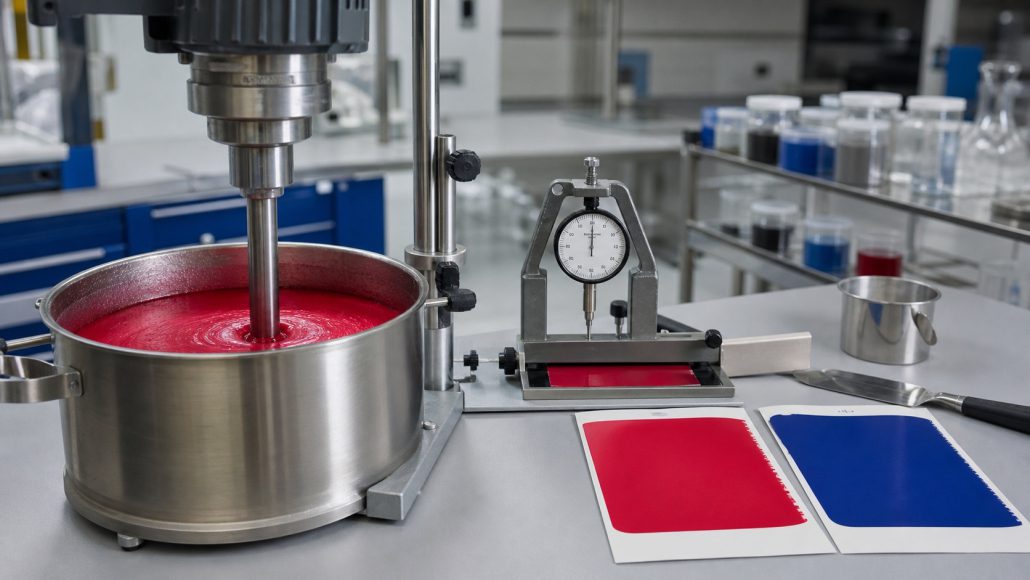
Pigment paste freeze thaw stability dispersion and redispersibility test

Visual Inspection Before Remixing

Open the container only after the sample reaches the specified evaluation temperature. Condensation on a cold open sample can change water content, so allow sealed equilibration when appropriate. Observe the surface, wall and bottom. Note a clear liquid layer, foam, skin, crystals, granules, rubbery gel, cracked mass, odor or package pressure. Measure the height or volume of any separated layer instead of writing only “slight separation.”

Use a clean spatula to probe the bottom at several locations. Soft sediment that lifts easily is different from a hard cake bonded to the container. Record whether the blade reaches the bottom, whether lumps smear or remain intact, and whether the product flows back into the channel. A simple redispersibility scale can be useful if photographs and operator training define each rating.

Do not approve solely because the paste becomes visually smooth. Subvisible agglomeration may reduce tinting strength, change undertone or load filters. Conversely, a product with modest syneresis may fully recover and perform normally. Visual findings guide the analytical work but do not replace it.

Viscosity Recovery and Flow-Curve Testing

Temperature has a large direct effect on viscosity, so exposed and control samples must be measured at the same equilibrated temperature. Record rheometer or viscometer model, geometry or spindle, speed or shear rate, sample conditioning, rest time and reading time. A single low-shear number may miss damage that appears during pumping or application.

Measure a flow curve when possible. Low-shear viscosity and yield stress relate to settling and package stability; medium shear relates to mixing and pumping; high shear relates to coating, printing or spray transfer. Compare the complete curve, thixotropic loop and recovery after shear. Freeze damage can increase low-shear structure while leaving high-shear viscosity similar, or it can destroy yield structure and increase settling risk.

Establish method precision before setting a tight tolerance. If duplicate control measurements vary by eight percent, a five-percent acceptance band is not defensible. Use an alert limit for drift and a rejection limit linked to production performance. Trend the exposed-to-control ratio by cycle number because a gradual change may reveal a marginal formulation even when the final value remains inside specification.

Hard Settling, Soft Settling and Redispersibility

Density differences naturally drive pigments downward. A well-designed paste uses particle stabilization and rheology to slow settling and keep sediment recoverable. Freezing can compress the particle bed or alter the structure that supports it. Hard settling is particularly serious because ordinary drum rolling or low-speed stirring may not restore the product.

Quantify recovery with a defined mixing ladder. Begin with the supplier’s normal instruction. If the paste remains nonuniform, increase time or energy in recorded steps. Take samples from the top, middle and bottom and compare solids, density or color strength. Uniform appearance at the surface does not prove that the bottom is recovered.

If high shear can recover a laboratory jar but the commercial customer receives a sealed drum with only a recirculation pump, the product has not passed a practical requirement. Supplier qualification must match the equipment available at the destination. Packaging design, agitator access and minimum order quantity can influence the decision as much as formulation chemistry.

Fineness, Filtration and Agglomerate Detection

A grind gauge identifies a coarse tail but may break weak agglomerates under the blade. Use one trained method, clean equipment and a defined interpretation point. Compare the control and exposed sample after equal conditioning. An increase in scratches or particles suggests irreversible association, skin fragments or contamination.

Filtration is often more predictive for ink, spray and precision-coating applications. Pass a defined mass through the production-relevant mesh or filter at controlled pressure and temperature. Record flow time, differential pressure, retained mass and appearance. Examine whether the residue is colored pigment, translucent polymer gel, packaging debris or dried skin. Each points to a different corrective action.

Microscopy can reveal flocculate morphology and help distinguish large soft clusters from hard particles. Particle-size instruments require careful dilution because the dilution medium can redisperse or further destabilize the sample. Use the method as comparative evidence, not an isolated certificate number.

Color Strength and Shade After Cold Exposure

Freeze damage can change optical performance before it becomes obvious in viscosity. Prepare exposed and control samples in the same fresh base at equal paste dosage, using identical weighing, mixing, film thickness and drying. Report relative tinting strength with L*, a*, b*, ΔE and visual undertone. The International Commission on Illumination provides authoritative colorimetry context, but the purchase agreement must still define the exact formula, illuminant, observer and instrument geometry.

Run a rub-up test when flocculation is possible. A larger rubbed-versus-unrubbed difference after cycling indicates that mechanical action changes pigment distribution. Also prepare a strength-adjusted drawdown: alter candidate dosage to match color depth, then evaluate remaining hue, gloss and opacity. This separates a simple strength shift from a broader compatibility failure.

Use an approved retained paste as the reference, not a theoretical color target. Protect the retain from freeze exposure, evaporation and repeated contamination. When replacing it, bridge old and new standards with replicate tests so historical trends remain meaningful.

pH, Conductivity, Solids and Density Diagnostics

In waterborne products, pH affects dispersant ionization, thickener efficiency, biocide performance and resin compatibility. Freezing can create local concentration gradients, and volatile neutralizers may be lost if the container leaks or is repeatedly opened. Measure pH only after standard temperature equilibration and defined mixing.

Conductivity can reveal changes in soluble salt concentration or contamination, although interpretation is formulation-specific. Nonvolatile content helps distinguish true dispersion failure from water loss. Density supports concentration and dosing checks. Compare these values as a diagnostic set: high viscosity with normal solids may indicate networking, while high viscosity with increased solids can indicate evaporation or package leakage.

Do not add water, neutralizer or defoamer merely to make a failed sample pass. Any recovery experiment should be separate from acceptance testing and fully documented. A product that requires unapproved correction after routine transport is not equivalent to the qualified grade.

Application Testing Is the Final Evidence

Laboratory physical tests cannot capture every interaction in the customer’s process. Evaluate the exposed paste in a representative coating, ink, fertilizer anti-caking coating, seed treatment or other defined formulation. Fix addition order, mixing energy, letdown time, substrate, film weight and cure. Compare process observations as well as finished color.

For waterborne coatings, monitor flocculation, foam, leveling, gloss, water resistance and viscosity after letdown. For flexographic ink, include circulation, filtration, anilox transfer and drying. For fertilizer or seed coating, examine sprayability, nozzle cleanliness, coverage uniformity, dust, rub-off and color after storage. A paste can recover in a beaker yet fail under low-shear addition or narrow nozzles.

Retain application panels or coated samples and document controlled photographs. Link failures to lot, package and exposure history. This E-E-A-T evidence is more useful to buyers and search systems than unsupported claims such as “excellent freeze stability.”
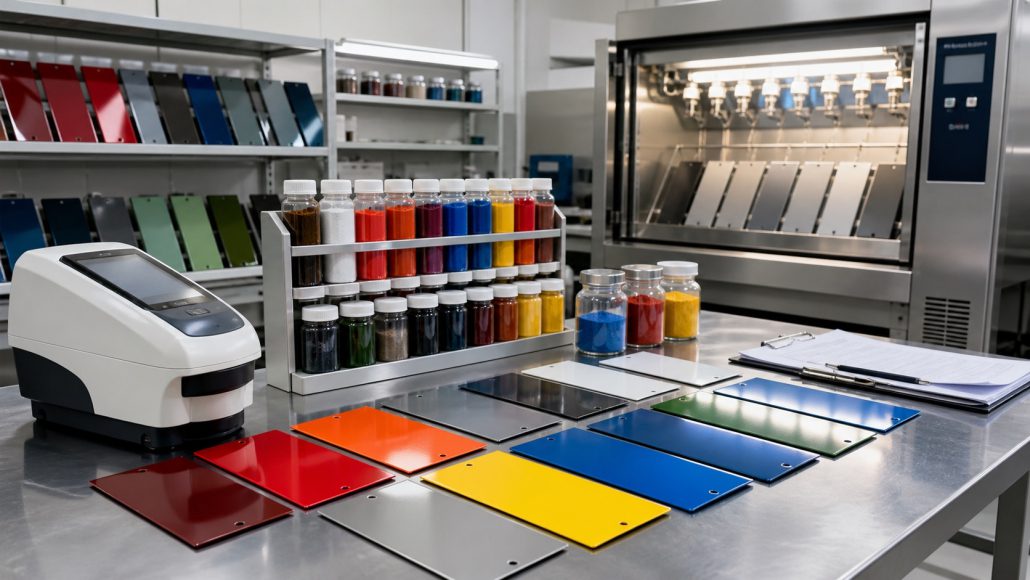
Pigment paste freeze thaw stability color strength and viscosity quality control

Common Failure Mechanisms

Dispersant desorption or bridging

Concentrated solutes and close particle contact during freezing can reduce steric or electrostatic protection. After thawing, particles remain linked and strength falls. Rub-up, microscopy and increased low-shear structure support this diagnosis.

Thickener network damage

Associative or cellulosic thickeners may rebuild differently after freezing. Viscosity can rise, fall or become time-dependent. Compare flow curves and recovery after controlled shear rather than relying on one spindle reading.

Emulsion or resin destabilization

If the paste contains resin or latex, freeze concentration can destabilize polymer particles and produce translucent gel or grit. Filtration residue and compatibility testing help distinguish polymer damage from pigment agglomeration.

Crystallization of carrier components

Glycols, surfactants, waxes or other ingredients can crystallize at low temperature. Slow disappearance during warming may look like reversible grit, while persistent crystals create application defects. Thermal analysis may be useful during supplier investigation.

Packaging and headspace effects

Expansion, contraction and ice formation can stress seals, draw air or moisture through closures and create wall deposits. Compare container materials and fill levels during validation. Damaged packages should be quarantined even when the bulk paste appears acceptable.

Pigment Paste Freeze Thaw Stability: Recovery or Rejection?

Recovery is acceptable only when the written method allows it and the material returns to all critical specifications using equipment available to the customer. Soft separation that disappears under normal homogenization, followed by normal viscosity, filtration, color and application performance, may be acceptable. Record the recovery energy and verify stability after rest.

Reject or escalate material with hard sediment, persistent gel, coarse residue, abnormal odor, package leakage, significant strength or undertone shift, unstable viscosity, failed application performance or repeated separation after mixing. Do not blend a failed lot into a good lot without an approved concession and validated result. Such blending destroys traceability and can enlarge the affected quantity.

A commercial concession should identify the specific lot, destination, corrected handling, test evidence and customer authorization. It must not silently become the new standard. Recurring concessions indicate that the formulation, packaging or shipping control requires corrective action.

Supplier–Buyer Correlation Study

When supplier and buyer disagree, use sealed split samples from the same package. Include an unexposed control and exposed material. Both laboratories should follow one protocol with the same reference, mixing ladder, measurement temperature, base formulation and instrument settings. Exchange raw data, not only pass/fail conclusions.

First compare repeatability within each laboratory. If one site cannot reproduce its own result, cross-site bias cannot be assigned. Next compare the same prepared drawdown or stable panel to separate instrument difference from preparation difference. Then compare independently prepared samples to evaluate the complete method.

Agree in advance on a referee laboratory or decision route. Define sample custody, seal numbers and timing. Freeze-related disputes become harder to resolve after multiple packages are opened, warmed and mixed without records.

Packaging and Logistics Controls

Pigment paste freeze thaw stability must extend from the laboratory to commercial packaging. Qualification is incomplete if the product passes in a small jar but fails in commercial packaging. Test representative pails, drums or totes where risk warrants. Evaluate wall temperature, core temperature, thawing time and mixing access. Insulated covers, heated storage, pallet position and shipment timing may be more cost-effective than reformulating a specialized paste.

Labels should state the storage range and actions after suspected freezing. Shipping documents should identify temperature-sensitive goods where applicable. Warehouse procedures need a quarantine area, temperature records and a rule against using a frozen package before quality review. Train receiving staff to photograph condition and preserve seals.

For critical winter routes, use temperature indicators or data loggers under a defined plan. One logger at a container door may not represent every pallet, so position devices based on a mapping study. Review data with the supplier and logistics provider instead of treating the logger as a simple claim tool.

Write a Freeze–Thaw Purchase Specification

  • Exact pigment paste grade, carrier system and approved manufacturing site.
  • Recommended storage range and absolute minimum exposure condition.
  • Test sample size, container, headspace and preconditioning.
  • Minimum temperature, verified sample temperature, hold time and cycle count.
  • Thawing temperature, duration and mixing permitted between cycles.
  • Visual separation and redispersibility rating with photographic examples.
  • Viscosity method and exposed-to-control acceptance range.
  • Fineness, filtration residue, pH, solids and density limits where relevant.
  • Relative strength, L*a*b*, ΔE, rub-up and application criteria.
  • Packaging, temperature monitoring, retain samples and change notification.
  • Quarantine, referee testing, complaint response and concession authority.

Supplier Qualification for Pigment Paste Freeze Thaw Stability

  • What lowest temperature and exposure time were validated, and on what package size?
  • Were tests run on multiple normal production lots or one optimized sample?
  • What raw materials provide freeze protection and how are they controlled?
  • Does the supplier measure actual sample temperature during cycling?
  • Which properties are checked after thawing, and what are the numerical limits?
  • How are pigment source, dispersant, thickener, biocide and carrier changes managed?
  • Are lot-specific COA results actual measurements or standard statements?
  • How long are retained samples kept and how are cold-weather complaints investigated?
  • Can the supplier support a split-sample correlation and pilot shipment?
  • What packaging and winter logistics options are available?

Cost-in-Use and Procurement Decisions

Pigment paste freeze thaw stability affects total delivered cost. Compare suppliers on the cost of conforming product delivered through the real route. Include insulation, heated storage, temperature monitoring, rejected freight, disposal, emergency replacement, shade adjustment, filter changes, cleaning, downtime and customer risk. A slightly higher paste price may be economical if the formulation has a wider cold-weather margin and stronger logistics control.

Do not use freeze resistance as the only decision factor. The approved grade must also meet color, strength, compatibility, regulatory, durability and supply requirements. If freezing is rare and avoidable, logistics control may be preferable to adding a large amount of humectant that changes drying or water resistance. Make the decision from application trials and exposure data.

For dual sourcing, qualify each supplier independently. Two pastes with the same color name or Color Index may require different storage limits and recovery procedures. Purchasing systems should prevent unreviewed substitution and maintain the correct specification with each supplier code.

Pigment Paste Freeze Thaw Stability Incoming Inspection

  1. Quarantine the affected packages and stop production release.
  2. Photograph labels, seals, deformation, leakage and pallet position.
  3. Download temperature records and document route and storage history.
  4. Allow sealed packages to equilibrate under the approved condition.
  5. Select samples across exposed locations without prematurely homogenizing evidence.
  6. Compare with an unaffected retain using the approved test sequence.
  7. Contact the supplier with raw observations and split-sample availability.
  8. Release, rework, return or reject only under documented authority.

Avoid repeated retesting until one result passes. Preserve the first result and investigate assignable causes. If only part of a shipment was exposed, maintain package-level identity. Composite sampling can hide a localized failure and complicate a legitimate freight or supplier claim.

Frequently Asked Questions

How many freeze–thaw cycles should pigment paste pass?

There is no universal number. Choose cycles from credible transport risk, product sensitivity and customer requirements. Screening at one, three and five cycles often shows progression, but the agreed protocol controls the decision.

Can frozen pigment paste simply be warmed and mixed?

Only if the supplier’s validated procedure allows it and all critical properties recover. Visual smoothness is insufficient; verify viscosity, filtration, strength, shade and application performance.

Why does viscosity increase after thawing?

Particles may form a stronger network, dispersant can bridge, thickeners can associate differently, or carrier components can crystallize. Compare flow curves, solids, pH, microscopy and control samples.

Why does color strength fall when fineness still passes?

Soft flocculation can reduce optical development while breaking under a grind-gauge blade. Rub-up, spectral comparison, microscopy and controlled redispersion provide better evidence.

Is one frozen jar enough to approve a supplier?

No. Use independent replicates and multiple representative production lots. Confirm the selected formulation in commercial packaging or a monitored pilot shipment when the risk is material.

Should the sample be mixed between cycles?

The protocol must specify this. Mixing can simulate normal handling but may hide cumulative damage. Many evaluations keep samples undisturbed between cycles and mix only for the final standardized recovery test.

What temperature should be used?

Use route data and the supplier’s storage limit. The chamber set point is not the same as sample-core temperature, so validate equilibration for the chosen mass and container.

Can a passed freeze–thaw test replace shelf-life testing?

No. Freeze cycling and ambient aging stress different mechanisms. Maintain separate shelf-life, heat-aging and application-stability programs.

What information should be included in a complaint?

Provide lot and package numbers, route, dates, logger data, photographs, thawing and mixing history, raw test results, application observations and an unopened split sample when available.

How should buyers compare quotations?

Compare equal application performance and full delivered cost, including winter packaging, monitoring, recovery labor, production risk, technical support and change control—not only price per kilogram.

Related Pigment Paste Resources

Use pigment paste compatibility testing for waterborne coatings when the main risk is binder interaction, pigment paste tinting strength testing for incoming color control, the hard-settling recovery guide for normal-storage sediment, and the flexographic pigment paste guide for press-specific qualification. This article owns the freeze–thaw and cold-chain intent so the pages support one another without targeting the same primary query.

Request a Cold-Chain Sample and Quotation

Send Hengyi Technology your carrier system, target color, application, minimum route temperature, package size, expected cycle or hold condition, current paste problem, test method, annual volume and destination. We can discuss candidate pigment paste grades, representative commercial-lot samples, COA and documentation, winter packaging and a side-by-side freeze–thaw qualification plan.

Contact Hengyi Technology to request a pigment paste sample, cold-chain review and commercial quotation.

Final Purchasing Principle

Pigment paste freeze thaw stability is a system property involving formulation, packaging, logistics, recovery equipment and final application. A credible program uses a verified exposure profile, unexposed control, standardized remixing, rheology and color testing, application evidence and supplier change control. That approach prevents false approvals based on appearance, reduces unnecessary rejection of recoverable material and gives buyers a defensible basis for winter sourcing decisions.

Pigment Paste for Flexographic Printing Inks: Viscosity, Filtration, Foam, Color Strength and Supplier Qualification

Quick Answer: Pigment paste for flexographic printing inks must be qualified for the complete press system, not just shade. Compare candidate lots for viscosity at press temperature, filtration pressure, foam release, fineness of grind, color strength, rub resistance, storage stability, anilox transfer and supplier consistency. Run a controlled drawdown and press simulation using the actual resin, solvent or water system, anilox volume, drying conditions and final filter.

Flexographic ink manufacturers face a narrow operating window. A paste can look correct in a beaker and still foam in circulation, plug a filter, overload an anilox cell, dry on the plate, or change viscosity during a long print run. This procurement guide connects laboratory QC to press performance and gives buyers a defensible route to sampling, approval and an inquiry.

Pigment paste quality testing and filtration sample preparation
Controlled QC links pigment paste dispersion and filtration to repeatable ink transfer.

Why flexographic ink is different from general coatings

Flexographic inks are transferred through an anilox roll, plate, substrate and dryer at high speed. Viscosity, surface tension, foam, drying and wetting therefore interact with the colorant. A paste that is acceptable for a high-build coating may be too viscous for anilox metering or may contain a coarse tail that accumulates in circulation. Qualification should specify the press speed, anilox volume, substrate, drying profile and color tolerance.

Water-based, solvent-based, UV-curable and low-migration packaging inks require different compatibility screens. The carrier, dispersant, resin and additives can change the paste’s rheology and filtration behavior. A supplier should provide test conditions, not a single unqualified viscosity number.

Quick Answer: Pigment paste tinting strength should be tested by comparing a candidate batch with an approved reference paste in the same controlled coating formula, at equal pigment or equal paste dosage, using identical mixing energy, film thickness, drying conditions, and color-measurement settings. Measure relative tinting strength together with L*, a*, b*, delta E, viscosity, fineness of grind, gloss, opacity, and storage stability. A batch should not be approved on visual shade alone. The best incoming-quality specification connects laboratory results with production behavior, defines repeatability and acceptance limits, and requires investigation whenever a change in strength is accompanied by rheology, dispersion, or compatibility drift.

For a coatings manufacturer, pigment paste is not merely a color ingredient. It affects shade accuracy, hiding power, gloss, viscosity, line speed, rework, and the cost of every finished kilogram. Small changes between lots can force operators to add extra paste, adjust several colorants, extend mixing time, or hold production while the laboratory investigates. A well-designed pigment paste tinting strength test therefore protects both product quality and purchasing economics.

This guide explains how coating laboratories, quality-control teams, and buyers can build a practical batch-consistency program. It covers sampling, reference standards, test formulas, drawdown preparation, spectrophotometer settings, strength calculations, common sources of error, accelerated storage, supplier documentation, and acceptance decisions. The purpose is not to prescribe one universal method, but to show how to create a controlled method that is relevant to the customer’s actual coating system.

pigment paste tinting strength laboratory drawdown test

Why Tinting Strength Matters in Pigment Paste Purchasing

Tinting strength describes how effectively a colorant changes the color of a defined white or colored system. In practical coating work, it is usually expressed as a relative percentage against an approved reference batch. A result of 100% means the candidate produces the same defined color effect as the standard under the specified test conditions. A value above or below 100% indicates a stronger or weaker result, although the exact calculation depends on the instrument software and method.

Strength directly affects dosing cost. If a new lot is five percent weaker, production may need approximately five percent more paste to reach the same target, but the correction is not always perfectly linear. More paste can also introduce additional water, solvent, dispersant, humectant, resin, or surfactant into the coating. These carrier components may change viscosity, dry time, water resistance, foam, gloss, or film integrity. A strength difference can therefore create both a color correction and a formulation change.

Strength is also an early warning signal. A shift may reflect pigment-content variation, incomplete dispersion, particle-size change, different surface treatment, excess moisture, incorrect letdown, sedimentation, or a raw-material substitution. The laboratory should evaluate strength together with shade and physical properties so it can distinguish a normal manufacturing variation from a meaningful change in product identity or process capability.

Tinting Strength Is Not the Same as Shade or Delta E

Three related measurements are often confused. Shade describes the color position and undertone of the paste after it is incorporated into a specified system. Delta E describes the numerical color difference between the candidate and reference under defined measurement conditions. Tinting strength estimates the relative coloring power. A candidate can have acceptable strength but an unacceptable undertone. It can also match visually at one dosage while requiring more material than the reference.

Consider two blue pigment pastes. The candidate may be 102% in strength but slightly greener than the standard. Reducing its dosage can correct depth, yet the green undertone remains. In a single-color coating this may be visible; in a multi-pigment formula it may require extra red or violet colorant. The final correction cost and metamerism risk can be larger than the apparent two-percent strength advantage.

For this reason, a report should include relative strength, L*, a*, b*, delta E, and a visual assessment under agreed lighting. If the coating will be sold in multiple markets, evaluate the relevant illuminants and observer settings. A pass/fail decision based on one delta E value without examining strength, hue direction, and production correction can hide commercially important differences.

Build the Test Around the Actual Coating System

A pigment paste can behave differently in acrylic, polyurethane, alkyd, epoxy, vinyl, or silicone-modified coatings. Waterborne and solventborne systems place different demands on wetting agents, resin compatibility, pH, and solvent balance. Even within waterborne acrylics, a change in emulsion type, neutralizer, thickener, or surfactant can alter color development and flocculation.

The most useful quality-control formula is therefore a simplified but representative version of the customer’s production system. It should be sensitive enough to reveal changes but stable enough to reproduce. A white-base letdown is common because titanium dioxide creates a measurable tint and helps expose undertone. For transparent pigments, a clear-base or masstone drawdown may be added to evaluate transparency, haze, and chroma.

Document every component by supplier, grade, and lot-control policy. Fix the paste-to-base ratio, solids, mixing sequence, container geometry, blade or mixer type, speed, time, and temperature. If the method changes whenever an operator runs the test, the resulting variation may be larger than the difference between pigment paste lots.

Recommended Test Matrix

Test What it reveals Typical comparison
Masstone drawdown Full shade, gloss, transparency, surface defects Candidate versus retained reference
White tint Tinting strength and undertone Fixed paste-to-white-base ratio
Strength-adjusted tint Residual hue difference after depth correction Candidate dosage adjusted to reference strength
Fineness of grind Agglomerates and dispersion consistency Hegman or micrometre reading
Viscosity and flow curve Rheology drift and compatibility Defined temperature, spindle, speed, and time
Rub-up test Flocculation and color development Rubbed area versus untouched film
Gloss and haze Particle and dispersion effects on appearance Specified angle and film thickness
Storage stability Settling, syneresis, viscosity and shade drift Ambient and accelerated aging
Compatibility ladder Robustness across customer bases Several resin or additive systems

Sampling: The First Control Point

No laboratory method can compensate for a poor sample. Pigment paste can separate during transport or storage, especially when the product has a wide density difference between pigment and carrier. Taking material from the surface of an unmixed drum may produce a weak sample, while taking only settled material from the bottom may produce an artificially strong result. Sampling instructions must reflect packaging size and the supplier’s recommended homogenization procedure.

Before opening, record product code, lot number, manufacturing date, package condition, seal status, and storage temperature. If the specification allows remixing, define the equipment and time. Avoid entraining excessive air. For large containers, a composite sample from several locations may be necessary. For routine deliveries, establish a statistically justified number of packages to sample rather than choosing only the easiest drum.

Place the sample in a clean, compatible, tightly closed container and label it immediately. Retain enough material for confirmation testing and supplier investigation. A reference lot should be stored under controlled conditions, protected from freezing, heat, evaporation, and contamination. Replace the reference before aging changes its viscosity or color performance.

Reference Standards and Control Samples

The approved reference should represent a lot that performed successfully in both laboratory and production trials. It should not be an idealized laboratory sample that was never used at scale. Assign a unique reference number, approval date, storage condition, and replacement date. Keep sealed portions so repeated opening does not change water or solvent content.

A daily control sample can help distinguish instrument or operator problems from material variation. Test the control before evaluating incoming lots. If the control falls outside its established range, stop and investigate the method rather than rejecting the delivery. Possible causes include an aging white base, incorrect weighing, a damaged film applicator, dirty glass panels, instrument calibration drift, or changes in room temperature and humidity.

When a reference supply becomes low, bridge the old and new standards with multiple replicate tests. Do not simply nominate the latest passing lot. Record the relationship between standards so historical data remain interpretable. For critical automotive, architectural, or industrial coatings, statistical control charts can show whether the method and product remain centered over time.

Step-by-Step White-Tint Test

  1. Condition materials. Bring the pigment paste, white base, panels, and equipment to the defined laboratory temperature. Gently homogenize according to the method.
  2. Calibrate balances and instrument. Use a balance appropriate for the small dosage. Calibrate the spectrophotometer with its current certified tile or standard.
  3. Weigh the white base. Use one homogeneous batch for the candidate and reference. Record actual weights, not only nominal targets.
  4. Add pigment paste. Weigh the defined amount directly into the base. Avoid loss on tools or container walls.
  5. Mix consistently. Fix mixer type, blade diameter, speed, time, container size, and batch volume. Scrape the walls only at defined stages.
  6. Deaerate if required. Use the same rest time or vacuum treatment for every sample.
  7. Prepare drawdowns. Apply candidate and reference side by side with the same applicator, substrate, direction, pressure, and wet-film thickness.
  8. Dry or cure. Control flash time, temperature, humidity, oven schedule, and panel position.
  9. Measure. Use the same instrument geometry, aperture, illuminant, observer, specular setting, backing, and measurement locations.
  10. Report and interpret. Record strength, color values, delta E, visual undertone, gloss, and any surface abnormality.

Mixing Energy and Color Development

A paste that is already well dispersed should normally develop color with moderate letdown mixing. Excessive high-shear mixing can hide compatibility weaknesses or change temperature enough to affect rheology. Insufficient mixing can leave streaks and produce a false low-strength result. The method must use enough energy to distribute the paste uniformly without becoming a second grinding process.

Validate the chosen mixing time by creating a color-development curve. Prepare identical samples at several mixing times and plot strength or delta E. Select a time after the curve reaches a stable plateau. If the result continues changing for a long period, investigate whether the paste is difficult to incorporate, the base is incompatible, or the equipment is inadequate.

Monitor sample temperature because high-speed mixers convert energy into heat. Temperature changes viscosity and can affect flocculation, foam, evaporation, and film leveling. A controlled laboratory mixer with recorded speed is preferable to manual stirring. If manual preparation is unavoidable, method precision must be established with repeated tests by different operators.

pigment paste batch consistency spectrophotometer quality control

Film Preparation and Measurement Conditions

Uneven film thickness can create misleading differences in color, opacity, and gloss. Use clean, flat substrates and a calibrated applicator. The substrate color and porosity must be controlled. For opaque coatings, black-and-white contrast cards allow simultaneous assessment of hiding. For transparent systems, clear film or standardized white and black backings may be needed.

Drying conditions can change color development. Waterborne coatings may show different coalescence and surfactant distribution at low temperature or high humidity. Baking systems require controlled metal temperature, not merely oven-air temperature. Two panels cured in different positions can receive different airflow or heat. Record the conditions and measure only after the defined conditioning time.

Spectrophotometer geometry matters. A sphere instrument with specular included can report differently from a 45/0 instrument or specular-excluded setting. Aperture size should suit the film uniformity. Measure several areas and report the average and spread. If visual assessment is part of approval, use a maintained light booth and trained observers rather than uncontrolled office lighting.

How Relative Tinting Strength Is Interpreted

Many color-measurement programs calculate strength using reflectance data and a Kubelka-Munk relationship, often expressed through K/S values. The exact output depends on pigment behavior, wavelength selection, opacity, and software settings. Laboratories should use one validated calculation and avoid comparing percentages generated by different methods as if they were interchangeable.

A result such as 97% may be acceptable in one application and unacceptable in another. The tolerance should be based on production capability, dosing accuracy, correction cost, and final-product specification. A narrow tolerance has little value if laboratory repeatability is poor. First determine the method’s repeatability and reproducibility, then set an acceptance band that reliably distinguishes normal test noise from product change.

Do not automatically compensate a weak batch and approve it. Review whether its viscosity, shade, dispersion, and storage behavior remain acceptable. A strength-adjusted drawdown is useful: change the candidate dosage to match the reference depth, then compare the remaining hue and appearance. This shows whether a simple dosage correction is technically and economically reasonable.

Fineness of Grind and Dispersion Diagnostics

A grind gauge is a quick screen for coarse particles or agglomerates, but it does not measure the full particle-size distribution. Run the test with a consistent draw speed and interpret both the first scratch pattern and the point of dense particles according to the agreed method. Clean the gauge immediately to prevent dried material from creating false readings.

A passing grind result does not prove complete dispersion. Soft flocculates can break under the gauge blade and still reduce strength or gloss in a coating. Microscopy, particle-size analysis, filtration residue, rub-up, and gloss can provide additional evidence. When strength drops while grind remains unchanged, consider flocculation, crystal change, pigment content, or base compatibility rather than assuming coarse contamination.

For fine industrial finishes, filtration through a defined mesh or screen can reveal hard particles that cause surface defects or spray-gun blockage. Report residue by mass and inspect its character. Dried skin, packaging debris, resin gel, and pigment agglomerates require different corrective actions.

Viscosity, Rheology, and Density

Viscosity is one of the fastest indicators of batch drift, but a single number is meaningful only when the test conditions are fixed. Record instrument, spindle or geometry, speed or shear rate, temperature, sample conditioning, and measurement time. Thixotropic pastes may show different values depending on previous mixing and rest history.

Measure more than one shear condition when rheology affects pumping, dosing, sag, or leveling. A paste can match low-shear viscosity but differ at high shear. Yield stress influences settling and container emptying. Flow curves may help diagnose dispersant balance, pigment-volume changes, or thickener variation.

Density can support mass-to-volume dosing control and detect major composition changes. Solids or nonvolatile content may reveal excess carrier or evaporation. Together with strength, these tests help determine whether a result reflects pigment concentration or color-development efficiency. For example, low strength with low solids suggests dilution, while low strength at normal solids may indicate dispersion or pigment-quality change.

Rub-Up, Flooding, Floating, and Flocculation

The rub-up test compares a freshly rubbed area with the untouched film. A large color difference suggests that mechanical action has changed pigment distribution or deagglomeration. In multi-pigment coatings, selective flocculation can produce flooding, floating, or shade drift during drying. The result depends on film timing, rubbing procedure, and coating rheology, so the method must be standardized.

Flocculation can reduce color strength even when the pigment paste itself passes its release tests. The interaction between paste dispersant and coating resin, surfactant, thickener, or coalescent may be responsible. Test the paste in representative bases and perform a compatibility ladder when it will be sold to diverse customers.

If a new batch shows a larger rub-up difference than the standard, investigate before correcting the shade. More dispersant is not always the answer; excess dispersant can reduce water resistance, increase foam, or destabilize other pigments. Compatibility work should consider pigment surface area, dispersant chemistry, pH, ionic strength, and the order of addition.

Storage and Accelerated Stability Testing

Incoming tests describe the sample at one moment. Pigment paste must also remain usable during storage and after incorporation into a coating. Retain samples at the recommended storage temperature and inspect for settling, syneresis, skin, odor, microbial change, viscosity drift, and color change. Record whether sediment is easily redispersed or forms a hard compact layer.

Accelerated heat storage can help compare batches, but it does not perfectly predict real shelf life. Select a temperature that stresses the system without creating an unrealistic failure mechanism. Freeze-thaw testing is important only when the product may encounter low-temperature transport or storage. Use defined cycles and allow samples to equilibrate before evaluation.

After aging, repeat strength, shade, viscosity, grind, and compatibility tests. A paste can look visually stable yet lose color development or increase flocculation. Include a control reference in every aging study. If the candidate and reference age differently, the result is more meaningful than an isolated pass/fail observation.

Typical Acceptance Criteria

Acceptance limits must be agreed between supplier and customer and linked to the application. A routine specification may include identity, appearance, relative tinting strength, shade difference, delta E, viscosity range, fineness of grind, nonvolatile content, density, pH for waterborne products, and storage stability. Sensitive applications may add gloss, haze, filtration residue, rub-up, heavy metals, or application-specific resistance tests.

A useful specification states the method beside every limit. “Viscosity: 2,000–3,000 mPa·s” is incomplete without temperature, spindle, speed, conditioning, and instrument. “Delta E below 1.0” is incomplete without formula, illuminant, observer, geometry, and surface condition. “Strength 100 ± 5%” is incomplete without the reference, base, dosage, and calculation.

Use warning limits as well as rejection limits where appropriate. A value inside the formal specification but moving steadily toward one boundary may signal process drift. Trend charts can reveal gradual changes before customers experience failure. A supplier should investigate recurring near-limit results instead of relying on the fact that each individual lot technically passed.

Measurement-System Analysis and Laboratory Precision

Before setting narrow tolerances, determine how much variation comes from the method. Ask several trained operators to prepare repeat samples from the same homogeneous paste and reference. Repeat the work on different days. Analyze variation from weighing, mixing, drawdown, curing, and instrument measurement. The objective is to understand the smallest material difference the laboratory can reliably detect.

If repeatability is poor, improve the method before tightening the product specification. Common improvements include larger test batches to reduce weighing error, automatic mixing, temperature control, fixed drawdown equipment, better panel conditioning, and multiple measurements. Training and clear photographs of acceptable film quality can also reduce operator differences.

Instrument maintenance is equally important. Follow calibration schedules, keep optical areas clean, monitor standard tiles, and document software settings. Color data generated after changing instrument geometry or calculation parameters should not be merged with historical data without a bridging study.

Troubleshooting Out-of-Specification Results

Low strength with normal shade direction

Check weighing, reference condition, paste homogenization, solids, pigment content, and mixing energy. Repeat with retained samples. If the difference is confirmed, evaluate whether dosage correction affects coating properties and cost.

Strength passes but undertone shifts

Review pigment chemistry, crystal form, particle size, raw-material source, and dispersion conditions. Prepare a strength-adjusted comparison and evaluate metamerism. A shade correction may require another colorant and create downstream complexity.

High viscosity and low strength

Consider flocculation, excess surface area, incorrect dispersant level, evaporation, microbial change, or low compatibility. Check rub-up, solids, pH, microscopy, and storage history.

Coarse particles or filtration residue

Inspect residue to identify pigment agglomerates, dried skin, resin gel, or foreign contamination. Review milling, screening, packaging cleanliness, and drum sealing. Do not assume additional customer mixing will solve hard contamination.

Laboratory result passes but production fails

Compare scale, shear, order of addition, temperature, water or solvent quality, and aging time. The laboratory formula may be too forgiving or unrepresentative. Update the qualification method using production evidence.

Supplier Qualification for Pigment Paste

A supplier should demonstrate control of raw-material identity, pigment loading, dispersion, carrier composition, filtration, filling, and traceability. Request a technical data sheet, safety data sheet, sample certificate of analysis, regulatory declarations, shelf-life statement, storage guidance, and change-notification policy. Confirm whether results on the COA are actual lot measurements or standard specification statements.

Audit questions should cover batch size, milling equipment, endpoint control, cleaning, contamination prevention, retained samples, calibration, nonconforming-material handling, and complaint investigation. Ask how the supplier manages changes to pigment source, dispersant, biocide, resin, water quality, solvent, and packaging. A seemingly minor change can affect coating compatibility.

Qualification should include at least three representative lots when the application is critical. Run laboratory tests and one or more production trials. Record dosing accuracy, mixing time, filtration, shade adjustment, line cleaning, yield, and finished-film performance. Approve the grade only after technical, quality, supply, and commercial requirements are all satisfied.

Purchasing Checklist

  • Define the exact pigment paste grade, color index where applicable, carrier type, and intended coating system.
  • Specify relative tinting strength method and acceptance band against an approved reference.
  • Define shade, delta E, undertone, and visual-lighting requirements.
  • Record viscosity method, fineness, solids, density, pH, and storage requirements.
  • Confirm packaging, net weight, batch size, shelf life, and transport-temperature limits.
  • Request lot-specific COA, SDS, TDS, regulatory declarations, and traceability.
  • Require advance notification for pigment, dispersant, carrier, process, site, or packaging changes.
  • Evaluate total color cost at equal final shade, not only price per kilogram of paste.
  • Check capacity, lead time, safety stock, minimum order, and complaint-response process.
  • Retain approved and incoming samples under controlled conditions.

Frequently Asked Questions

What is a good tinting-strength tolerance for pigment paste?

There is no universal tolerance. Many industrial methods use a range around the approved reference, but the correct limit depends on laboratory precision, coating sensitivity, dosage system, correction cost, and final-product tolerance. Establish method capability before agreeing on the band.

Can delta E replace tinting-strength testing?

No. Delta E measures total color difference under defined conditions, while strength estimates coloring power. Two samples can have similar delta E but different strength and undertone. Report both when batch economics and shade correction matter.

Should testing use equal paste weight or equal pigment solids?

Equal paste weight reflects the delivered product and normal dosing. Equal pigment solids can help diagnose concentration effects. For routine receiving inspection, use the agreed commercial basis and add solids data when investigation is needed.

Why does strength change after storage?

Settling, flocculation, evaporation, microbial activity, dispersant redistribution, temperature history, or incomplete remixing can change apparent strength. Repeat testing after controlled homogenization and compare viscosity, solids, and grind.

Is a Hegman grind test enough to approve pigment paste?

No. It is useful for coarse particles but does not fully describe particle distribution, soft flocculation, strength, shade, gloss, compatibility, or storage stability. It should be one part of a broader release method.

How many batches should be tested during supplier qualification?

For a critical coating, three or more representative production lots provide better evidence than one optimized sample. Include normal manufacturing variation and complete at least one realistic scale-up trial.

Can a weaker lot be accepted with a price adjustment?

Only after technical review. Extra paste changes carrier contribution, viscosity, drying, water or solvent balance, and inventory usage. Calculate total correction cost and confirm the finished coating remains within specification.

What information should be sent with a pigment paste inquiry?

Provide the target shade, binder, waterborne or solventborne system, pigment-paste dosage, curing conditions, film requirements, current problem, test methods, annual volume, packaging preference, and regulatory market. This allows a supplier to recommend and sample the correct grade.

Technical and Commercial Evaluation With HengyiTek

HengyiTek supports coating manufacturers and distributors that need consistent pigment paste performance, documented quality control, and practical sample qualification. Our discussions begin with the customer’s coating chemistry, shade target, processing equipment, viscosity window, durability requirements, and receiving-test method. This application information is more useful than selecting a paste by color name alone.

For related information, review the HengyiTek product portfolio, our pigment paste product information, and our guide to pigment paste compatibility testing for waterborne coatings. General colorimetry terminology and international measurement work can be referenced through the International Commission on Illumination.

Request a Sample and Batch-Consistency Review

Send HengyiTek your white base or resin type, target color, current paste, test ratio, tinting-strength method, viscosity requirement, application process, annual demand, and any batch-consistency problem. We can discuss candidate grades, arrange samples, and help structure a side-by-side evaluation. For the fastest technical response, include your approved reference data, drawdown conditions, instrument settings, and photos or measurements from the failed batch.

Flexographic press simulation

After laboratory tinting-strength testing, run a press-relevant simulation. Circulate the ink through a representative pump, filter, hose and anilox or cell geometry for a defined time. Record inlet and outlet viscosity, temperature, pressure, foam height, filter differential pressure and shade at the beginning and end. Print a solid patch, fine text, reverse type and a screened tint. Inspect pinholes, mottle, dirty print, streaks and drying on the plate.

Use an approved paste as the control and compare at equal color strength, not only equal mass. If the candidate reaches color at a lower dosage, calculate the effect on viscosity, drying, cost per printed square meter and filter loading. Retain printed samples for rub, scuff, migration and storage review.

Supplier RFQ for flexographic pigment paste

  • Ink chemistry and resin or binder system
  • Water, solvent, UV or low-migration application
  • Target shade, color strength and ΔE limit
  • Press speed, anilox volume, substrate and dryer profile
  • Viscosity range at test temperature and shear rate
  • Fineness, filterability, foam tendency and storage stability
  • Recommended dosage, let-down sequence and dilution method
  • CoA, SDS, restricted-substance statement and change control
  • Sample quantity for lab, pilot press and customer approval
  • Lead time, lot traceability, technical support and inquiry contact

FAQ for buyers

What viscosity should a flexographic pigment paste have?

There is no universal value. Set a range for the actual ink system and measure at a defined temperature and shear condition. The final ink, not the paste alone, must stay inside the press window.

How can foam be reduced?

Check dispersant, surfactant, pump shear, return-line design and defoamer compatibility. Test the candidate in circulation; a beaker shake test is not enough.

Why can an ink filter plug even when fineness passes?

Hard agglomerates, gels, dried skins or contamination may form during storage or let-down. Combine grind gauge, pressure-rise, retained-residue and aging tests.

Inquiry CTA

Send Hengyi Technology your pigment type, carrier, resin, target color, press speed, anilox volume, filter rating and annual demand. We can recommend pigment paste candidates, arrange samples, review press data and support supplier qualification.

Pigment paste for fertilizer color control and coated granule uniformity

Pigment Paste for Fertilizer Granules: Color Uniformity, Antioxidant Compatibility, Storage Stability and Supplier Qualification

Quick answer: A pigment paste for fertilizer must color every granule consistently without changing nutrient release, coating adhesion, caking behavior or storage life. Qualify the paste in the actual fertilizer matrix, with the actual antioxidant, binder, moisture level and drying profile. Measure shade uniformity, dosage accuracy, migration, wet rub, dusting, caking and accelerated storage. A supplier should provide batch traceability, solids data, stability guidance, regulatory declarations and technical support for plant trials.

Fertilizer color is used for product identification, grade differentiation, application guidance and brand recognition. The colorant is exposed to salts, acids, alkaline surfaces, oxidizing ingredients, heat, humidity, abrasion and long storage. A paste that performs well in water-based paint may fail on urea, NPK, MAP, DAP or coated potash granules. This guide provides a procurement and process framework.

Why fertilizer pigment paste needs a dedicated qualification

Fertilizer granules are not inert plastic beads. Their surface can be porous, hygroscopic, alkaline or acidic. Granulation temperature and drying can remove water from the paste quickly, leaving uneven rings or dark spots. High-salt surfaces can also destabilize a dispersant. The result may be shade variation, dust, transfer to packaging or premature fading.

  • Define the fertilizer chemistry and pH.
  • Record granule size, porosity, surface oil and moisture.
  • Specify the application equipment, spray rate and mixing time.
  • Set color tolerance using an instrument, not only visual approval.
  • Test the finished granule after conditioning and storage.

Color uniformity and dosage control

Uniform color depends on droplet size, atomization, wetting, mixing time and the ratio of paste solids to binder. Use a calibrated pump and record actual mass gain on a representative batch. Sample from the beginning, middle and end of a run. Compare at least ten granules from each location under the same light and measure L*, a*, b* where practical.

Control point What to measure Why it matters
Paste Solids, viscosity, pH, density Predicts pumpability and dose
Spray Flow, pressure, droplet pattern Prevents stripes and wet spots
Granule Delta E, coverage, rub resistance Confirms commercial appearance
Storage Caking, bleed, shade shift Protects shelf life and claims

Antioxidant and fertilizer compatibility

When fertilizer is combined with antioxidant-treated organic materials, coated urea or specialty micronutrients, the paste must remain compatible with the complete formulation. Antioxidants can change surface energy and may interact with dispersants. Ask the supplier to test the exact antioxidant, binder, anti-caking agent and coating oil used in production.

Run a compatibility jar test first. Mix paste, binder and fertilizer extract at the intended ratio, then observe separation, gel formation, gas, pH drift and sediment. Follow with a small rotating-drum trial. Do not approve solely from a color card made in water.

Storage stability, caking and migration

Fertilizer is commonly stored through temperature and humidity cycles. Condition colored granules at elevated humidity and temperature, then inspect the package, surface and contact liner. Check whether color migrates to neighboring granules, forms a sticky layer or reduces free-flowing behavior.

  1. Retain an uncolored control and an approved colored control.
  2. Store samples in sealed and ventilated conditions representative of logistics.
  3. Measure shade and moisture at day zero, after conditioning and after recovery.
  4. Record caking strength, sieve distribution and dust generation.
  5. Inspect liner staining and color transfer after compression.

Paste chemistry and formulation choices

Pigment paste can be water-based, glycol-based or formulated with a specialty carrier. The correct system depends on granule surface, drying capacity and downstream handling. High pigment strength is not automatically best. A concentrated paste can be economical but may require more mixing energy and accurate metering. A lower-strength system may wet faster and give a wider process window.

Ask for pigment identity, solids, particle-size information, pH, viscosity at defined shear, preservation system, freeze-thaw guidance and recommended storage. For agricultural products, request relevant safety and restricted-substance statements for the destination market.

Application trial design

Use a small design of experiments instead of changing several variables at once. Test paste dosage, binder ratio, spray pressure and mixing time at low and high granule moisture. Record color, coating pickup, dust, caking and nutrient-release observations. Keep a retained sample from each condition.

Pigment paste dispersion and color control sample
Dispersion quality and controlled dosing support repeatable fertilizer color.

Failure modes and corrective actions

Failure Likely cause Corrective action
Uneven rings Poor atomization or insufficient mixing Check nozzle pattern and drum residence time
Color fades Inadequate light or chemical resistance Test a more resistant pigment chemistry
Sticky granules Excess carrier or slow drying Reduce wet pickup and optimize drying
Color transfer Weak film or migration Review binder and conditioning profile
Paste separates Storage or electrolyte incompatibility Agitate, adjust formulation or change grade

Quality control and supplier documents

Every commercial lot should have a batch number, manufacture date, net weight and certificate of analysis. Establish incoming tests for appearance, solids, viscosity, pH, density and a drawdown or granule spot test. Keep a retained sample and a change-notification requirement. Confirm packaging protects against freezing, overheating and contamination.

For a supplier audit, review raw-material controls, dispersion equipment, filtration, filling accuracy, cleaning procedures and complaint handling. Ask how out-of-specification lots are segregated and how corrective actions are verified.

RFQ checklist

  • Fertilizer type, nutrient analysis and pH.
  • Granule size, moisture and surface treatment.
  • Target shade and visual or instrumental tolerance.
  • Application method, dosage range and production rate.
  • Antioxidant, binder and anti-caking package.
  • Storage temperature, humidity and shelf-life target.
  • Required SDS, regulatory and restricted-substance documents.
  • Sample quantity, MOQ, lead time and technical support.

Frequently asked questions

Can one pigment paste work for urea and NPK?

It may, but compatibility and drying behavior must be checked in each matrix. Salt content and surface porosity can change the result.

How much paste should be used?

Use the supplier’s starting range only as a trial point. Final dosage should be set by measured coverage, color tolerance, cost and storage performance.

Is visual inspection enough?

No. Visual checks are useful for screening, but an instrument and retained standards improve lot release and reduce disagreement.

What should be included in a sample request?

Send fertilizer composition, process conditions, target shade, expected annual volume and destination-market documentation needs.

Color quality-control comparison for pigment paste
Retained color standards make supplier and production decisions auditable.

Request a controlled trial

For related colorant selection, review our organic pigment formulation guide, browse the product range and read the technical blog. When requesting a quotation from Hengyi Technology, include your fertilizer type, target shade, application equipment and documentation list. Contact us for samples and a plant-trial plan.

Pigment paste compatibility test for waterborne coatings

Pigment Paste Tinting Strength and Batch Consistency Testing for Coatings

Quick Answer: Pigment paste tinting strength should be tested by comparing a candidate batch with an approved reference paste in the same controlled coating formula, at equal pigment or equal paste dosage, using identical mixing energy, film thickness, drying conditions, and color-measurement settings. Measure relative tinting strength together with L*, a*, b*, delta E, viscosity, fineness of grind, gloss, opacity, and storage stability. A batch should not be approved on visual shade alone. The best incoming-quality specification connects laboratory results with production behavior, defines repeatability and acceptance limits, and requires investigation whenever a change in strength is accompanied by rheology, dispersion, or compatibility drift.

For a coatings manufacturer, pigment paste is not merely a color ingredient. It affects shade accuracy, hiding power, gloss, viscosity, line speed, rework, and the cost of every finished kilogram. Small changes between lots can force operators to add extra paste, adjust several colorants, extend mixing time, or hold production while the laboratory investigates. A well-designed pigment paste tinting strength test therefore protects both product quality and purchasing economics.

This guide explains how coating laboratories, quality-control teams, and buyers can build a practical batch-consistency program. It covers sampling, reference standards, test formulas, drawdown preparation, spectrophotometer settings, strength calculations, common sources of error, accelerated storage, supplier documentation, and acceptance decisions. The purpose is not to prescribe one universal method, but to show how to create a controlled method that is relevant to the customer’s actual coating system.

pigment paste tinting strength laboratory drawdown test

Why Tinting Strength Matters in Pigment Paste Purchasing

Tinting strength describes how effectively a colorant changes the color of a defined white or colored system. In practical coating work, it is usually expressed as a relative percentage against an approved reference batch. A result of 100% means the candidate produces the same defined color effect as the standard under the specified test conditions. A value above or below 100% indicates a stronger or weaker result, although the exact calculation depends on the instrument software and method.

Strength directly affects dosing cost. If a new lot is five percent weaker, production may need approximately five percent more paste to reach the same target, but the correction is not always perfectly linear. More paste can also introduce additional water, solvent, dispersant, humectant, resin, or surfactant into the coating. These carrier components may change viscosity, dry time, water resistance, foam, gloss, or film integrity. A strength difference can therefore create both a color correction and a formulation change.

Strength is also an early warning signal. A shift may reflect pigment-content variation, incomplete dispersion, particle-size change, different surface treatment, excess moisture, incorrect letdown, sedimentation, or a raw-material substitution. The laboratory should evaluate strength together with shade and physical properties so it can distinguish a normal manufacturing variation from a meaningful change in product identity or process capability.

Tinting Strength Is Not the Same as Shade or Delta E

Three related measurements are often confused. Shade describes the color position and undertone of the paste after it is incorporated into a specified system. Delta E describes the numerical color difference between the candidate and reference under defined measurement conditions. Tinting strength estimates the relative coloring power. A candidate can have acceptable strength but an unacceptable undertone. It can also match visually at one dosage while requiring more material than the reference.

Consider two blue pigment pastes. The candidate may be 102% in strength but slightly greener than the standard. Reducing its dosage can correct depth, yet the green undertone remains. In a single-color coating this may be visible; in a multi-pigment formula it may require extra red or violet colorant. The final correction cost and metamerism risk can be larger than the apparent two-percent strength advantage.

For this reason, a report should include relative strength, L*, a*, b*, delta E, and a visual assessment under agreed lighting. If the coating will be sold in multiple markets, evaluate the relevant illuminants and observer settings. A pass/fail decision based on one delta E value without examining strength, hue direction, and production correction can hide commercially important differences.

Build the Test Around the Actual Coating System

A pigment paste can behave differently in acrylic, polyurethane, alkyd, epoxy, vinyl, or silicone-modified coatings. Waterborne and solventborne systems place different demands on wetting agents, resin compatibility, pH, and solvent balance. Even within waterborne acrylics, a change in emulsion type, neutralizer, thickener, or surfactant can alter color development and flocculation.

The most useful quality-control formula is therefore a simplified but representative version of the customer’s production system. It should be sensitive enough to reveal changes but stable enough to reproduce. A white-base letdown is common because titanium dioxide creates a measurable tint and helps expose undertone. For transparent pigments, a clear-base or masstone drawdown may be added to evaluate transparency, haze, and chroma.

Document every component by supplier, grade, and lot-control policy. Fix the paste-to-base ratio, solids, mixing sequence, container geometry, blade or mixer type, speed, time, and temperature. If the method changes whenever an operator runs the test, the resulting variation may be larger than the difference between pigment paste lots.

Recommended Test Matrix

Test What it reveals Typical comparison
Masstone drawdown Full shade, gloss, transparency, surface defects Candidate versus retained reference
White tint Tinting strength and undertone Fixed paste-to-white-base ratio
Strength-adjusted tint Residual hue difference after depth correction Candidate dosage adjusted to reference strength
Fineness of grind Agglomerates and dispersion consistency Hegman or micrometre reading
Viscosity and flow curve Rheology drift and compatibility Defined temperature, spindle, speed, and time
Rub-up test Flocculation and color development Rubbed area versus untouched film
Gloss and haze Particle and dispersion effects on appearance Specified angle and film thickness
Storage stability Settling, syneresis, viscosity and shade drift Ambient and accelerated aging
Compatibility ladder Robustness across customer bases Several resin or additive systems

Sampling: The First Control Point

No laboratory method can compensate for a poor sample. Pigment paste can separate during transport or storage, especially when the product has a wide density difference between pigment and carrier. Taking material from the surface of an unmixed drum may produce a weak sample, while taking only settled material from the bottom may produce an artificially strong result. Sampling instructions must reflect packaging size and the supplier’s recommended homogenization procedure.

Before opening, record product code, lot number, manufacturing date, package condition, seal status, and storage temperature. If the specification allows remixing, define the equipment and time. Avoid entraining excessive air. For large containers, a composite sample from several locations may be necessary. For routine deliveries, establish a statistically justified number of packages to sample rather than choosing only the easiest drum.

Place the sample in a clean, compatible, tightly closed container and label it immediately. Retain enough material for confirmation testing and supplier investigation. A reference lot should be stored under controlled conditions, protected from freezing, heat, evaporation, and contamination. Replace the reference before aging changes its viscosity or color performance.

Reference Standards and Control Samples

The approved reference should represent a lot that performed successfully in both laboratory and production trials. It should not be an idealized laboratory sample that was never used at scale. Assign a unique reference number, approval date, storage condition, and replacement date. Keep sealed portions so repeated opening does not change water or solvent content.

A daily control sample can help distinguish instrument or operator problems from material variation. Test the control before evaluating incoming lots. If the control falls outside its established range, stop and investigate the method rather than rejecting the delivery. Possible causes include an aging white base, incorrect weighing, a damaged film applicator, dirty glass panels, instrument calibration drift, or changes in room temperature and humidity.

When a reference supply becomes low, bridge the old and new standards with multiple replicate tests. Do not simply nominate the latest passing lot. Record the relationship between standards so historical data remain interpretable. For critical automotive, architectural, or industrial coatings, statistical control charts can show whether the method and product remain centered over time.

Step-by-Step White-Tint Test

  1. Condition materials. Bring the pigment paste, white base, panels, and equipment to the defined laboratory temperature. Gently homogenize according to the method.
  2. Calibrate balances and instrument. Use a balance appropriate for the small dosage. Calibrate the spectrophotometer with its current certified tile or standard.
  3. Weigh the white base. Use one homogeneous batch for the candidate and reference. Record actual weights, not only nominal targets.
  4. Add pigment paste. Weigh the defined amount directly into the base. Avoid loss on tools or container walls.
  5. Mix consistently. Fix mixer type, blade diameter, speed, time, container size, and batch volume. Scrape the walls only at defined stages.
  6. Deaerate if required. Use the same rest time or vacuum treatment for every sample.
  7. Prepare drawdowns. Apply candidate and reference side by side with the same applicator, substrate, direction, pressure, and wet-film thickness.
  8. Dry or cure. Control flash time, temperature, humidity, oven schedule, and panel position.
  9. Measure. Use the same instrument geometry, aperture, illuminant, observer, specular setting, backing, and measurement locations.
  10. Report and interpret. Record strength, color values, delta E, visual undertone, gloss, and any surface abnormality.

Mixing Energy and Color Development

A paste that is already well dispersed should normally develop color with moderate letdown mixing. Excessive high-shear mixing can hide compatibility weaknesses or change temperature enough to affect rheology. Insufficient mixing can leave streaks and produce a false low-strength result. The method must use enough energy to distribute the paste uniformly without becoming a second grinding process.

Validate the chosen mixing time by creating a color-development curve. Prepare identical samples at several mixing times and plot strength or delta E. Select a time after the curve reaches a stable plateau. If the result continues changing for a long period, investigate whether the paste is difficult to incorporate, the base is incompatible, or the equipment is inadequate.

Monitor sample temperature because high-speed mixers convert energy into heat. Temperature changes viscosity and can affect flocculation, foam, evaporation, and film leveling. A controlled laboratory mixer with recorded speed is preferable to manual stirring. If manual preparation is unavoidable, method precision must be established with repeated tests by different operators.

pigment paste batch consistency spectrophotometer quality control

Film Preparation and Measurement Conditions

Uneven film thickness can create misleading differences in color, opacity, and gloss. Use clean, flat substrates and a calibrated applicator. The substrate color and porosity must be controlled. For opaque coatings, black-and-white contrast cards allow simultaneous assessment of hiding. For transparent systems, clear film or standardized white and black backings may be needed.

Drying conditions can change color development. Waterborne coatings may show different coalescence and surfactant distribution at low temperature or high humidity. Baking systems require controlled metal temperature, not merely oven-air temperature. Two panels cured in different positions can receive different airflow or heat. Record the conditions and measure only after the defined conditioning time.

Spectrophotometer geometry matters. A sphere instrument with specular included can report differently from a 45/0 instrument or specular-excluded setting. Aperture size should suit the film uniformity. Measure several areas and report the average and spread. If visual assessment is part of approval, use a maintained light booth and trained observers rather than uncontrolled office lighting.

How Relative Tinting Strength Is Interpreted

Many color-measurement programs calculate strength using reflectance data and a Kubelka-Munk relationship, often expressed through K/S values. The exact output depends on pigment behavior, wavelength selection, opacity, and software settings. Laboratories should use one validated calculation and avoid comparing percentages generated by different methods as if they were interchangeable.

A result such as 97% may be acceptable in one application and unacceptable in another. The tolerance should be based on production capability, dosing accuracy, correction cost, and final-product specification. A narrow tolerance has little value if laboratory repeatability is poor. First determine the method’s repeatability and reproducibility, then set an acceptance band that reliably distinguishes normal test noise from product change.

Do not automatically compensate a weak batch and approve it. Review whether its viscosity, shade, dispersion, and storage behavior remain acceptable. A strength-adjusted drawdown is useful: change the candidate dosage to match the reference depth, then compare the remaining hue and appearance. This shows whether a simple dosage correction is technically and economically reasonable.

Fineness of Grind and Dispersion Diagnostics

A grind gauge is a quick screen for coarse particles or agglomerates, but it does not measure the full particle-size distribution. Run the test with a consistent draw speed and interpret both the first scratch pattern and the point of dense particles according to the agreed method. Clean the gauge immediately to prevent dried material from creating false readings.

A passing grind result does not prove complete dispersion. Soft flocculates can break under the gauge blade and still reduce strength or gloss in a coating. Microscopy, particle-size analysis, filtration residue, rub-up, and gloss can provide additional evidence. When strength drops while grind remains unchanged, consider flocculation, crystal change, pigment content, or base compatibility rather than assuming coarse contamination.

For fine industrial finishes, filtration through a defined mesh or screen can reveal hard particles that cause surface defects or spray-gun blockage. Report residue by mass and inspect its character. Dried skin, packaging debris, resin gel, and pigment agglomerates require different corrective actions.

Viscosity, Rheology, and Density

Viscosity is one of the fastest indicators of batch drift, but a single number is meaningful only when the test conditions are fixed. Record instrument, spindle or geometry, speed or shear rate, temperature, sample conditioning, and measurement time. Thixotropic pastes may show different values depending on previous mixing and rest history.

Measure more than one shear condition when rheology affects pumping, dosing, sag, or leveling. A paste can match low-shear viscosity but differ at high shear. Yield stress influences settling and container emptying. Flow curves may help diagnose dispersant balance, pigment-volume changes, or thickener variation.

Density can support mass-to-volume dosing control and detect major composition changes. Solids or nonvolatile content may reveal excess carrier or evaporation. Together with strength, these tests help determine whether a result reflects pigment concentration or color-development efficiency. For example, low strength with low solids suggests dilution, while low strength at normal solids may indicate dispersion or pigment-quality change.

Rub-Up, Flooding, Floating, and Flocculation

The rub-up test compares a freshly rubbed area with the untouched film. A large color difference suggests that mechanical action has changed pigment distribution or deagglomeration. In multi-pigment coatings, selective flocculation can produce flooding, floating, or shade drift during drying. The result depends on film timing, rubbing procedure, and coating rheology, so the method must be standardized.

Flocculation can reduce color strength even when the pigment paste itself passes its release tests. The interaction between paste dispersant and coating resin, surfactant, thickener, or coalescent may be responsible. Test the paste in representative bases and perform a compatibility ladder when it will be sold to diverse customers.

If a new batch shows a larger rub-up difference than the standard, investigate before correcting the shade. More dispersant is not always the answer; excess dispersant can reduce water resistance, increase foam, or destabilize other pigments. Compatibility work should consider pigment surface area, dispersant chemistry, pH, ionic strength, and the order of addition.

Storage and Accelerated Stability Testing

Incoming tests describe the sample at one moment. Pigment paste must also remain usable during storage and after incorporation into a coating. Retain samples at the recommended storage temperature and inspect for settling, syneresis, skin, odor, microbial change, viscosity drift, and color change. Record whether sediment is easily redispersed or forms a hard compact layer.

Accelerated heat storage can help compare batches, but it does not perfectly predict real shelf life. Select a temperature that stresses the system without creating an unrealistic failure mechanism. Freeze-thaw testing is important only when the product may encounter low-temperature transport or storage. Use defined cycles and allow samples to equilibrate before evaluation.

After aging, repeat strength, shade, viscosity, grind, and compatibility tests. A paste can look visually stable yet lose color development or increase flocculation. Include a control reference in every aging study. If the candidate and reference age differently, the result is more meaningful than an isolated pass/fail observation.

Typical Acceptance Criteria

Acceptance limits must be agreed between supplier and customer and linked to the application. A routine specification may include identity, appearance, relative tinting strength, shade difference, delta E, viscosity range, fineness of grind, nonvolatile content, density, pH for waterborne products, and storage stability. Sensitive applications may add gloss, haze, filtration residue, rub-up, heavy metals, or application-specific resistance tests.

A useful specification states the method beside every limit. “Viscosity: 2,000–3,000 mPa·s” is incomplete without temperature, spindle, speed, conditioning, and instrument. “Delta E below 1.0” is incomplete without formula, illuminant, observer, geometry, and surface condition. “Strength 100 ± 5%” is incomplete without the reference, base, dosage, and calculation.

Use warning limits as well as rejection limits where appropriate. A value inside the formal specification but moving steadily toward one boundary may signal process drift. Trend charts can reveal gradual changes before customers experience failure. A supplier should investigate recurring near-limit results instead of relying on the fact that each individual lot technically passed.

Measurement-System Analysis and Laboratory Precision

Before setting narrow tolerances, determine how much variation comes from the method. Ask several trained operators to prepare repeat samples from the same homogeneous paste and reference. Repeat the work on different days. Analyze variation from weighing, mixing, drawdown, curing, and instrument measurement. The objective is to understand the smallest material difference the laboratory can reliably detect.

If repeatability is poor, improve the method before tightening the product specification. Common improvements include larger test batches to reduce weighing error, automatic mixing, temperature control, fixed drawdown equipment, better panel conditioning, and multiple measurements. Training and clear photographs of acceptable film quality can also reduce operator differences.

Instrument maintenance is equally important. Follow calibration schedules, keep optical areas clean, monitor standard tiles, and document software settings. Color data generated after changing instrument geometry or calculation parameters should not be merged with historical data without a bridging study.

Troubleshooting Out-of-Specification Results

Low strength with normal shade direction

Check weighing, reference condition, paste homogenization, solids, pigment content, and mixing energy. Repeat with retained samples. If the difference is confirmed, evaluate whether dosage correction affects coating properties and cost.

Strength passes but undertone shifts

Review pigment chemistry, crystal form, particle size, raw-material source, and dispersion conditions. Prepare a strength-adjusted comparison and evaluate metamerism. A shade correction may require another colorant and create downstream complexity.

High viscosity and low strength

Consider flocculation, excess surface area, incorrect dispersant level, evaporation, microbial change, or low compatibility. Check rub-up, solids, pH, microscopy, and storage history.

Coarse particles or filtration residue

Inspect residue to identify pigment agglomerates, dried skin, resin gel, or foreign contamination. Review milling, screening, packaging cleanliness, and drum sealing. Do not assume additional customer mixing will solve hard contamination.

Laboratory result passes but production fails

Compare scale, shear, order of addition, temperature, water or solvent quality, and aging time. The laboratory formula may be too forgiving or unrepresentative. Update the qualification method using production evidence.

Supplier Qualification for Pigment Paste

A supplier should demonstrate control of raw-material identity, pigment loading, dispersion, carrier composition, filtration, filling, and traceability. Request a technical data sheet, safety data sheet, sample certificate of analysis, regulatory declarations, shelf-life statement, storage guidance, and change-notification policy. Confirm whether results on the COA are actual lot measurements or standard specification statements.

Audit questions should cover batch size, milling equipment, endpoint control, cleaning, contamination prevention, retained samples, calibration, nonconforming-material handling, and complaint investigation. Ask how the supplier manages changes to pigment source, dispersant, biocide, resin, water quality, solvent, and packaging. A seemingly minor change can affect coating compatibility.

Qualification should include at least three representative lots when the application is critical. Run laboratory tests and one or more production trials. Record dosing accuracy, mixing time, filtration, shade adjustment, line cleaning, yield, and finished-film performance. Approve the grade only after technical, quality, supply, and commercial requirements are all satisfied.

Purchasing Checklist

  • Define the exact pigment paste grade, color index where applicable, carrier type, and intended coating system.
  • Specify relative tinting strength method and acceptance band against an approved reference.
  • Define shade, delta E, undertone, and visual-lighting requirements.
  • Record viscosity method, fineness, solids, density, pH, and storage requirements.
  • Confirm packaging, net weight, batch size, shelf life, and transport-temperature limits.
  • Request lot-specific COA, SDS, TDS, regulatory declarations, and traceability.
  • Require advance notification for pigment, dispersant, carrier, process, site, or packaging changes.
  • Evaluate total color cost at equal final shade, not only price per kilogram of paste.
  • Check capacity, lead time, safety stock, minimum order, and complaint-response process.
  • Retain approved and incoming samples under controlled conditions.

Frequently Asked Questions

What is a good tinting-strength tolerance for pigment paste?

There is no universal tolerance. Many industrial methods use a range around the approved reference, but the correct limit depends on laboratory precision, coating sensitivity, dosage system, correction cost, and final-product tolerance. Establish method capability before agreeing on the band.

Can delta E replace tinting-strength testing?

No. Delta E measures total color difference under defined conditions, while strength estimates coloring power. Two samples can have similar delta E but different strength and undertone. Report both when batch economics and shade correction matter.

Should testing use equal paste weight or equal pigment solids?

Equal paste weight reflects the delivered product and normal dosing. Equal pigment solids can help diagnose concentration effects. For routine receiving inspection, use the agreed commercial basis and add solids data when investigation is needed.

Why does strength change after storage?

Settling, flocculation, evaporation, microbial activity, dispersant redistribution, temperature history, or incomplete remixing can change apparent strength. Repeat testing after controlled homogenization and compare viscosity, solids, and grind.

Is a Hegman grind test enough to approve pigment paste?

No. It is useful for coarse particles but does not fully describe particle distribution, soft flocculation, strength, shade, gloss, compatibility, or storage stability. It should be one part of a broader release method.

How many batches should be tested during supplier qualification?

For a critical coating, three or more representative production lots provide better evidence than one optimized sample. Include normal manufacturing variation and complete at least one realistic scale-up trial.

Can a weaker lot be accepted with a price adjustment?

Only after technical review. Extra paste changes carrier contribution, viscosity, drying, water or solvent balance, and inventory usage. Calculate total correction cost and confirm the finished coating remains within specification.

What information should be sent with a pigment paste inquiry?

Provide the target shade, binder, waterborne or solventborne system, pigment-paste dosage, curing conditions, film requirements, current problem, test methods, annual volume, packaging preference, and regulatory market. This allows a supplier to recommend and sample the correct grade.

Technical and Commercial Evaluation With HengyiTek

HengyiTek supports coating manufacturers and distributors that need consistent pigment paste performance, documented quality control, and practical sample qualification. Our discussions begin with the customer’s coating chemistry, shade target, processing equipment, viscosity window, durability requirements, and receiving-test method. This application information is more useful than selecting a paste by color name alone.

For related information, review the HengyiTek product portfolio, our pigment paste product information, and our guide to pigment paste compatibility testing for waterborne coatings. General colorimetry terminology and international measurement work can be referenced through the International Commission on Illumination.

Request a Sample and Batch-Consistency Review

Send HengyiTek your white base or resin type, target color, current paste, test ratio, tinting-strength method, viscosity requirement, application process, annual demand, and any batch-consistency problem. We can discuss candidate grades, arrange samples, and help structure a side-by-side evaluation. For the fastest technical response, include your approved reference data, drawdown conditions, instrument settings, and photos or measurements from the failed batch.

Pigment paste compatibility test for waterborne coatings

Pigment Paste Compatibility Testing for Waterborne Coatings: Prevent Flocculation, Flooding and Color Drift

Quick answer: A pigment paste compatibility test should prove that a colorant remains uniformly dispersed after it is mixed into the exact waterborne coating, not merely that the paste looks stable in its original container. Evaluate viscosity shock, seeding, rub-up color difference, flooding, floating, gloss, hiding, storage, freeze-thaw exposure and application appearance at the intended tint strength. Approve the paste only when the complete coating system passes written limits across representative production lots.

Waterborne coating producers often discover incompatibility after a new pigment paste has already entered production. The mixed paint thickens suddenly, color strength falls, a rubbed area changes shade, cells appear during drying, or the stored batch develops floating and sediment. These failures may be blamed on the pigment, but the real cause can be an interaction among the pigment surface, dispersant, carrier, binder, neutralizer, thickener, surfactant, defoamer, coalescent and water quality.

This guide gives formulators, quality teams and buyers a practical pigment paste compatibility test for supplier qualification. It explains how to separate dispersion quality from let-down compatibility, how to design a controlled screening matrix, how to interpret a rub-up test, and how to convert laboratory results into a purchasing specification that supports consistent production and customer inquiries.

What does pigment paste compatibility mean?

Compatibility means that the pigment paste can be incorporated into a specific base coating without destabilizing the pigment dispersion or the binder system. The finished paint should retain acceptable color strength, shade, gloss, viscosity, hiding, flow, storage stability and application behavior. Compatibility is therefore a system property. A pigment paste can work well in one acrylic emulsion and fail in another, even when both products are described as waterborne acrylic paints.

A stable paste contains pigment particles that have been wetted, mechanically deagglomerated and stabilized against renewed association. Stabilization may be electrostatic, steric or a combination. When the paste enters a new binder environment, changes in pH, ionic strength, solvent balance and adsorption competition can weaken that stabilization. The pigment can form loose flocculates without creating obvious hard particles. Color strength, gloss and rheology may change before visible sediment appears.

The binder can also be destabilized. A highly concentrated surfactant package, a large pH difference or an incompatible solvent can disturb latex particles and associative thickeners. The result may be viscosity collapse, sudden thickening, graininess or poor film formation. A useful pigment paste compatibility test therefore evaluates both the colorant and the receiving paint.

Pigment paste compatibility test: failure signatures

Observed result Likely mechanisms to investigate Useful confirmation test
Immediate viscosity increase Dispersant-binder interaction, pH shock, associative thickener response, excessive electrolyte Viscosity versus addition sequence, pH and diluted-paste controls
Viscosity collapse Surfactant or solvent interference with rheology network KU and low-shear viscosity before and after tinting
Rubbed area differs in color Pigment flocculation or differential pigment mobility Wet-film rub-up followed by instrumental Delta E
Floating or cell pattern Surface-tension gradients, convection, unequal pigment mobility Drawdown at two film thicknesses and controlled drying
Weak color strength Flocculation, incomplete dispersion, adsorption competition Tint-strength comparison against approved control
Low gloss or haze Large flocculates, poor leveling, binder disturbance Gloss, microscopy and rub-up comparison
Seeding or specks Coagulated binder, pigment agglomerates, dried skin contamination Fineness gauge, filtration and microscope examination
Separation during storage Density difference, insufficient yield stress, flocculation, syneresis Accelerated and ambient storage with redispersion rating

No single symptom proves one mechanism. For example, a viscosity increase may indicate beneficial structure at low severity or destructive flocculation at high severity. Use controls and change one variable at a time before recommending a new dispersant or rejecting a supplier.

Why waterborne coatings create difficult compatibility conditions

Waterborne coatings contain multiple interfaces. Pigment surfaces, latex particles, mineral extenders, air, substrate and container walls compete for surfactants and polymers. A pigment paste introduced at only a few percent can still carry enough dispersant, humectant, biocide, neutralizer and solvent to alter the balance of the paint.

pH is especially important. Many acrylic dispersions and polyacrylate dispersants depend on neutralization. Mixing a low-pH paste into an alkaline paint can temporarily create local conditions that promote flocculation or latex instability. Conversely, a strongly alkaline paste can disturb acid-sensitive components. Measure pH before mixing, immediately after let-down and after equilibration rather than assuming the final bulk value tells the entire story.

Ionic strength matters in coatings containing mineral fillers, corrosion inhibitors, salts or hard process water. Electrolytes can compress electrostatic stabilization and change thickener efficiency. Nonionic steric stabilization may offer more tolerance in some systems, but it must still anchor effectively to the pigment and remain compatible with the binder.

Associative thickeners can interact with surfactants and hydrophobic components carried by the paste. A universal colorant that performs in flat architectural paint may create a large viscosity shift in a high-gloss system with a different rheology package. The receiving paint must be treated as a distinct test matrix.

Start with a technically complete sample request

Before laboratory testing, define the commercial and technical requirement. Give the supplier the coating chemistry, pigment color target, intended dosage range, pH, solids, gloss level, application method, drying conditions, regulatory market and expected storage temperature. State whether the paste must be resin-free, binder-containing, VOC-free, APEO-free or compatible with multiple bases.

Request the exact commercial grade, Color Index, pigment content or strength standard, carrier description, density, pH, viscosity method, fineness, volatile content, recommended storage, shelf life and lot-specific certificate of analysis. Ask which binder families have been evaluated and under what conditions. A statement that a paste is “universal” should be treated as a screening claim, not proof.

Obtain enough material for initial screening, accelerated storage and a production-relevant let-down. Retain an unopened reference from the same lot. For a critical color, request at least three representative lots before final approval. Supplier qualification requires evidence of consistency, not one carefully selected sample.

Build the pigment paste compatibility test matrix

A useful matrix includes the approved incumbent, the candidate paste, an untinted base and, when possible, a deliberately stressed control. Test the candidate at the normal tint level and at a higher level that represents the maximum commercial color. Include both full shade and a titanium-dioxide reduction if the product portfolio uses pastel colors.

Use at least two receiving bases when the paste is intended to be universal. A low-PVC gloss acrylic and a high-PVC flat paint create different adsorption, surface-area and rheology demands. Industrial users may need acrylic, polyurethane dispersion, water-reducible alkyd and epoxy-emulsion bases. Do not average the results: every claimed compatible system should meet its own criteria.

Define addition sequence and mixing energy. Add the paste at the same paint temperature, use the same impeller, speed, vessel geometry and time, and record the interval before testing. High shear can temporarily hide incompatibility by breaking weak flocculates. Production may use only low-shear tinting, so the laboratory should include the lowest realistic mixing energy.

Randomize sample labels when visual judgment is important. Prepare replicates for borderline results. Keep raw data, photographs and retained drawdowns so that purchasing, formulation and quality teams can review the same evidence.

Step 1: inspect the pigment paste before let-down

Condition all samples at the same temperature. Record package appearance, skin, odor changes, free liquid, soft settling and hard sediment. Mix according to a written procedure and rate ease of redispersion. Aggressive mixing can make a poor package look acceptable, so record the force and time required.

Measure density, pH and viscosity with defined equipment, geometry, spindle, speed and temperature. A single viscosity value is often insufficient for a shear-thinning paste. If risk justifies it, collect a small flow curve or at least low- and medium-shear values. Compare with the supplier certificate and an approved reference lot.

Check fineness of dispersion using an appropriate gauge and sampling procedure. ASTM D1210 describes evaluation of pigment-vehicle systems by a Hegman-type gauge and emphasizes judging whether agglomerates have been sufficiently broken down to avoid interference with film smoothness. Fineness is not the same as primary particle size, and a good gauge reading does not guarantee compatibility after let-down.

Inspect a diluted sample under the microscope when unusual seeds, gel particles or coarse specks are present. Determine whether the material is pigment agglomerate, dried paste, foreign contamination or coagulated binder before assigning a corrective action.

Step 2: watch the let-down for immediate shock

Record the appearance while the paste is added to the base. Look for stringing, small colored grains, loss of vortex, foam increase, curds or rapid thickening. Measure temperature because viscosity can change simply from mixing heat. After the defined mixing time, allow the sample to equilibrate before final comparison.

Measure pH and viscosity immediately and after 24 hours. For architectural coatings, Krebs-unit viscosity is useful at a defined condition, but it should be supplemented with the low-shear or high-shear measurement relevant to leveling, sag, pumping and application. A candidate that matches KU viscosity while collapsing low-shear structure may settle in the package.

Run a diluted-paste addition if a large viscosity shock occurs. Premixing the paste with water or a compatible binder portion can distinguish local concentration effects from fundamental incompatibility. Also test an alternate addition sequence: paste into base, base into paste, and paste preblended with a small amount of carrier. A production recommendation must specify the sequence that was actually validated.

Pigment paste compatibility test for waterborne coating dispersion
A controlled drawdown and rub-up reveal whether pigment paste remains compatible in the receiving waterborne coating.

Pigment paste compatibility test: use the rub-up correctly

The rub-up test is one of the fastest ways to detect pigment flocculation and unequal pigment mobility. Apply a uniform wet film. After a controlled flash time, rub a defined area with a finger or suitable applicator using consistent pressure and number of strokes. Let the film dry, then compare the rubbed and untouched areas visually and instrumentally.

If rubbing improves color strength or changes hue, mechanical action has redistributed or deflocculated pigment in the wet film. The difference can indicate that the original mixture was not fully stable. BYK’s technical guidance notes that instability in pigment blends can become visible as a color difference between the rubbed area and surrounding coating. The test is particularly valuable when floating is not obvious to the eye.

Control film thickness, substrate, flash time, rubbing pressure, drying temperature and measurement location. A rub performed too early can disturb film thickness; one performed too late may not move pigment. Compare the candidate with the incumbent on the same card and report Delta E plus the direction of L*, a* and b* change.

The rub-up test is diagnostic, not a complete approval. A small difference may be commercially acceptable in a flat paint but unacceptable in an automotive or industrial finish. Establish a product-specific limit and confirm with full application testing.

Step 4: distinguish flooding from floating

Flooding is a broadly uniform separation that changes the surface color relative to the bulk film. Floating creates visible cells, streaks or mottled patterns as different pigments move during drying. Both can arise from differences in particle mobility, surface tension and convection, but their appearance and corrective actions can differ.

Draw down the paint at two wet-film thicknesses on sealed contrast cards. Dry one panel horizontally under still air and another under the intended production condition. Observe the film during the open time and after full cure. Compare top surface, cross-section where practical, and rubbed area.

Check whether the defect occurs in a single-pigment clear let-down or only in a multi-pigment base. If a pigment paste floods by itself, its stabilization may be inadequate. If the defect appears only in the complete paint, investigate interactions with titanium dioxide, extenders, dispersants and rheology modifiers. BYK identifies incompatible tint paste, insufficiently stabilized base pigments and insufficiently stabilized concentrate pigment as separate possible causes.

Do not correct floating only by increasing viscosity. Higher viscosity may slow convection but can damage leveling and application. The more robust approach is to balance pigment stabilization, surface tension, rheology and drying behavior across the application window.

Step 5: measure color strength, shade, hiding and gloss

Prepare drawdowns at controlled wet-film thickness over a defined substrate. Use the same base, paste dosage, mixing energy and conditioning time. Measure L*a*b*, Delta E, relative color strength, gloss and contrast ratio where relevant. Include full shade and reduction tests because flocculation can behave differently in the presence of titanium dioxide.

Weak color strength can increase cost even when the price per kilogram is attractive. Calculate the paste quantity required to match the approved shade, then compare total colorant cost per accepted liter or kilogram of paint. Also include any extra mixing, filtration, rework or off-color adjustment.

Gloss loss may reveal flocculation, coarse material or poor leveling. Measure gloss only after comparable cure and film thickness. A change in surface texture can alter both color and gloss readings, so review the drawdown visually and microscopically instead of treating instrument numbers in isolation.

For metamerism-sensitive products, compare spectral curves and evaluate under the required illuminants. Two pigment pastes can match under daylight while separating under retail LED or fluorescent lighting. Record the illuminant and observer used for every color tolerance.

Step 6: test storage and redispersibility

Fill compatible containers with minimum headspace and store controls at ambient condition. Add an elevated-temperature exposure appropriate to the coating and packaging. If distribution risk includes cold weather, run freeze-thaw testing based on the product specification. Do not translate accelerated storage directly into a guaranteed shelf-life period without correlation data.

At planned intervals, inspect skinning, syneresis, floating, sediment, odor and container interaction. Rate redispersibility before using high shear. Measure pH, viscosity, fineness, color strength and rub-up difference again. A sample that looks homogeneous may still have lost color strength or developed weak flocculation.

Store both the neat paste and the tinted paint. The paste can remain stable while the finished paint fails after days or weeks because adsorption equilibrium and rheology continue to evolve. Evaluate the maximum intended paste dosage, since high tint levels introduce more carrier and dispersant into the base.

After storage, apply by the real method: brush, roller, spray, curtain, dip or industrial line simulation. Check leveling, sag, foam, craters, edge color, repair appearance and recoat behavior. Package stability without application performance is not sufficient.

Pigment paste compatibility test for different coating systems

Architectural emulsion paint

Prioritize tint strength, rub-up, floating, KU and low-shear viscosity, hiding, wet-scrub expectations, freeze-thaw exposure and long package stability. Test low- and high-PVC bases because mineral surface area and thickener demand differ substantially.

Waterborne industrial acrylic

Prioritize gloss, color tolerance, spray behavior, flash rust risk, adhesion, water resistance and accelerated heat storage. Confirm that paste additives do not increase foam or reduce early water resistance.

Polyurethane dispersion coating

Prioritize binder compatibility, pot behavior if crosslinked, gloss, mechanical performance and chemical resistance. Verify the effect of pigment paste carrier on coalescence and crosslinking rather than assuming color acceptance equals film-performance acceptance.

Water-reducible alkyd

Prioritize pH sensitivity, viscosity, dry time, gloss and pigment stabilization after neutralization. Test the actual reduction water and application solids. Broad compatibility claims should be verified in the precise alkyd and neutralizer package.

Multicolor or multi-pigment systems

Prioritize rub-up Delta E, flooding, floating and metamerism. A paste may be stable alone but interact with pigments already present in the base. Evaluate the most difficult color combinations, not only clean single-pigment shades.

Troubleshooting a failed pigment paste compatibility test

Failure: immediate thickening

Check pH, electrolyte content, thickener response and order of addition. Run a water-diluted paste control and a base without associative thickener. If dilution prevents the shock, define a controlled pre-dilution or slower addition process. If the effect persists, screen a paste with a different carrier or stabilization package.

Failure: rub-up color difference

Compare mixing energies, then screen dispersant compatibility and dosage. Evaluate the paste in a clear binder and the base pigments separately. Avoid simply adding excess surfactant; it may improve initial color acceptance while harming water resistance, foam or long-term stability.

Failure: floating cells

Confirm drying conditions and film thickness. Compare single-pigment and blended systems, then adjust stabilization, surface control and rheology systematically. Evaluate at realistic application viscosity because a correction that works only in a thick laboratory drawdown may fail in spray application.

Failure: storage separation

Determine whether the structure is soft settling, hard settling, syneresis or pigment flotation. Measure rheology before and after storage and inspect redispersibility. Consider particle-density differences, insufficient low-shear structure, flocculation and packaging temperature cycles.

Failure: seeding or grit

Filter and identify the residue. Use a fineness gauge and microscopy. Determine whether the particles came from the paste, base, dried container wall or latex coagulation. Supplier rejection is justified only after the source is demonstrated.

Pigment paste compatibility test quality control and viscosity measurement
Incoming quality control combines viscosity, fineness, shade and retained-sample evidence.

Pigment paste compatibility test: supplier qualification specification

Convert successful testing into a controlled specification. Include identity, Color Index, appearance, density, pH, viscosity method and range, fineness, pigment content or standardized strength, shade tolerance, volatile content, microbiological expectations where relevant, packaging, shelf life and storage temperature. Define the approved reference and sample-preparation method.

Add application-specific acceptance criteria: viscosity shift in named bases, rub-up Delta E, tint strength, gloss, hiding, floating rating, storage stability and redispersibility. The specification should state paste dosage, base formula revision, mixing procedure, film thickness, substrate, cure and instrument conditions.

Require lot traceability, retained samples, certificate format, complaint response and change notification. Changes to pigment source, dispersant, carrier, biocide, manufacturing site or process can alter compatibility even when routine certificate values remain within range.

Review capacity, lead time, packaging integrity, transport temperature, contingency manufacturing and technical support. A technically suitable paste can still create commercial risk if lot availability, documentation or change control is unreliable.

Incoming quality-control plan

  1. Verify supplier, grade, lot, packaging and certificate.
  2. Condition and visually inspect the unopened sample.
  3. Mix by the approved procedure and rate redispersibility.
  4. Measure density, pH, viscosity and fineness under defined conditions.
  5. Prepare a standardized tint in the designated control base.
  6. Measure tint strength, shade, Delta E and gloss against the approved reference.
  7. Perform the rub-up test and record the color difference.
  8. Retain the paste, tint and drawdown with traceable labels.
  9. Trend results by lot and trigger technical review before values reach failure limits.

Not every lot needs the complete qualification program. Incoming testing should be risk-based, while periodic verification repeats broader storage and application checks. Increase test frequency after a supplier change, complaint or trend shift.

Evidence file for E-E-A-T and GEO-ready answers

Create an evidence file that connects the supplier lot, base-paint batch, formula revision, mixing conditions, instruments, calibration status, test operator, raw readings, photographs and approval decision. State the exact conditions behind every conclusion. “Excellent compatibility” is weak evidence; “rub-up Delta E remained below the written limit in two defined acrylic bases after ambient and accelerated storage” is useful technical evidence.

Separate supplier claims from buyer-generated observations. Cite recognized methods within their scope. ASTM D1210 provides a framework for fineness-of-dispersion evaluation, while equipment settings and acceptance limits must still be defined by the user. Manufacturer technical guidance can explain mechanisms, but it does not replace testing in the customer’s coating.

Document failed trials and corrective actions. Negative evidence helps future teams avoid repeating an incompatible combination. It also supports credible customer answers because limitations, test boundaries and uncertainty are visible rather than hidden.

For AI search and technical retrieval, use concise definitions, explicit conditions, comparison tables and direct answers. Maintain the same product terminology across the article, specification, product page and inquiry response. Structured, verifiable language makes the information easier for both engineers and search systems to interpret.

Purchasing checklist

  • Exact paste grade, Color Index and pigment-strength basis
  • Waterborne binder families actually tested by the supplier
  • Carrier, pH, density, viscosity and fineness data
  • Maximum and minimum recommended tint level
  • VOC, APEO, biocide and restricted-substance documentation
  • Color tolerance and approved reference procedure
  • Rub-up, flooding, floating and storage results with conditions
  • Packaging, shelf life and transport-temperature limits
  • Representative samples from multiple production lots
  • Manufacturing-site traceability and change notification
  • Lead time, capacity, contingency plan and technical support

Frequently asked questions

What is the fastest pigment paste compatibility test?

A controlled let-down followed by viscosity measurement, drawdown and wet-film rub-up gives a fast first screen. It should be followed by storage and application testing before supplier approval.

Does a good Hegman reading prove compatibility?

No. It indicates the presence or absence of coarse particles under the selected method. Fine pigment can still flocculate after contact with a new binder and cause weak color, gloss loss or floating.

Why does paint thicken after pigment paste is added?

Possible causes include pH shock, electrolyte effects, adsorption competition and interaction between paste surfactants and associative thickeners. Use dilution, pH and addition-sequence controls to isolate the cause.

What does a color change in the rubbed area mean?

It usually indicates that mechanical rubbing changed pigment distribution or flocculation in the wet film. Quantify the difference and compare it with a product-specific acceptance limit.

Can one universal pigment paste work in every waterborne coating?

No claim should be accepted without testing. Acrylic, polyurethane, alkyd, epoxy and high- or low-PVC systems create different compatibility conditions.

How many lots should be tested before approval?

For critical production, evaluate at least three representative lots and retain references. The exact plan should reflect product risk, supplier history and customer requirements.

Final approval decision

A pigment paste compatibility test should reproduce the receiving coating, tint level, mixing energy, application and storage risk. Approve the candidate only when it meets color, rheology, dispersion, film appearance and stability limits without creating unacceptable cost or process changes.

Use a staged decision: document review, paste inspection, controlled let-down, rub-up and drawdown, accelerated storage, application test and multi-lot confirmation. This sequence finds incompatibility before it becomes production rework, customer shade complaints or supplier disputes.

Request pigment paste samples for coating trials

Hengyi Technology supplies pigment and pigment-paste solutions for industrial color applications. Send your binder chemistry, base-paint pH, tint strength, target shade, gloss, application method, storage conditions, regulatory market and annual demand. A technically complete request allows a more focused sample and quotation discussion.

Contact Hengyi Technology for pigment paste samples, compatibility testing support and quotation. Explore the Organic Pigments for Coatings and Paints portfolio, the water-based coatings pigment guide, and the pigment paste hard-settling troubleshooting guide.

For external technical references, review ASTM D1210 for fineness of dispersion by Hegman-type gauge, BYK’s technical explanation of floating and the rub-up test, BYK’s industrial-coatings compatibility guidance, and BASF’s waterborne dispersing-agent overview. Apply every standard and supplier reference within the conditions stated by its publisher.

Pigment paste for fertilizer color control and coated granule uniformity

Fertilizer Color Measurement Guide

Quick answer: Fertilizer color measurement is reliable only when the sample, presentation and comparison method are controlled. Before increasing pigment paste dosage to correct a batch, verify that the reference and production granules were sampled, conditioned and measured in the same way. Combine instrumental results with an agreed visual assessment and a representative sampling plan. A single favorable reading does not demonstrate uniform color throughout a shipment.

This guide is for fertilizer producers, coating formulators and technical buyers who need to compare production batches or qualify a pigment paste supplier. It focuses on a specific problem: deciding whether an apparent color difference is real, representative and commercially important. It does not prescribe a universal color tolerance or replace nutrient analysis, product safety assessment or other fertilizer release requirements.

1. Define the Purpose of Fertilizer Color Measurement

A color check can serve several different purposes. A development team may compare candidate colorants, a production laboratory may release finished granules, and a customer may assess appearance after transport. These decisions should not automatically use the same sample or acceptance rule. Write down the decision that the result must support before choosing a measurement procedure. Otherwise, the team may collect precise numbers that do not answer the commercial question.

For batch matching, identify the approved product, shade and reference lot. State whether the requirement concerns the average appearance, visible unevenness, off-color particles or all three. A batch can have an acceptable average while containing conspicuous pale and dark granules. Conversely, small instrumental differences may not correspond to a meaningful appearance difference under the agreed viewing conditions. Both possibilities belong in the qualification plan.

2. Keep the Pigment Paste and Finished Granule Tests Separate

Testing a liquid colorant and testing a coated fertilizer are different operations. A supplier may compare pigment paste through a controlled application or dispersion method, while the fertilizer producer evaluates a coating on an irregular substrate. A neat-paste appearance check is not automatically a prediction of finished-granule color. Record which material was tested and avoid transferring acceptance limits between these stages without validation.

Use the paste test to monitor the supplied material under its agreed method. Use the granule test to assess the complete application, including substrate, coating carrier and production conditions. When the two disagree, investigate the application rather than assuming one laboratory is wrong. Hengyi’s fertilizer pigment paste color-control guide provides broader application context; this article concentrates on the measurement and acceptance workflow.

3. Establish an Approved Physical Reference

Choose a reference that represents the intended commercial appearance rather than the most attractive handful from a trial. Document its production lot, preparation, approval date and storage conditions. Divide retained material into suitable working and archive portions so frequent handling does not compromise the only reference. Mark each portion clearly, and establish who may authorize replacement when the reference is exhausted or no longer suitable.

A digital record is helpful but should not be treated as a complete substitute for a physical sample in every workflow. Preserve the associated method settings and instrument identity with the recorded values. During reference replacement, compare old and new material under the same procedure where practical. Explain the approval basis so the next analyst does not inherit an unexplained target that has drifted through several replacements.

4. Sample the Production Lot, Not the Easiest Bag

Create a sampling plan that reflects how the lot is produced and handled. Identify the production interval, collection points and number of increments through an appropriate quality procedure. A convenient scoop from an accessible bag may miss variation elsewhere. Keep startup, steady production and transition material separately identified when the investigation requires it. Do not disguise a process transition by mixing its sample into a much larger composite.

Label each sample with enough information to connect it to the coating run and supplied colorant lot. Preserve individual increments when evaluating uniformity, even if a composite is also prepared for an average comparison. This allows the team to distinguish between a general shade shift and a local distribution problem. The sampling plan should be practical for routine staff, not so elaborate that operators quietly abandon it.

5. Control Sample Presentation

The instrument should see the intended sample consistently. The selected holder, measurement opening and preparation approach must suit the granules and the equipment. Follow the instrument manufacturer’s guidance and validate the chosen arrangement with your own material. X-Rite’s sample preparation and presentation guidance emphasizes that unintended colors at the measurement port can affect the result. This is relevant when assessing holders, gaps and backgrounds.

Define how the sample is placed, leveled and repositioned. Check whether ordinary differences between operators change the result enough to affect the decision. Do not press, crush or otherwise alter the granules merely to make the reading convenient unless that preparation is part of an approved method serving the intended purpose. A procedure that changes the appearance being evaluated needs a clear technical justification.

6. Record Sample Condition and Timing

Compare material at an agreed stage after coating and under a documented condition. A freshly collected sample and a retained sample from a different storage history are not necessarily equivalent. Record relevant observations such as temperature at collection, visible moisture, surface condition and elapsed time before measurement. Use a suitable conditioning procedure rather than assuming that every sample can be tested immediately on arrival.

The required conditions should come from the product and method, not a generic internet recipe. If appearance changes during the normal interval between production and bagging, evaluate that interval during development. Decide which stage governs routine acceptance. Mark deliberately aged or exposed specimens as investigative samples, and keep their results separate from routine release data unless the specification explicitly requires that treatment.

Fertilizer color measurement and coated granule quality testing
Illustrative laboratory scene: compare representative samples under a documented measurement method.

7. Hold Instrument Settings Constant

Record the instrument model, method identifier and the settings needed to reproduce the measurement. These may include the measurement geometry, aperture, illuminant and observer selection, and the chosen color-difference calculation. Use the equipment documentation to define the relevant fields. Two reports carrying the same product name can still describe different measurement conditions, so compare the method details before discussing a disagreement.

Have trained laboratory staff manage calibration and verification under the manufacturer’s instructions. Maintain the relevant reference checks and cleaning records. If the instrument or software changes, assess the effect before combining old and new results in one trend. The objective is continuity in the decision process, not simply a table of numbers generated by whichever device was available that day.

8. Use Several Presentations, Not One Lucky Reading

Granular material should be assessed with a validated repeat-measurement approach appropriate to the sample and instrument. Distinguish repeating the reading without moving the sample from presenting a fresh portion. The first mainly examines instrument repeatability under that setup; the second also includes presentation and sample variation. Both can be useful, but they do not answer the same question.

Agree on how many presentations are required and how results will be summarized before testing a disputed lot. Keep the individual results, not only the final average. If variation is large, investigate it rather than continuing until a favorable average appears. A transparent record helps determine whether the problem lies in measurement consistency, granule variation or the relationship between the reference and production material.

9. Interpret Color Difference with Its Components

A total color-difference value can help summarize a comparison, but the underlying direction of change is often useful for troubleshooting. Preserve the reported component differences and spectral data where available. Let qualified color personnel interpret them under the chosen system. Do not assume that two different color-difference formulas produce interchangeable acceptance numbers, even when both reports use the familiar term delta E.

The practical question is whether the product differs in a way that matters to the agreed appearance specification. Review the instrumental result together with the physical samples. If the number and visual judgment repeatedly disagree, investigate the measurement arrangement, viewing conditions and tolerance design. Raising or lowering the acceptance limit without understanding that disagreement may only move the dispute to the next shipment.

10. Set Tolerances from Representative Samples

There is no universal pass limit suitable for every fertilizer shade and coating system. Develop a tolerance using representative acceptable and unacceptable samples, normal process variation and the measurement capability. Include the customer or internal appearance authority where appropriate. Document whether the tolerance covers average shade alone or also includes an unevenness requirement. These are separate aspects of quality and may need separate evidence.

Do not choose a narrow limit merely because the instrument displays several decimal places. The method must be capable of supporting the decision. Equally, a broad limit should not be used to conceal obvious defects. Agree on the review procedure for borderline results, including any additional sampling or qualified visual assessment. This prevents commercial pressure from creating a different decision rule for each lot.

11. Standardize Visual Assessment

Use the agreed viewing environment, sample presentation and comparison sequence. Avoid comparing one sample in direct sunlight with another under mixed warehouse lighting. Keep reference and production material side by side in a controlled arrangement suitable for the product. Ask evaluators to assess the same features rather than mixing judgments about gloss, color, particle size and cleanliness into an unexplained overall preference.

Record who performed the assessment and how disagreement is resolved. Training with approved examples can improve consistency, especially for new staff. Photographs can support the record but should not silently replace the agreed visual method: exposure, display settings and image processing affect how an image appears. If remote approval relies on photographs, define that workflow separately and acknowledge its limitations.

12. Separate Average Shade from Uneven Coating

A mixture of visibly different particles may produce an average measurement close to the target. Therefore, inspect the distribution of appearance as well as the average. Keep representative samples of known unevenness defects for training where suitable. Decide whether the defect concerns individual granules, patches on a granule, variation between collection times or variation between bags. Each pattern points toward a different investigation.

For example, a consistent shift across all sampled locations suggests a different priority from a short interval of unusually pale material. The first may justify checking the reference, substrate or delivered colorant contribution; the second may direct attention to a production transition or delivery interruption. These are investigation leads, not automatic diagnoses. Confirm them with traceable evidence before changing the recipe.

13. Check the Fertilizer Substrate

Retain an uncoated substrate sample when the trial or investigation permits. Record the base fertilizer lot and relevant appearance observations. A colorant that performs consistently on one substrate may produce a different final appearance when the underlying material changes. Comparing coated material without knowing the substrate history can lead to unnecessary pigment adjustments and obscure the real source of variation.

During supplier qualification, use the same representative substrate for candidate comparisons. Later, challenge the preferred candidate across the normal substrate variation defined by the technical team. Keep development conclusions within that tested range. Do not promise that a successful sample will mask every possible change in raw material, granule surface or manufacturing history. Those broader claims require their own evidence.

14. Verify Actual Pigment Paste Delivery

Review the mass delivered to the coating process, not only the nominal setting. Check batch records, transfer losses, replenishment and any relevant delivery verification. Identify whether dosage is expressed per mass of fertilizer, per mass of coating liquid or on another basis. A correct number on the wrong basis can produce an incorrect comparison between two production runs or two suppliers.

Include the carrier contribution when comparing products of different supplied concentration. Equal kilograms of two pastes do not necessarily represent equal coloring performance, and equal color performance does not necessarily mean equal coating behavior. Establish the comparison through a controlled application trial. Keep the calculation visible in the report so purchasing can understand how a quoted price translates into the trial formulation.

Fertilizer pigment paste coating production for batch color matching
Illustrative production scene: connect color results with substrate, coating components and the sampled production interval.

15. Review the Whole Coating System

Record the binder, coating oil or other carrier, addition sequence and relevant mixing conditions with the pigment paste lot. When a color shift appears, ask whether another component changed at the same time. A supplier comparison loses meaning if the carrier or application procedure changes without being recorded. Freeze these variables during the initial screening unless the objective is specifically to evaluate their interaction.

Color is only one release property. Any adjustment must preserve the other requirements for the product, including the applicable handling and storage performance. The related NPK fertilizer coloring guide addresses broader application considerations. A shade correction should not be approved solely because the new sample looks closer to the target while another required property deteriorates.

16. Diagnose a Color Complaint in a Fixed Order

Question Evidence to review Purpose
Are the methods equivalent? Settings, reference and preparation Exclude an invalid comparison
Is the sample representative? Lot map and collection records Define the affected scope
Did the substrate change? Retained uncoated material Separate substrate contribution
Was delivery consistent? Actual dosing and transition records Check the applied formulation
Did the whole coating change? Component lots and process history Identify a testable mechanism

Assign an owner to each check and retain the evidence. Avoid testing the same convenient sample repeatedly while leaving the production interval undefined. The investigation should become narrower as information accumulates. When the cause remains uncertain, state the uncertainty and use an authorized interim control instead of presenting a plausible explanation as a verified conclusion.

17. Design a Useful Supplier Comparison

Prepare a written comparison using the current approved colorant as the control. Apply the candidates to the same fertilizer substrate through the same method, then assess the finished samples under the same measurement procedure. Include the commercial objective: a closer shade match, improved consistency, easier delivery or lower applied cost. A trial should answer a defined question rather than collect unrelated favorable observations.

Use representative commercial material where possible and record the supplied form and batch identity. Do not qualify a supplier solely from an untraceable hand-prepared sample. If a candidate passes the initial screen, define the next step for production confirmation and ongoing control. Purchasing should know which conclusions are established and which remain provisional before negotiating routine supply.

18. Calculate Cost at the Accepted Shade

Compare cost using the amount needed to meet the agreed finished-product requirements in the validated trial. Include the relevant carrier contribution, handling losses and operating implications. A lower price per kilogram is not necessarily a lower cost per acceptable tonne of fertilizer. However, do not assume that a more expensive product will reduce defects without production evidence.

Keep the calculation simple enough to audit. Show the delivered price basis, applied quantity, output basis and any measured difference in waste or rework. Separate observed results from estimated benefits. This allows a buyer to see whether a proposed change is supported by data or depends on an assumption that still needs confirmation during the production trial.

19. Agree on Retesting Before a Dispute

A written retest procedure should distinguish an invalid measurement from a valid unfavorable result. Document the reason for any invalidation and preserve the original record. Define when a fresh sample is appropriate and who authorizes it. Repeating measurements until one passes is not a reliable acceptance system and makes it difficult to explain the decision later.

For external disputes, use matched, coded samples and exchange the necessary method information. Where an independent laboratory or agreed referee is used, establish its role in advance. Retain the relevant pigment paste, substrate and coated samples when feasible. These materials often provide more useful evidence than a later photograph of a different bag from the same shipment.

20. Maintain a Practical Batch Record

Connect the finished-fertilizer lot with pigment paste lot, coating components, substrate and the measurement record. Include the reference identifier and method version. When a process or instrument changes, mark that event so future reviewers can interpret the trend. Avoid combining investigative samples with routine release samples without a label; the two groups may represent different collection purposes.

Review trends with production and purchasing staff, not only the laboratory. A gradual change that remains within the release limit can still justify an early check. Decide who responds to an alert and what evidence is needed to close it. The record should help prevent repeated uncertainty, rather than become a large archive that nobody uses until a customer complains.

21. Prepare a Pigment Paste Inquiry

Describe the intended fertilizer application, substrate appearance, coating carrier and target shade. State how the finished product will be measured and which additional properties must remain acceptable. Include the expected delivery form, trial scale and relevant storage conditions. This gives the supplier a more useful starting point than asking for the cheapest red or blue paste without an application boundary.

  • Identify the fertilizer and coating process being evaluated.
  • Provide an approved target or an agreed comparison sample.
  • Specify the measurement and visual assessment methods.
  • Explain whether the concern is average shade or uniformity.
  • Request the current product documentation and batch traceability.
  • Agree on a sample plan and the next qualification decision.
  • Confirm which changes require advance notification.

Use the inquiry to establish a controlled evaluation, not a universal performance promise. Regulatory suitability and finished-product requirements must be checked for the actual formulation and destination. Color matching does not establish nutrient content, agronomic performance or product compliance. Keep those responsibilities explicit in the technical and purchasing discussion.

Illustrative Example: Two Bags Look Different

This example describes an investigation approach, not customer data. A buyer reports that two bags from a shipment appear different. The producer first records the bag identifiers and asks for representative samples rather than deciding from phone photographs. Retained samples and production collection records are reviewed to determine whether the two bags belong to the same production interval. The affected scope remains provisional until those records are checked.

The laboratory then compares the samples using the approved reference and preparation method. Individual results are retained, and visual assessment is performed under the agreed conditions. If the apparent difference disappears under aligned presentation, the team documents that finding without assuming the customer’s original observation was unreasonable. Transport, handling and the comparison environment may still need investigation.

If the difference persists, the team checks whether it occurs across the whole batch or only in a defined interval. Substrate records, actual colorant delivery and coating component lots are aligned with that interval. Any proposed corrective action is tested under controlled conditions. The original stock is handled through the authorized quality process; a later passing trial does not automatically release material that was already identified as nonconforming.

The closure report separates observations from conclusions. It records the matched samples, method, affected scope, verified cause where established and evidence that the corrective action works. If no cause is proven, that limitation remains visible. This disciplined approach gives both supplier and customer a stronger basis for the next decision than repeated adjustments made solely to produce a favorable photograph.

Before Signing the Color Release

Perform a final record review before the authorized person signs the release. Confirm that the reference identifier, product lot, sample locations and method version agree across the worksheet and final report. Check that any additional tests were labeled correctly and that the decision follows the approved procedure. Resolve missing information while the samples and operators are still available, rather than leaving unexplained blanks for a later audit.

The reviewer should also confirm that color approval has not been mistaken for complete product release. Other required fertilizer and coating checks remain separate obligations. Record any conditions attached to an approval and communicate them to the personnel handling the material. A clear handover prevents a limited laboratory conclusion from becoming an unrestricted commercial claim. Keep the release decision connected to the actual tested lot, not to every future delivery of the same named pigment paste.

Frequently Asked Questions

Can a phone photograph define the target color?

It can communicate an initial idea, but it should not automatically become the acceptance reference. Agree on physical samples or a validated digital workflow with defined conditions before using it for shipment approval.

Should darker granules always receive less pigment paste?

No automatic change is justified. Check the reference, sample condition, substrate and actual delivery first. A dosage correction must be evaluated against the full finished-product requirements.

Does an acceptable average prove uniformity?

No. Examine the individual samples and the agreed visual defect criteria. An average may conceal differences between particles or production intervals that remain commercially important.

Can two laboratories compare delta E values directly?

Only after confirming compatible methods, references and sample presentation. The formula and measurement conditions need to be known; the shared label alone does not establish equivalence.

What makes a supplier trial useful?

A defined objective, representative material, an approved control, matched application conditions and written acceptance criteria. Follow the laboratory screen with appropriate production confirmation before routine substitution.

Next Step: Build a Reproducible Acceptance Method

Start fertilizer color measurement with a representative sample and a controlled reference. Standardize preparation, retain individual results and combine the instrumental comparison with an agreed visual assessment. When a batch differs, investigate the measurement and actual production history before changing pigment dosage. This makes both technical decisions and supplier negotiations more defensible.

For a pigment paste inquiry, contact Hengyi Technology with your fertilizer substrate, coating system, target shade and test requirements. Request relevant documentation and agree on a controlled trial. The objective is consistent, accepted production—not a single attractive sample that cannot be reproduced.

Why Pigment Paste Settles Hard—and Whether It Can Be Recovered

A layer at the bottom of a pigment-paste container does not automatically mean the product has failed. Dense pigment particles naturally experience gravity, and some well-formulated concentrates develop a soft sediment during long storage. The critical questions are whether the layer can be redispersed with reasonable mixing, whether the restored paste meets specification, and whether any chemical or microbiological change has occurred. Hard settling is different: particles form a compact, strongly associated bed that ordinary agitation cannot reincorporate. Attempting to hide that defect by aggressive mixing or dilution can send off-shade, unstable, or unsafe material into production.

This guide separates normal settling, soft settling, hard settling, and syneresis; explains their physical and chemical causes; and gives a disciplined decision process for recovery or rejection. It applies to water-based and solvent-based pigment pastes used in coatings, fertilizer treatments, inks, textiles, construction materials, adhesives, and other industrial products. For product forms and available colors, see Hengyi’s pigment paste portfolio.

First identify what is actually in the container

The words “settling” and “separation” are often used interchangeably, but they describe different states. Diagnosis should begin before anyone inserts a high-speed mixer. Photograph the unopened container, note headspace, odor, swelling, leakage, surface skin, visible colonies, liquid layer, and sediment depth. Record batch number, age, storage history, and transport route. Then take representative samples using a defined method.

Normal gravitational settling

Normal settling is the gradual downward movement of dispersed particles caused by density difference between pigment and liquid. The supernatant may remain colored, and the bottom concentration increases smoothly. A modest amount can be acceptable if the product specification permits it and gentle standardized mixing restores uniformity. Settling rate depends on particle size, density contrast, carrier viscosity, particle interactions, and container geometry.

Soft sediment

Soft sediment is a loose, usually smooth bed that yields under a spatula and disperses with low or moderate shear. It often forms when particles settle as weakly associated structures that preserve enough void volume for liquid to remain between them. A paste with controlled weak flocculation may intentionally produce soft, non-caking sediment rather than a dense compact cake. Recovery is acceptable only if subsequent testing confirms the original performance.

Hard settling or caking

Hard settling is a compact layer that resists penetration, breaks into rubbery or brittle chunks, or remains as granules after prolonged mixing. It can result from insufficient surface stabilization, excessively fine deflocculated particles packing over time, binder bridging, crystal growth, drying at the container wall, or chemical incompatibility. The bed may have squeezed out much of its continuous phase. Once intimate particle contacts strengthen, restoring the original surface state may be impossible.

Syneresis or clear-liquid separation

Syneresis is the expulsion of liquid from a structured network. A clear or translucent layer appears at the top, but the lower phase is not necessarily a gravity-packed pigment cake. Rheology-gel contraction, temperature cycling, electrolyte changes, or polymer incompatibility can cause it. Some syneresis is reversible; some indicates that the formulation network has changed permanently. Measure both phases and do not assume the top liquid is simply excess water or solvent.

Other conditions that imitate settling

Freeze damage can create curds or grit throughout the paste. Microbial spoilage can reduce viscosity, increase viscosity, produce gas, change pH, or generate odor. Evaporation can create a thick upper skin while lower solids remain normal. Resin incompatibility can form discrete gel particles. Contamination introduced during transfer can appear as dark sediment. Each condition requires a different response, and several can occur together.

Comparison of normal settling, soft sediment, hard pigment-paste cake and syneresis during container diagnosis
Observe the layer structure and resistance before mixing; destructive agitation removes valuable diagnostic evidence.

Particle size, density, and packing

Gravity acts more strongly on large, dense particles, while viscous drag slows their movement. In a dilute ideal suspension, settling velocity rises sharply with particle diameter. Real pigment pastes are concentrated, non-Newtonian, and interactive, so a simple equation cannot predict shelf life. Nevertheless, the direction is useful: coarse particles, oversized agglomerates, and heavy inorganic pigments generally settle faster than smaller or lower-density particles in the same medium.

Fast settling is not identical to hard settling. Large particles can fall quickly yet produce a loose bed. Very fine, well-dispersed particles may settle slowly but pack tightly over months, leaving a hard layer. A broad particle-size distribution can be especially compact because small particles fill spaces between larger ones. Shape matters too: platelets and irregular aggregates create different drag and packing from near-spherical particles.

Agglomerates increase apparent particle size

Poor wetting or inadequate milling leaves clusters that behave as large particles. They settle rapidly, lower color strength, reduce gloss, and may block filters. Measuring the delivered powder’s primary particle size will not reveal this problem. Evaluate the finished paste by microscopy, fineness of grind, and an appropriately prepared particle-size measurement. Sampling only the top after settling can falsely suggest a finer distribution because the coarse fraction is already at the bottom.

Density difference cannot be eliminated, but it can be managed

Changing pigment chemistry solely to reduce density is rarely practical because color, durability, opacity, and regulatory status also matter. Formulators instead control particle state, continuous-phase rheology, yield stress, and weak structure. Increasing viscosity indiscriminately is not enough: the product still must pump, dose, tint, spray, or print. A useful paste resists sedimentation at rest and flows predictably under processing shear.

Wetting and dispersant failure

Wetting agents help the carrier replace air and moisture at the powder surface. Dispersants adsorb on exposed pigment and prevent separated particles from reuniting through steric or electrostatic stabilization. If wetting is incomplete, dry cores survive the premix and become persistent specks. If dispersant coverage is insufficient, collisions during storage create flocs that settle and consolidate.

Dosage must be based on active dispersant relative to pigment and validated for the pigment’s surface area. A supplier percentage may be only a starting point. Different grades of the same Color Index can have different surface treatments, particle morphology, and adsorption demand. Resin, defoamer, surfactant, biocide, and electrolyte can compete for surface sites or change the conformation of the stabilizing chain.

Under-dispersion and over-dispersion can both cause trouble

Under-dispersion produces large agglomerates, high or unstable viscosity, weak color development, and rapid sedimentation. More milling may help only when sufficient dispersant is available to cover newly exposed surface. Otherwise particles reflocculate after leaving the high-shear zone.

Excess dispersant is not guaranteed protection. Free additive can alter continuous-phase viscosity, create foam, increase water sensitivity, compete with the binder, or cause depletion flocculation. Highly deflocculated small particles can also form a densely packed bed. The optimum is a robust dosage window that achieves required strength and stability without excessive mobile additive.

Dispersant desorption during storage

A dispersant that works in the mill base can be displaced after letdown or during aging. Changes in solvent composition, pH, salt concentration, temperature, or binder adsorption can weaken its attachment. Slow desorption may explain why a fresh batch passes but cakes after several weeks. Compatibility testing must therefore include the complete formulation and aged samples, not only the freshly milled concentrate.

Flocculation and the path from soft bed to hard cake

Flocculation occurs when particles associate into structures. Strong flocculation usually damages color strength, gloss, and flow. Controlled weak flocculation can sometimes reduce hard packing because settling structures remain bulky and porous. The challenge is balancing redispersibility with application performance. A network strong enough to prevent caking may also create excessive yield stress or poor leveling.

Bridging flocculation occurs when one polymer adsorbs onto more than one particle, often because surface coverage is incomplete or polymer architecture is unsuitable. Charge neutralization can remove electrostatic repulsion. Depletion flocculation can occur when nonadsorbed polymer is excluded from the gap between particles, creating an osmotic attraction. These mechanisms can look similar in a container but respond differently to added dispersant.

Repeated temperature cycles and vibration allow particles to rearrange into closer packing. Liquid is pushed upward, contact area grows, and weak associations can mature into a resistant cake. Time matters: a sediment recoverable after one week may be unrecoverable after six months. That is why shelf-life claims require real-time confirmation even when accelerated screens are used.

Rheology: suspend at rest, flow in use

A pigment paste generally benefits from a low-shear yield stress that supports particles at rest and a lower apparent viscosity under mixing or pumping. Thixotropic recovery should be fast enough to rebuild structure after handling but not so fast that air is trapped or leveling is impaired. One viscosity measurement at one spindle speed cannot describe this behavior.

Selecting a rheology strategy

Cellulosic thickeners, associative thickeners, clays, silicas, polyamides, castor derivatives, and other modifiers build structure by different mechanisms. Choice depends on water or solvent carrier, pH, polarity, binder, surfactants, and end-use constraints. Some create a continuous network; others associate with latex or hydrophobic components. A modifier can interact with pigment dispersant and change color development.

Add enough structure to meet stability and handling targets, but verify pumping, dispenser accuracy, mixing, and customer letdown. A large increase in high-shear viscosity may make milling inefficient without improving sediment control. Conversely, a paste can look thick when stirred yet possess insufficient low-shear yield stress for storage.

Do not use thickener to hide poor dispersion

A thickener can slow the descent of unstable agglomerates but cannot restore missing surface coverage. The product may pass a short hot-storage test and then show poor tint strength, rub-up, or shock in the customer’s binder. Optimize wetting and dispersion first. Add rheology control as a separate, measurable layer of protection.

pH, electrolytes, and carrier compatibility

In waterborne paste, pH affects pigment surface charge, dispersant ionization, thickener efficiency, preservative activity, and binder compatibility. Drifting across a critical range can collapse electrostatic stabilization or change viscosity dramatically. Neutralizers can evaporate, react, or partition into headspace. Measure pH at a defined temperature and after consistent equilibration.

Electrolytes enter through pigments, process water, neutralizers, biocides, fillers, or customer letdowns. Increased ionic strength can compress the electrical double layer and trigger flocculation. Multivalent ions may bridge anionic groups. Conductivity is not a universal stability specification, but trending it can expose raw-material or wash-process changes.

Carrier and binder shock

A paste stable by itself can fail when introduced into a chemically different medium. Rapid local changes in polarity, pH, solvent strength, or ionic concentration can desorb dispersant and form seeds. Addition order, dilution rate, temperature, and agitation influence the outcome. Test compatibility across realistic addition levels and bases rather than assuming that “water-based” means mutually compatible.

Solventborne systems have analogous risks. A stabilizing chain well solvated in an aromatic-rich carrier may collapse in an aliphatic or ester-rich letdown. Resin-bound pigment concentrates can have narrow compatibility outside the intended binder family. Obtain a clear compatibility map from the supplier and verify critical combinations.

Temperature, freezing, and transport

Heat lowers carrier viscosity and accelerates particle movement, chemical reactions, microbial growth, and dispersant rearrangement. Cold can increase viscosity temporarily; freezing can concentrate salts and polymers in the unfrozen phase, deform emulsion particles, or create irreversible coagulation. A freeze-thaw-damaged paste may contain grit even after it returns to room temperature.

Long-distance transport adds continuous vibration, repeated acceleration, container-wall temperature gradients, and extended dwell time. Vibration can compact sediment more efficiently than static storage. Partial drums have more headspace and sloshing. An IBC presents a different liquid depth and bottom geometry from a laboratory jar, so a small jar test cannot reproduce every packing effect.

Record actual exposure with temperature loggers for sensitive shipments. Define minimum and maximum transport temperatures, keep containers sealed, and avoid direct sun. Establish whether product must be homogenized before sampling or use, and specify suitable mixing equipment. For fertilizer-related transport and coating considerations, see this focused guide to pigment paste for fertilizer anti-caking coatings.

A diagnostic decision process

  1. Quarantine the lot. Do not issue material while its uniformity and safety are uncertain.
  2. Review history. Confirm batch age, previous results, storage limits, temperature excursions, transport, and whether the container was opened or partially used.
  3. Inspect without agitation. Document skin, liquid layer, gas, odor, growth, corrosion, sediment depth, and container damage.
  4. Probe the layer. Using a safe, clean tool and appropriate protective controls, assess resistance at several locations. Do not rely on the centre alone.
  5. Sample top, middle, and bottom. Compare solids, density, pH, viscosity, color, and microscopy where relevant.
  6. Check for contamination. Investigate microbial, chemical, and foreign-material risks before considering rework.
  7. Run a small recovery trial. Use a documented low-risk mixing sequence on a representative laboratory quantity.
  8. Retest all critical properties. A visually uniform sample is not proof of recovery.
  9. Age the recovered sample. Confirm that the defect does not return rapidly.
  10. Authorize, downgrade, rework, or reject. Use written criteria and quality approval.

Useful diagnostic measurements

Measure total solids or nonvolatile content in separated layers to distinguish dilution gradients from gel contraction. Compare density and pigment concentration. Obtain viscosity or a rheology curve after standardized conditioning. Check pH and conductivity in waterborne systems. Evaluate Hegman fineness, particle-size distribution, microscopy, tint strength, full shade, undertone, gloss, rub-up, and filtration.

For suspected spoilage, use an appropriate microbiological program rather than odor alone. For solvent systems, check water contamination and solvent balance where relevant. Compare results with release data and a retained sample. A retained sample stored under controlled conditions can distinguish manufacturing weakness from abnormal shipment exposure.

Can the paste be recovered?

A paste is a candidate for recovery when the sediment remains penetrable, breaks down under reasonable controlled shear, no contamination or chemical degradation is evident, and all required properties can be restored. Recovery is a quality decision, not an operator judgment based on appearance. The intended application and risk determine how much evidence is needed.

Perform recovery first on a representative small sample

Bring the closed container to an approved working temperature. Take a representative portion containing the correct ratio of top liquid and sediment. Begin with low-speed mixing to reincorporate liquid and avoid splashing or dust from dried residue. Increase shear only within equipment and product limits. Record mixer type, blade, diameter, speed, time, temperature, and energy where possible.

Do not add water, solvent, dispersant, biocide, neutralizer, or thickener during the first trial. Additions can make appearance acceptable while moving solids, VOC, pH, or performance outside specification. If an additive correction is later considered, it requires a controlled rework formula, compatibility evidence, and authorization.

Define successful recovery

Successful recovery means no persistent lumps or bottom cake; uniform top, middle, and bottom composition; compliant viscosity and rheology; correct solids and density; acceptable fineness, strength, shade, gloss, and application performance; and satisfactory short-term re-aging. Filtration must not simply remove enough pigment-rich cake to weaken the batch. Yield losses and filter residue should be measured.

Safe full-container rework

If the laboratory trial succeeds, write a batch-specific instruction. Confirm mixer torque, vessel integrity, grounding and ventilation for flammable products, splash control, and personal protection. Ensure the blade can reach and circulate the bottom region; a surface vortex does not prove bottom movement. Monitor temperature because high shear can heat viscous paste. Sample multiple locations after mixing and retain the reworked material until testing is complete.

Rework can introduce air and microbial contamination or damage particles through excessive shear. Clean equipment must be verified, especially when moving between colors. Label and trace the reworked lot, document added processing, and reassess shelf life. Do not silently reset the manufacturing date.

When to reject rather than rework

Reject or hold for specialist disposition when there is confirmed or suspected microbial contamination, unknown foreign material, off-odor linked to degradation, swollen packaging, severe corrosion, irreversible gel, large dry cake, crystal growth, or failure to restore critical properties. Also reject when recovery would require unvalidated additive additions, unsafe manual excavation, excessive heat, or equipment beyond rated limits.

Material should not be released if it matches color only after high-speed mixing but rapidly resettles hard, fails filtration, loses strength, shifts undertone, or damages the final product. Regulatory identity and restricted-substance status cannot be corrected by blending. For a critical application, uncertainty itself may be sufficient reason not to use the batch.

Downgrading to a less demanding application is possible only with documented compatibility, customer requirements, traceability, and approval. It must not become a route for concealing off-specification material. Disposal must follow the safety data sheet and applicable local waste rules. For chemical hazard and substance information, consult the official European Chemicals Agency information-on-chemicals portal and relevant local authorities.

Preventing hard settling at formulation and production stages

Control the pigment and dispersion process

Specify pigment identity, surface treatment, oil absorption, moisture, soluble salts, and application performance. Standardize powder addition, wetting time, premix shear, mill energy, temperature, media condition, and endpoint. Optimize active dispersant dosage through a ladder rather than copying a percentage between pigments. Verify that milling improves strength and removes coarse agglomerates without generating an unstable over-milled state.

Build appropriate low-shear structure

Select a rheology package compatible with carrier, pigment, dispersant, binder, pH, and end use. Measure yield stress, low-shear viscosity, shear thinning, and recovery where risk justifies it. Confirm that the paste remains pumpable and accurately doseable. Test the structure after aging because associative networks can evolve over time.

Control water quality, pH, and preservation

Use defined process-water quality. Monitor conductivity and hardness when ionic sensitivity is known. Set manufacturing and aged pH ranges based on stability rather than convenience. Design preservation through risk assessment, hygienic manufacturing, clean packaging, and challenge testing where appropriate; do not rely only on adding more preservative after contamination.

Design packaging and instructions around the product

Use containers that limit evaporation and contamination and tolerate transport conditions. Validate fill volume, liner compatibility, closure torque, and headspace. State storage temperature, shelf life, mixing-before-use requirement, and recommended mixing method. If a product develops acceptable soft sediment, communicate that fact with a reproducible redispersion procedure.

Accelerated stability testing

Accelerated stability testing of pigment paste using heat aging, centrifugation, freeze-thaw cycles and redispersibility checks
Accelerated methods reveal different failure mechanisms and should be correlated with real-time storage.

No single accelerated test predicts shelf life. Elevated-temperature storage reduces viscosity and accelerates some interactions, but it can also create mechanisms absent at ambient conditions. Centrifugation quickly highlights separation tendency but imposes forces unlike warehouse storage. Freeze–thaw cycling targets cold-chain vulnerability. Vibration or transport simulation examines packing under movement. Use a complementary test set selected for the real supply chain.

Quantify redispersibility

Terms such as “easy to stir” are subjective. Define a method using container size, fill level, probe or blade geometry, speed, time, and temperature. Measure penetration force, mixing torque, time to homogeneity, or residue after a standard screen. Score sediment depth and hardness using reference photographs or samples. Test at multiple locations if the container geometry produces uneven beds.

Correlate accelerated and real-time results

Place pilot lots in real-time storage under defined conditions and compare their progression with accelerated samples. A test is useful when it ranks formulations in a way that reflects field experience, not merely because it produces separation quickly. Continue real-time studies through the claimed shelf life and retain representative packaging sizes.

Include an aged application test. A concentrate can redisperse visually yet lose tint strength or generate seeds in the final binder. Evaluate relevant properties after standardized redispersion, including color, gloss, rub-up, spray or print behavior, cure, adhesion, and water resistance.

Incoming and release quality control

Release tests commonly include appearance, color strength, shade, viscosity at defined conditions, density, solids, pH for waterborne grades, fineness, and an application drawdown. Add particle-size, rheology, conductivity, microbiological, filtration, or compatibility testing based on risk. Record sample conditioning and mixing because results from an unmixed top sample are meaningless.

Trend results across lots. Rising viscosity, declining strength, increasing coarse particles, or changing pH may warn of future settling before a batch fails. Establish alert limits inside specification limits so investigation begins early. Retained samples should use representative sealed packaging and controlled storage; very small jars may not reproduce production-container behavior.

For incoming customer QC, agree whether the paste should be homogenized before sampling. Define acceptable separation and redispersibility rather than using “no settling” as an unrealistic universal requirement. A certificate of analysis should identify methods and units. Supplier and customer laboratories should compare instruments and preparation when results disagree.

Evaluating a pigment-paste supplier

Ask for formulation-type information sufficient to establish compatibility: water or solvent carrier, resin-free or resin-bound design, ionic character, pH, solids, density, recommended applications, storage limits, and mixing guidance. Request stability evidence in the actual package, lot-consistency data, change-notification practice, and a complaint process. Confidential composition need not be disclosed, but performance boundaries must be clear.

Qualify a supplier through more than one laboratory sample. Test at least several production lots in the intended formulation and, where practical, conduct a plant trial. Include accelerated and real-time retained samples. Compare cost by usable color strength and production performance, not price per kilogram alone. A cheaper paste that requires extra dosing, filtration, downtime, or rework is not lower cost.

Audit manufacturing controls relevant to settling: raw-material qualification, water quality, dispersant dosing, mill monitoring, temperature control, rheology adjustment, tank homogeneity, packaging, hygiene, retained samples, and traceability. Require prompt notification of pigment source, surface treatment, dispersant, carrier, or process changes that can affect stability.

Frequently asked questions

Is any sediment at the bottom a quality failure?

No. Some dense pigment pastes form limited soft sediment during storage. It is acceptable only when the agreed specification allows it, standardized mixing restores uniformity, and all performance properties remain compliant.

Can a hard-settled paste be fixed by adding water or solvent?

Do not add diluent as an informal correction. It changes solids, viscosity, strength, VOC, drying, and compatibility. Any addition requires an approved small-scale study and controlled rework instruction.

Why did the paste pass hot storage but settle during shipping?

Transport adds vibration, repeated acceleration, large-container depth, and temperature cycling that a static laboratory jar may not reproduce. Add transport simulation and package-scale evaluation to the stability program.

Does higher viscosity always prevent settling?

No. Low-shear yield stress and network recovery matter more than one apparent-viscosity result. Agglomerates may still settle, and excessive high-shear viscosity can make processing difficult without preventing caking.

Can high-speed mixing damage pigment paste?

Yes. It can introduce heat and air, change rheology, increase contamination risk, or expose new surface without adequate dispersant. Use the minimum validated energy needed for uniformity.

How can soft sediment be distinguished from hard cake?

Use a standardized probe and mixing test. Soft sediment yields smoothly and reincorporates within defined low or moderate shear. Hard cake strongly resists penetration or persists as chunks and grit.

Why does clear liquid appear on top without a hard bottom?

The condition may be syneresis, in which a rheological network contracts and expels liquid. Investigate rheology, temperature, electrolyte, pH, and polymer compatibility rather than assuming ordinary settling.

Should recovered material keep its original shelf life?

Not automatically. Rework adds processing history and may not remove the underlying tendency. Quality staff should assign disposition and remaining shelf life from validated data, with full traceability.

Conclusion

Hard settling is the end result of interacting forces, not simply “a paste that was too thin.” Particle size and density drive movement, while wetting, dispersant adsorption, flocculation, packing, rheology, pH, electrolytes, carrier compatibility, temperature, and vibration determine whether the sediment remains soft or consolidates into cake. Correct diagnosis begins with observation before mixing and continues through layered sampling and application testing.

Recovery is justified only when controlled mixing restores complete homogeneity and every critical property, no contamination or degradation is present, and the recovered sample remains stable during re-aging. Otherwise, rejection is safer than concealing the defect. Formulators can prevent recurrence by optimizing dispersion and low-shear structure separately, validating real transport conditions, quantifying redispersibility, trending QC data, and holding suppliers to clear change-control and stability evidence.