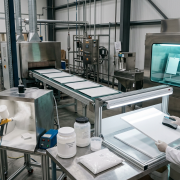
Titanium dioxide pigment for powder coatings in an industrial lab

Titanium Dioxide for Powder Coatings: B2B Technical Selection Guide

Introduction

Titanium dioxide for powder coatings is one of the most important material choices for manufacturers that need high opacity, stable whiteness, durable gloss, and reliable outdoor performance. In a competitive B2B market, buyers are not only looking for a white pigment. They are looking for a consistent industrial raw material that can reduce coating defects, improve production efficiency, control total formulation cost, and support stable performance across batches.

This guide is written for powder coating formulators, procurement managers, technical directors, distributors, and OEM purchasing teams. It focuses on practical decision-making: how titanium dioxide affects powder coating performance, what pain points buyers usually face, which technical parameters matter, how to compare suppliers, and how to select the right TiO2 grade for different application scenarios.

Titanium dioxide for powder coatings used in industrial coating durability testing

Strategic Summary: Why TiO2 Selection Matters in Powder Coatings

Powder coatings are used because they offer high material utilization, low volatile organic compound emissions, good mechanical strength, and efficient coating-line productivity. However, these advantages can be weakened if the pigment package is unstable. Titanium dioxide has a direct influence on hiding power, color brightness, film appearance, gloss retention, dispersion, weatherability, and sometimes even processing behavior during extrusion and grinding.

For indoor products, buyers usually focus on whiteness, hiding power, color stability, and cost efficiency. For outdoor products, the requirements become more demanding: UV resistance, chalking resistance, gloss retention, and long-term color durability become essential. In both cases, a low-quality or poorly matched TiO2 grade can create hidden costs through higher dosage, rejected batches, customer complaints, unstable spraying performance, or premature coating failure.

A strong B2B purchasing decision should therefore combine technical performance, application fit, supplier reliability, documentation support, logistics stability, and long-term cost control. The cheapest titanium dioxide is not always the most economical option if it increases loading levels, reduces opacity, or causes production inconsistency.

Industry Pain Points: What Powder Coating Manufacturers Need to Solve

Powder coating producers often face similar problems when developing or scaling white and light-colored products. These issues are not always caused by titanium dioxide alone, but TiO2 selection and dispersion quality are frequently key contributors.

  • Insufficient opacity: The coated substrate remains visible, especially over dark metal surfaces or sharp edges.
  • High formulation cost: More TiO2 is required to reach target hiding power, raising cost per kilogram of finished powder.
  • Batch-to-batch color variation: Whiteness, undertone, or tinting strength changes between production lots.
  • Poor dispersion: Agglomerates cause specks, rough surface texture, unstable gloss, and inconsistent appearance.
  • Gloss loss outdoors: UV exposure causes gradual surface degradation, particularly in architectural and outdoor metal products.
  • Chalking and yellowing: Unsuitable pigments can accelerate binder degradation or fail to maintain clean color.
  • Processing instability: Powder extrusion, milling, classification, and spraying become less predictable when raw material properties fluctuate.
  • Supplier inconsistency: Buyers receive different quality from shipment to shipment, even when the product name appears unchanged.

These pain points explain why powder coating buyers typically search for more than a product price. They want application guidance, stable specifications, reliable documentation, and a supplier that understands how titanium dioxide performs inside a powder coating formulation.

Technical Analysis: How Titanium Dioxide Works in Powder Coatings

Titanium dioxide is valued because it has a very high refractive index compared with most resin binders, fillers, and extender pigments. When light enters a coating film, properly dispersed TiO2 particles scatter light strongly. This scattering effect improves opacity and gives the coating a clean, bright appearance. The better the light scattering efficiency, the easier it is to hide the substrate at a controlled film thickness.

In powder coatings, TiO2 must perform inside a solid, solvent-free formulation. The powder mixture is premixed, melt-extruded, cooled, crushed, milled, classified, sprayed electrostatically, and finally cured on the substrate. During these stages, pigment dispersion and raw material compatibility are critical. A TiO2 grade that works well in liquid paint may not always deliver the same result in powder coating if its surface treatment, moisture level, or dispersion behavior is not suitable for the powder process.

Key performance mechanisms include light scattering, particle spacing, surface interaction with the binder, and resistance to UV-driven degradation. If TiO2 particles are evenly distributed and separated at an efficient distance, the coating can achieve high hiding power. If particles agglomerate, the effective scattering area decreases, and more pigment may be needed to reach the same opacity. This is why dispersion quality affects both technical performance and cost efficiency.

TiO2 dispersion in powder coating resin improving opacity gloss and color consistency

Rutile vs. Anatase TiO2: Which Grade Fits Powder Coatings?

Rutile titanium dioxide is usually the preferred choice for powder coatings, especially for exterior and high-performance applications. Rutile has stronger hiding power and better weather resistance than anatase. It is more stable under ultraviolet exposure and is normally available with surface treatments that reduce photocatalytic activity. This matters because photocatalytic activity can accelerate binder degradation, leading to chalking, yellowing, loss of gloss, and reduced service life.

Anatase titanium dioxide can provide good whiteness and may be considered for selected indoor applications where weatherability is not critical. However, it is generally less suitable for exterior powder coatings, architectural metal, outdoor equipment, and applications requiring long-term durability. For B2B buyers, the decision should be based on actual end-use conditions, not simply on pigment price.

Selection factor Rutile TiO2 Anatase TiO2
Hiding power Usually higher Moderate to good
Outdoor durability Better choice Limited
UV stability Stronger Weaker
Typical use Exterior and premium powder coatings Selected indoor or cost-sensitive products
Buyer priority Performance and lifecycle value Initial cost and basic whiteness

Surface Treatment: The Hidden Factor Behind Durability and Dispersion

Many industrial buyers compare titanium dioxide mainly by crystal type, whiteness, and price. However, surface treatment can be equally important. TiO2 particles are often treated with inorganic materials such as alumina, silica, or zirconia, and sometimes with organic treatments to improve dispersion and compatibility. These treatments help control how TiO2 interacts with the resin, how easily it disperses, and how resistant it is to weathering.

For exterior powder coatings, the surface treatment should help reduce photocatalytic activity and protect the binder from UV-related degradation. For high-gloss indoor coatings, the surface treatment should support smooth film formation and minimize defects. For extrusion stability, the pigment should process consistently without causing excessive torque variation, specks, or agglomeration. A technical supplier should be able to explain which grade is suitable for which coating formulation and why.

Buyer Intent: What Procurement Teams Really Compare

When a buyer searches for titanium dioxide for powder coatings, the intent is often commercial as well as technical. The buyer may be comparing suppliers, preparing a sample trial, solving a production defect, replacing a previous grade, or looking for a more stable supply chain. This means a purchasing decision usually includes several layers.

  • Technical fit: Does the TiO2 grade meet opacity, whiteness, gloss, weatherability, and dispersion requirements?
  • Process fit: Does it perform well during premixing, extrusion, milling, spraying, and curing?
  • Regulatory and documentation support: Can the supplier provide product specifications, safety documentation, and shipment documents?
  • Supply stability: Can the supplier support regular volume, consistent quality, and predictable lead times?
  • Total cost: Does the material reduce loading, rework, claims, and formulation instability?
  • Communication: Can the supplier respond quickly to technical questions and purchasing requirements?

For industrial procurement, total cost of ownership is more important than unit price alone. If a higher-quality rutile TiO2 allows lower dosage, better batch consistency, fewer customer complaints, and stronger outdoor performance, it may deliver better value even if the purchase price is higher.

Supplier Selection Logic: How to Compare TiO2 Suppliers

A reliable titanium dioxide supplier should support both purchasing and technical decision-making. Buyers should avoid choosing only by the lowest quotation, especially for exterior powder coatings or OEM-approved formulations. A structured supplier review can reduce risk before bulk purchasing.

  • Application knowledge: The supplier should understand powder coating systems, not only general pigment sales.
  • Grade consistency: Ask whether the same grade can be supplied consistently across shipments.
  • Sample policy: Request samples for lab extrusion, spray testing, color measurement, and weathering review.
  • Specification transparency: Review whiteness, tinting strength, volatile matter, oil absorption, particle size, and surface treatment information where available.
  • Documentation: Confirm availability of safety data, product technical data, packing information, and export documents.
  • Logistics capacity: Check packaging, lead time, port options, and ability to support repeat shipments.
  • Problem-solving support: A good supplier should help analyze opacity loss, color drift, dispersion problems, or weathering concerns.

In practice, the best supplier is not always the largest supplier. The best supplier is the one that can match the correct titanium dioxide grade to the buyer’s coating formulation, deliver stable quality, and support long-term purchasing confidence.

Application Case Scenarios for Powder Coatings

1. Architectural Aluminum Profiles

Architectural profiles require long outdoor service life, strong color retention, and stable gloss. Rutile titanium dioxide with good weatherability is recommended for white and light-colored profiles because the coating must resist sunlight, rain, heat, and pollution. Buyers should test gloss retention, color difference, and chalking resistance before approving a grade for exterior use.

2. Home Appliances and Metal Cabinets

Appliance coatings often demand smooth appearance, high whiteness, stable gloss, and resistance to daily cleaning. For indoor products, the focus may be more on brightness, hiding power, and cost efficiency than extreme weatherability. Good TiO2 dispersion helps reduce surface specks and supports consistent appearance on large visible panels.

3. Outdoor Furniture and Garden Equipment

Outdoor furniture is exposed to UV light, moisture, abrasion, and temperature changes. Poor pigment choice can cause fading, chalking, or loss of gloss. Rutile TiO2 with suitable surface treatment supports longer-lasting white, beige, grey, and pastel finishes. The supplier should help confirm whether the selected grade is intended for outdoor powder coating use.

4. Industrial Machinery and Equipment Housings

Industrial machinery coatings must balance appearance and protection. Some products operate indoors, while others are used in workshops, agricultural environments, or semi-outdoor conditions. TiO2 selection should match the expected exposure level. Buyers often prioritize stable color, hiding power over dark metal, and reliable performance during high-volume spraying.

5. Automotive and Motorcycle Components

Automotive-related powder coatings may require high appearance standards, strong batch consistency, and resistance to environmental stress. Even small color differences can create quality concerns. In this segment, buyers should focus on controlled tinting strength, dispersion stability, and supplier consistency across production lots.

Testing Checklist Before Bulk Purchase

Before switching suppliers or approving a new TiO2 grade, buyers should test the pigment under real formulation and processing conditions. A laboratory result is useful, but pilot-scale extrusion and spraying often reveal additional performance differences.

  • Compare hiding power at the same pigment loading and film thickness.
  • Measure whiteness, brightness, undertone, and color difference.
  • Review gloss, surface smoothness, orange peel, and visible specks.
  • Check extrusion torque stability, melt flow behavior, and dispersion quality.
  • Test powder particle size distribution after milling and classification.
  • Assess electrostatic spraying behavior and transfer efficiency.
  • Run curing tests to confirm final film appearance and mechanical properties.
  • For outdoor applications, perform accelerated weathering or compare field exposure data.
  • Calculate total formulation cost, not only TiO2 purchase price.

Related HengyiTek Resources

For readers comparing titanium dioxide across multiple industries, the following related resources can help build a broader technical understanding:

FAQ: Titanium Dioxide for Powder Coatings

1. What is the best titanium dioxide type for powder coatings?

Rutile titanium dioxide is usually the best choice for powder coatings, especially exterior and high-performance applications. It offers stronger hiding power and better UV stability than anatase TiO2.

2. Can anatase TiO2 be used in powder coatings?

Yes, anatase TiO2 can be used in selected indoor or cost-sensitive powder coating products. However, it is normally not preferred for outdoor applications because its weather resistance is weaker than rutile TiO2.

3. How does TiO2 improve opacity?

TiO2 has a high refractive index, allowing it to scatter visible light efficiently. When particles are well dispersed, this light scattering hides the substrate and improves coverage.

4. Why does dispersion matter in powder coatings?

Poor dispersion can cause specks, uneven color, reduced gloss, and lower hiding efficiency. Good dispersion helps TiO2 deliver better opacity and smoother coating appearance.

5. Does higher TiO2 dosage always improve hiding power?

No. Excessive loading can reduce efficiency if particles are crowded or poorly dispersed. The best result comes from balancing TiO2 grade, dosage, resin binder, and processing conditions.

6. What TiO2 properties should buyers compare?

Buyers should compare whiteness, tinting strength, hiding power, surface treatment, particle size distribution, moisture or volatile content, oil absorption, dispersion behavior, and weatherability.

7. Is TiO2 important for outdoor powder coatings?

Yes. Outdoor powder coatings need UV resistance, gloss retention, and chalking resistance. A suitable rutile TiO2 grade helps improve long-term coating durability.

8. How can buyers test TiO2 before bulk purchase?

Buyers should run lab and pilot tests for opacity, whiteness, gloss, surface quality, dispersion, extrusion stability, spray behavior, curing performance, and weathering resistance if the product is used outdoors.

9. Can TiO2 affect powder coating gloss?

Yes. Pigment dispersion, particle characteristics, and compatibility with the resin binder can influence gloss and surface smoothness. Poor dispersion may reduce gloss or create visible defects.

10. What industries use TiO2-based powder coatings?

Common industries include architectural aluminum, appliances, automotive components, outdoor furniture, machinery, metal cabinets, garden equipment, hardware, and general industrial finishing.

11. How should procurement teams compare suppliers?

Procurement teams should compare technical support, sample availability, specification consistency, documentation, logistics reliability, communication speed, and total cost of ownership instead of price alone.

12. Why choose HengyiTek for titanium dioxide supply?

HengyiTek supports industrial buyers with titanium dioxide and related chemical materials for coatings, plastics, inks, and other applications. Buyers can request product guidance based on application needs, performance targets, and purchasing requirements.

Conclusion: Choose TiO2 by Performance, Not Price Alone

Titanium dioxide for powder coatings is a strategic raw material. It affects opacity, whiteness, color consistency, gloss, dispersion, UV resistance, production stability, and long-term coating performance. For B2B buyers, the right decision requires technical testing, supplier comparison, and a clear understanding of the final application environment.

If your powder coating formulation requires high hiding power, stable whiteness, outdoor durability, or improved batch consistency, HengyiTek can help you select suitable titanium dioxide options. Contact our team to discuss your resin binder, application scenario, target performance, and purchasing plan.
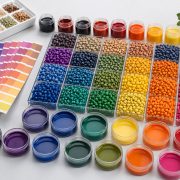
Contact Hengyitek for TIO2 supply.

seed coating color pigment

How Organic Pigment Paste Improves Seed Coating Uniformity and Reduces Production Defects

Introduction

Modern seed companies are under increasing pressure to deliver high-quality products with consistent appearance and reliable performance.

Today, coated seeds are not only agricultural inputs. They are also branded products.

Farmers, distributors, and retailers expect seeds to have:

  • Uniform color
  • Smooth coating surface
  • Low dust generation
  • Good handling performance
  • Stable appearance during storage

However, achieving consistent seed coating quality is not always easy.

Many seed processors experience production problems such as:

  • Uneven color distribution
  • Pigment spots
  • Coating cracks
  • Seed clumping
  • Excessive dust
  • Poor adhesion
  • Variation between batches

These issues can increase production costs and reduce customer confidence.

A properly designed organic pigment paste for seed coating can help solve many of these challenges.

Because pigment paste provides better dispersion, controlled particle size, and improved compatibility with coating systems, it allows seed processors to achieve more uniform and stable coating results.

This article explains how organic pigment paste improves seed coating quality, why coating defects happen, and how manufacturers can optimize their process.


Comparison of uneven and uniform seed coating using organic pigment paste


1. Why Seed Coating Uniformity Is Critical

Seed coating is a precision process.

Unlike ordinary industrial coloring, seed coating involves biological materials with different sizes, shapes, and surface characteristics.

A successful coating must create a thin and even layer around each seed.

This layer may contain:

  • Pigment
  • Polymer binder
  • Fungicide
  • Insecticide
  • Biological treatment
  • Micronutrients

If the coating is uneven, several problems may occur.


1.1 Appearance Problems

The first visible issue is inconsistent color.

Some seeds may appear darker.

Others may appear lighter.

Some may show uncovered areas.

For commercial seed companies, this creates a poor impression.

A customer opening a bag of seeds expects professional quality. Uneven appearance may make them question the production process.


1.2 Incorrect Treatment Distribution

Color is often combined with active seed treatments.

If the coating layer is uneven, other ingredients may also distribute unevenly.

For example:

  • One seed may receive more coating material.
  • Another seed may receive less protection.

Therefore, coating uniformity is connected with overall treatment consistency.


1.3 Packaging and Transportation Issues

Poor coating adhesion can create dust during:

  • Packaging
  • Transportation
  • Storage
  • Mechanical handling

Colored dust can stain bags and equipment.

This is especially important for export seed products because transportation time may be long.


2. Common Seed Coating Defects in Production

Understanding defects is the first step toward improvement.


Defect 1: Uneven Color Distribution

Causes:

  • Poor pigment dispersion
  • Incorrect pigment dosage
  • Insufficient mixing time
  • Uneven spray distribution
  • Wrong viscosity

When pigment particles are not evenly distributed, some areas receive more pigment than others.


Solution:

Use pigment paste with:

  • Stable dispersion
  • Fine particle size
  • Suitable viscosity
  • Good compatibility with binders

A high-quality pigment paste allows the color particles to spread more evenly across the seed surface.


Defect 2: Pigment Sedimentation

Sedimentation happens when pigment particles settle during storage or production.

This creates several problems:

  • Color variation
  • Uneven dosing
  • Machine blockage
  • Production interruption

Why It Happens

Pigment particles naturally tend to settle due to gravity.

The speed depends on:

  • Particle size
  • Density difference
  • Liquid viscosity
  • Dispersion quality

Solution

A good organic pigment paste should contain proper dispersing technology.

This helps keep pigment particles separated and stable.

Before production, the pigment paste should also be mixed properly.


Defect 3: Coating Cracking

After drying, some coated seeds may develop cracks.

This usually happens because the coating film becomes too hard or too thick.


Causes:

  • Excess pigment loading
  • Poor binder flexibility
  • Incorrect drying conditions
  • Too much coating liquid

Solution:

Optimize:

  • Pigment dosage
  • Binder ratio
  • Drying temperature
  • Coating thickness

The pigment paste should work together with the polymer coating system.


Defect 4: Seed Sticking and Clumping

Seed clumping is another common factory problem.

It affects:

  • Packaging efficiency
  • Mechanical planting performance
  • Product appearance

Causes:

  • Excess moisture
  • Slow drying
  • Poor coating balance
  • Incorrect liquid addition

Solution:

Control:

  • Liquid amount
  • Mixing speed
  • Drying time
  • Pigment paste concentration

A properly formulated pigment paste should not increase unnecessary moisture.


Defect 5: Color Rub-Off

Color transfer happens when pigment does not attach strongly to the seed surface.

Signs include:

  • Colored dust
  • Dirty packaging
  • Color loss during transportation

Solution:

Improve:

  • Binder compatibility
  • Pigment dispersion
  • Surface adhesion

Organic pigment paste with suitable particle size usually provides better coating integration.


3. How Organic Pigment Paste Improves Seed Coating Performance

3.1 Better Pigment Dispersion

Dispersion is one of the most important factors.

A pigment paste already contains finely distributed pigment particles.

This provides advantages:

  • Faster mixing
  • More uniform color
  • Reduced agglomeration
  • Better production stability

Compared with dry pigment powder, liquid paste eliminates the difficult first dispersion stage.


3.2 More Accurate Color Control

Seed companies often require specific colors.

For example:

  • Red corn seeds
  • Blue soybean seeds
  • Green vegetable seeds
  • Yellow grass seeds

A stable pigment paste allows manufacturers to control color more accurately.

This improves:

  • Batch consistency
  • Brand recognition
  • Customer confidence

3.3 Lower Production Variation

Large seed factories need repeatable processes.

A stable pigment paste helps maintain:

  • Same color strength
  • Same viscosity
  • Same coating performance

This reduces adjustment time between batches.


3.4 Better Equipment Performance

Modern seed coating machines require stable liquid systems.

Poor pigment products may cause:

  • Spray nozzle blockage
  • Pump problems
  • Uneven spraying

A suitable pigment paste should flow smoothly through equipment.


Automated seed coating equipment applying organic pigment paste evenly


4. Optimizing Pigment Paste Dosage

More pigment does not always mean better color.

Excess pigment can create:

  • Thick coating layers
  • Slow drying
  • Reduced flexibility
  • Higher cost

The goal is:

Maximum color performance with minimum dosage.


Factors Affecting Dosage

Seed Size

Large seeds require more coating material.

Examples:

  • Corn
  • Soybean
  • Peanut

Small seeds require careful control.

Examples:

  • Vegetable seeds
  • Flower seeds

Target Color

Dark colors usually require more pigment.

Light colors require less.


Binder System

Different binders influence pigment performance.

The same pigment dosage may perform differently with different coating systems.


Equipment Type

Rotary coaters, pan coaters, and fluid-bed systems have different requirements.


5. Quality Testing for Seed Coating Uniformity

Professional seed companies should test finished products.


Color Uniformity Test

Check:

  • Random seed samples
  • Color difference
  • Surface coverage

Adhesion Test

Evaluate:

  • Color transfer
  • Dust generation
  • Surface durability

Germination Test

Compare coated seeds with untreated controls.

Measure:

  • Germination percentage
  • Seedling growth
  • Early development

Storage Test

Store coated seeds under realistic conditions.

Evaluate:

  • Color stability
  • Coating integrity
  • Seed performance

6. Selecting the Right Organic Pigment Paste

When purchasing pigment paste, companies should evaluate:

Technical Performance

  • Dispersion stability
  • Particle size
  • Viscosity
  • Color strength
  • Storage stability

Application Performance

  • Compatibility with binders
  • Compatibility with seed treatments
  • Spray system performance
  • Drying behavior

Supplier Capability

Look for suppliers offering:

  • Technical support
  • Sample testing
  • Custom color matching
  • Stable production
  • Export experience

7. Industry Trends in Seed Coating Technology

Automation Growth

Seed factories are becoming more automated.

This increases demand for:

  • Stable liquid systems
  • Precise dosing
  • Consistent viscosity

Premium Seed Products

High-value seeds require better appearance.

Vegetable seeds, hybrid seeds, and specialty crops increasingly use professional coating systems.


Sustainable Agriculture

The market is moving toward:

  • Safer ingredients
  • Environmentally responsible products
  • Reduced chemical impact

Organic pigment paste supports this direction when properly formulated.

Recommended internal links:

Seed coating pigment supplier guide

Germination safety article


NPK fertilizer coloring article


FAQ

1. Why is seed coating color uneven?

Common causes include poor pigment dispersion, incorrect dosage, unstable viscosity, or uneven spraying.


2. Can organic pigment paste improve seed coating quality?

Yes. Properly formulated pigment paste improves dispersion, color consistency, and coating stability.


3. Does more pigment create better seed color?

Not always. Excess pigment may increase cost and create coating problems.


4. How can seed companies reduce coating defects?

They should optimize pigment selection, dosage, binder compatibility, mixing conditions, and drying processes.


5. Can pigment paste work with biological seed treatments?

Yes, but compatibility testing is recommended.


6. What causes pigment paste sedimentation?

Poor dispersion stability, large particle size, or unsuitable formulation may cause sedimentation.


7. How long can pigment paste be stored?

Storage life depends on formulation and conditions. Properly designed products should remain stable under recommended storage conditions.


Conclusion

Seed coating quality depends on many factors, but pigment performance is one of the most important.

A high-quality organic pigment paste for seed coating helps manufacturers achieve:

  • Better color uniformity
  • Lower production defects
  • Improved coating stability
  • Reduced dust problems
  • More consistent commercial products

However, pigment selection should not focus only on color.

Professional seed companies need solutions that combine color performance, coating compatibility, and biological safety.

By choosing the right pigment paste technology and optimizing production parameters, seed processors can improve efficiency, reduce waste, and deliver higher-value agricultural products.


Request a Seed Coating Pigment Paste Sample for Industrial Testing. Products Recommended:

titanium dioxide for wall paint

Titanium Dioxide for Exterior Paints: Improving UV Resistance and Weather Durability

Introduction

Exterior paint is one of the most demanding applications in the coatings industry.

Unlike interior coatings, exterior paint systems must maintain their appearance and protective performance while being continuously exposed to harsh environmental conditions.

Buildings, infrastructure, and outdoor structures experience:

  • Strong ultraviolet radiation
  • Rain and moisture
  • Temperature fluctuations
  • Atmospheric pollutants
  • Wind erosion
  • Long-term weathering

Over time, these factors can cause serious coating problems, including:

  • Color fading
  • Loss of gloss
  • Surface chalking
  • Film degradation
  • Reduced protection performance

For paint manufacturers, improving exterior coating durability is one of the most important challenges.

Titanium dioxide (TiO₂) plays a critical role in solving these challenges.

As the most widely used white pigment in the coatings industry, titanium dioxide provides excellent:

  • Opacity
  • Whiteness
  • Light scattering ability
  • UV stability
  • Chemical resistance
  • Weather durability

Among different titanium dioxide types, rutile titanium dioxide is the preferred choice for exterior paint applications because of its superior stability and long-term performance.

For coating manufacturers, selecting the correct TiO₂ grade directly influences:

  • Coating lifetime
  • Exterior appearance
  • Customer satisfaction
  • Production cost
  • Market competitiveness

Exterior building coated with durable white paint


The Growing Importance of High-Performance Exterior Coatings

The global demand for durable exterior coatings continues to increase.

Modern construction projects require coatings that provide not only attractive appearance but also long-term protection.

Architectural paint manufacturers are facing increasing expectations from customers:

  • Longer maintenance cycles
  • Better color retention
  • Higher weather resistance
  • Improved environmental performance

At the same time, coating producers must balance:

  • Raw material cost
  • Formulation efficiency
  • Product quality
  • Application performance

Titanium dioxide is one of the most important raw materials helping manufacturers achieve this balance.

A high-quality TiO₂ pigment can improve coating performance while reducing the amount of paint required to achieve sufficient coverage.


What Is Titanium Dioxide in Exterior Paint?

Titanium dioxide is an inorganic white pigment with the chemical formula TiO₂.

It is widely used in coatings because it has one of the highest refractive indexes among commercially available white pigments.

The refractive index determines how effectively a material scatters visible light.

Higher light scattering ability provides:

  • Stronger hiding power
  • Better opacity
  • Brighter appearance

In exterior paint formulations, titanium dioxide performs several important functions:

1. White Color Enhancement

Titanium dioxide creates a clean and bright white appearance.

This improves:

  • Architectural aesthetics
  • Color consistency
  • Visual quality

2. Opacity Improvement

Exterior paints often need to cover:

  • Concrete surfaces
  • Brick walls
  • Cement substrates
  • Previous coating layers

High-opacity titanium dioxide helps manufacturers achieve complete coverage with fewer coating layers.


3. UV Resistance Improvement

Although titanium dioxide is not a UV absorber in the traditional sense, its light-scattering ability reduces the amount of damaging radiation reaching the coating binder.

This helps improve:

  • Color stability
  • Coating durability
  • Outdoor lifetime

Why Rutile Titanium Dioxide Is Preferred for Exterior Paint

Titanium dioxide exists mainly in two industrial crystal structures:

  • Rutile titanium dioxide
  • Anatase titanium dioxide

For exterior coatings, rutile TiO₂ is generally preferred.

The reason is its superior crystal stability.


Rutile Titanium Dioxide Advantages

Higher Crystal Stability

Rutile titanium dioxide has a more stable crystal structure compared with anatase TiO₂.

This provides:

  • Better outdoor durability
  • Improved weather resistance
  • Lower risk of coating degradation

Better Weather Resistance

Exterior paints must maintain performance for years.

Rutile TiO₂ helps improve resistance against:

  • Sunlight exposure
  • Humidity
  • Temperature changes
  • Outdoor aging

Excellent Hiding Power

Because of its high refractive index, rutile TiO₂ provides excellent opacity.

This allows paint manufacturers to:

  • Reduce pigment consumption
  • Improve coverage
  • Lower formulation costs

How Titanium Dioxide Helps Prevent Exterior Paint Failure

Exterior coating failure is usually caused by multiple factors.

However, pigment selection plays an important role.


Problem 1: Color Fading

Industry Challenge

Outdoor coatings often lose color intensity after long-term sunlight exposure.

This creates:

  • Customer complaints
  • Increased maintenance costs
  • Reduced product reputation

Titanium Dioxide Solution

High-quality rutile titanium dioxide helps maintain:

  • White appearance
  • Color stability
  • Surface quality

Problem 2: Loss of Gloss

Industry Challenge

Gloss reduction makes coatings appear old and damaged.

Common causes:

  • UV degradation
  • Poor pigment dispersion
  • Surface damage

Titanium Dioxide Solution

Properly treated TiO₂ improves:

  • Dispersion
  • Surface smoothness
  • Coating appearance

Problem 3: Poor Hiding Power

Industry Challenge

Low opacity requires more paint layers.

This increases:

  • Material consumption
  • Labor cost
  • Application time

Titanium Dioxide Solution

High-opacity TiO₂ provides:

  • Better substrate coverage
  • Reduced coating thickness requirements
  • Improved cost efficiency

Titanium Dioxide for Coatings and Paints


Technical Factors Affecting Titanium Dioxide Performance in Exterior Paint

Particle Size Distribution

Particle size is one of the most important parameters affecting TiO₂ performance.

It influences:

  • Light scattering
  • Opacity
  • Brightness
  • Dispersion

An optimized particle size distribution provides better coating performance.


Surface Treatment Technology

Modern coating-grade titanium dioxide usually receives surface treatment.

Common inorganic treatments include:

  • Aluminum oxide
  • Silicon oxide
  • Zirconium compounds

Organic surface treatments are also used to improve:

  • Compatibility
  • Dispersion
  • Processing performance

For exterior coatings, surface treatment plays a key role in achieving long-term durability.


Dispersion Performance

Poor TiO₂ dispersion may result in:

  • Pigment agglomeration
  • Uneven coating surface
  • Reduced gloss
  • Lower opacity

High-quality exterior paint TiO₂ should provide:

  • Easy dispersion
  • Stable formulation performance
  • Consistent coating quality

Industry Challenges When Selecting Titanium Dioxide for Exterior Paint

For exterior paint manufacturers, choosing titanium dioxide is not simply a matter of selecting a white pigment.

The pigment directly affects:

  • Coating durability
  • Production efficiency
  • Customer satisfaction
  • Product positioning
  • Market competitiveness

Many coating manufacturers face similar technical challenges when selecting TiO₂.


Challenge 1: Balancing Performance and Cost

The Industry Problem

Titanium dioxide is one of the most expensive raw materials in paint formulations.

Manufacturers must balance:

  • Higher pigment performance
  • Raw material cost
  • Final product price
  • Customer expectations

Using low-quality TiO₂ may reduce initial costs, but it can create long-term problems:

  • Higher dosage requirements
  • Poor hiding power
  • More coating layers
  • Customer complaints

The Solution

A suitable rutile titanium dioxide grade provides better cost efficiency through:

  • Higher opacity
  • Better dispersion
  • Lower consumption
  • Improved coating performance

The lowest purchase price does not always create the lowest production cost.


Challenge 2: Maintaining Long-Term Outdoor Durability

The Industry Problem

Exterior coatings are expected to protect buildings for many years.

However, outdoor conditions continuously attack coating films.

Common problems include:

  • UV degradation
  • Surface chalking
  • Color change
  • Gloss loss

For architectural coating manufacturers, durability is one of the most important selling points.


The Solution

High-performance rutile titanium dioxide helps improve:

  • Weather resistance
  • Color retention
  • Surface stability
  • Coating lifetime

This is why rutile TiO₂ is widely selected for premium exterior paint applications.


Challenge 3: Achieving Stable Production Quality

The Industry Problem

Paint manufacturers require consistent production performance.

Variation in pigment quality may cause:

  • Different batch colors
  • Unstable viscosity
  • Uneven gloss
  • Customer quality issues

Large coating producers especially require reliable raw material consistency.


The Solution

A professional titanium dioxide supplier should provide:

  • Stable product quality
  • Technical data sheets
  • Quality inspection reports
  • Application support

Consistent TiO₂ quality helps manufacturers maintain stable coating production.


Sulfate Process vs Chloride Process Titanium Dioxide for Exterior Paint

Titanium dioxide is mainly produced through two industrial manufacturing technologies:

  1. Sulfate process
  2. Chloride process

Both methods can produce rutile titanium dioxide suitable for coatings.

However, their characteristics can be different.


Sulfate Process Titanium Dioxide for Exterior Paint

Production Characteristics

The sulfate process is a mature titanium dioxide production technology.

It involves:

  • Titanium-containing raw materials
  • Sulfuric acid digestion
  • Hydrolysis
  • Calcination
  • Surface treatment

The process has been widely used globally for many years.


Advantages of Sulfate Process TiO₂

Good Cost Performance

Sulfate TiO₂ provides:

  • Reliable quality
  • Competitive pricing
  • Wide application range

It is commonly used in:

  • Architectural coatings
  • General exterior paints
  • Industrial coatings

Flexible Application

Modern sulfate process TiO₂ can achieve excellent performance through:

  • Particle control
  • Inorganic surface treatment
  • Organic surface treatment

Suitable grades can provide:

  • Good opacity
  • Good whiteness
  • Good weather resistance

Chloride Process Titanium Dioxide for Exterior Paint

Production Characteristics

The chloride process uses titanium tetrachloride oxidation technology.

This technology provides precise control over pigment formation.


Advantages of Chloride Process TiO₂

Better Particle Uniformity

Chloride technology generally provides excellent control of:

  • Particle size distribution
  • Crystal structure
  • Pigment consistency

Premium Optical Performance

Advantages include:

  • High brightness
  • Excellent whiteness
  • Strong opacity

Excellent Outdoor Durability

For high-performance exterior coatings, chloride TiO₂ is often selected because of:

  • Strong weather resistance
  • Better long-term stability
  • Premium appearance

Comparison Table: Sulfate vs Chloride Titanium Dioxide for Exterior Paint

Property Sulfate Process TiO₂ Chloride Process TiO₂
Production technology Mature technology Advanced oxidation technology
Cost More competitive Usually higher
Whiteness Excellent Excellent
Opacity High Very high
Particle control Good Excellent
Batch consistency Good Excellent
Weather resistance Good to excellent Excellent
Premium exterior coating Suitable Highly suitable
Cost-sensitive projects Recommended Less common

How Paint Manufacturers Select Titanium Dioxide for Exterior Applications

Professional buyers usually evaluate several technical factors.


1. TiO₂ Content

Higher titanium dioxide content generally indicates higher pigment concentration.

However, TiO₂ content alone does not determine performance.

Manufacturers should also evaluate:

  • Particle structure
  • Surface treatment
  • Dispersion performance

2. Hiding Power

Hiding power determines how effectively paint covers the substrate.

High hiding power provides:

  • Better coverage
  • Lower consumption
  • Improved cost efficiency

3. Tinting Strength

Tinting strength affects:

  • Color development
  • Formulation efficiency
  • Pigment dosage

Strong tinting performance allows formulators to achieve desired color with optimized pigment loading.


4. Oil Absorption

Oil absorption affects:

  • Resin demand
  • Viscosity
  • Processing behavior

A suitable oil absorption value helps improve formulation balance.


5. Surface Treatment

For exterior paint, surface treatment is extremely important.

It affects:

  • Weather resistance
  • Dispersion
  • Resin compatibility

Coating-grade TiO₂ commonly uses inorganic coatings such as:

  • Aluminum oxide
  • Silicon oxide
  • Zirconium compounds

B2B Purchasing Guide: How to Choose a Titanium Dioxide Supplier

For international coating manufacturers, supplier selection is as important as product selection.

A reliable supplier should provide more than just pigment supply.


1. Technical Documentation

Professional suppliers should provide:

  • Technical Data Sheet (TDS)
  • Certificate of Analysis (COA)
  • Safety Data Sheet (SDS)
  • Application recommendations

These documents help customers evaluate product suitability.


2. Application Experience

A supplier with coating application experience can provide better support.

Important questions:

  • Is the grade designed for exterior paint?
  • Has it been tested in similar formulations?
  • Can technical assistance be provided?

3. Quality Consistency

For paint manufacturers, consistent quality is critical.

Important factors:

  • Stable whiteness
  • Stable particle distribution
  • Stable dispersion
  • Reliable shipment quality

4. Supply Capability

International buyers should evaluate:

  • Production capacity
  • Export experience
  • Packaging quality
  • Delivery reliability

A stable supplier relationship reduces production risks.


Application Examples of Titanium Dioxide in Exterior Coatings

Example 1: Architectural Exterior Wall Paint

Customer Requirement

A paint manufacturer needed:

  • Bright white appearance
  • Long outdoor lifetime
  • Stable performance in humid climates

TiO₂ Solution

Rutile titanium dioxide with:

  • High opacity
  • Good dispersion
  • Weather resistance

Result

Improved:

  • Coverage
  • Exterior appearance
  • Customer satisfaction

Example 2: Industrial Protective Coating

Customer Requirement

An industrial coating producer required:

  • Chemical resistance
  • Outdoor durability
  • Stable appearance

TiO₂ Solution

A coating-grade rutile titanium dioxide suitable for industrial applications.

Result

Improved:

  • Coating durability
  • Surface appearance
  • Long-term protection

Recommended Product for Exterior Paint

Rutile Titanium Dioxide for Paint

Application:

  • Exterior architectural coatings
  • Water-based paint
  • Solvent-based coatings
  • Powder coatings
  • Industrial coatings

Key features:

  • High hiding power
  • Excellent whiteness
  • Good dispersion
  • Weather resistance

Product Link:

https://www.hengyitek.com/product/rutile-titanium-dioxide-for-paint/

Titanium Dioxide

https://www.hengyitek.com/titanium-dioxide/


Coatings

Titanium Dioxide for Coatings and Paints

https://www.hengyitek.com/titanium-dioxide-for-coatings-and-paints/


 Product

Rutile Titanium Dioxide for Paint

https://www.hengyitek.com/product/rutile-titanium-dioxide-for-paint/


Technical Comparison

Sulfate Process Titanium Dioxide vs Chloride Process Titanium Dioxide

https://www.hengyitek.com/sulfate-vs-chloride-titanium-dioxide/

Frequently Asked Questions (FAQ)

1. Why is titanium dioxide used in exterior paint?

Titanium dioxide is used in exterior paint because it provides excellent whiteness, opacity, hiding power, and weather resistance.

In outdoor coating systems, TiO₂ helps improve:

  • Surface appearance
  • Color stability
  • UV resistance
  • Coating lifetime

Rutile titanium dioxide is especially suitable for exterior paint because of its stable crystal structure and durability.


2. Which type of titanium dioxide is best for exterior coatings?

Rutile titanium dioxide is generally considered the preferred choice for exterior coatings.

Compared with anatase titanium dioxide, rutile TiO₂ provides:

  • Better weather resistance
  • Higher opacity
  • Improved UV stability
  • Longer outdoor performance

For architectural and industrial exterior coatings, rutile TiO₂ is widely selected.


3. Does titanium dioxide improve UV resistance in paint?

Yes.

Titanium dioxide improves UV resistance mainly through its excellent light-scattering ability.

It helps reduce the amount of damaging UV radiation reaching the coating binder.

This contributes to:

  • Better color retention
  • Reduced coating degradation
  • Improved outdoor durability

4. What is the difference between rutile and anatase titanium dioxide for paint?

The main difference is crystal structure and durability.

Rutile titanium dioxide:

  • More stable crystal structure
  • Higher opacity
  • Better weather resistance
  • Suitable for outdoor coatings

Anatase titanium dioxide:

  • Lower weather resistance
  • Mainly used in paper and specialty applications

For exterior paint, rutile TiO₂ is usually preferred.


5. Is sulfate process titanium dioxide suitable for exterior paint?

Yes.

Modern sulfate process rutile titanium dioxide can provide excellent performance for many exterior coating applications.

Advantages include:

  • Good opacity
  • Good whiteness
  • Competitive cost
  • Wide application experience

It is commonly used in:

  • Architectural coatings
  • General exterior paints
  • Industrial coatings

6. Is chloride process titanium dioxide better for outdoor coatings?

Chloride process titanium dioxide is often selected for premium outdoor coating applications.

It generally provides:

  • Excellent particle consistency
  • High brightness
  • Strong weather resistance
  • Stable quality

However, the best choice depends on:

  • Coating formulation
  • Performance requirements
  • Cost target

7. How much titanium dioxide is used in exterior paint?

The amount of titanium dioxide depends on:

  • Paint formulation
  • Resin system
  • Required opacity
  • Application conditions

Exterior coatings typically use TiO₂ as one of the major pigment components because hiding power and durability are critical.

The optimal loading level should be determined through formulation testing.


8. How does titanium dioxide affect paint hiding power?

Titanium dioxide improves hiding power through its high refractive index and light-scattering ability.

Higher hiding power allows paint manufacturers to:

  • Cover surfaces more effectively
  • Reduce coating thickness
  • Improve application efficiency

9. Does particle size affect titanium dioxide performance?

Yes.

Particle size distribution affects:

  • Opacity
  • Brightness
  • Dispersion
  • Gloss

A properly controlled particle size distribution provides better coating performance.


10. Why is surface treatment important for exterior paint TiO₂?

Surface treatment improves:

  • Pigment dispersion
  • Resin compatibility
  • Weather resistance
  • Storage stability

For exterior coatings, surface treatment is especially important because coatings must maintain performance under long-term outdoor exposure.


11. What quality parameters should buyers check when purchasing TiO₂?

Professional buyers usually evaluate:

  • TiO₂ content
  • Whiteness
  • Tinting strength
  • Particle size distribution
  • Oil absorption
  • Surface treatment
  • Dispersion performance

Technical documents such as TDS and COA should be reviewed before purchasing.


12. Can titanium dioxide be used in water-based exterior paint?

Yes.

Titanium dioxide is widely used in water-based exterior coatings.

Important properties include:

  • Good dispersion
  • Resin compatibility
  • High opacity
  • Weather resistance

13. Can titanium dioxide be used in industrial outdoor coatings?

Yes.

Industrial coatings commonly use rutile titanium dioxide because it improves:

  • Appearance
  • Durability
  • Weather resistance
  • Long-term protection

Applications include:

  • Steel structures
  • Machinery coatings
  • Protective coatings

14. How do I choose a reliable titanium dioxide supplier?

A reliable supplier should provide:

  • Stable product quality
  • Technical support
  • Application experience
  • Export capability
  • Complete documentation

Buyers should evaluate both product performance and supplier reliability.


15. Why should coating manufacturers test TiO₂ samples before purchasing?

Different TiO₂ grades may perform differently depending on:

  • Resin system
  • Pigment loading
  • Production process
  • Application environment

Sample testing helps manufacturers confirm:

  • Compatibility
  • Opacity
  • Dispersion
  • Final coating appearance

Related Articles

Titanium Dioxide

https://www.hengyitek.com/titanium-dioxide/


Application

Titanium Dioxide for Coatings and Paints

Titanium Dioxide for Coatings and Paints

https://www.hengyitek.com/titanium-dioxide-for-coatings-and-paints/

Transfer article authority back to commercial application page.


Product Page

Rutile Titanium Dioxide for Paint

Rutile Titanium Dioxide for Paint

https://www.hengyitek.com/product/rutile-titanium-dioxide-for-paint/


Technical Comparison Article

Sulfate Process Titanium Dioxide vs Chloride Process Titanium Dioxide

Sulfate Process Titanium Dioxide vs Chloride Process Titanium Dioxide

https://www.hengyitek.com/sulfate-vs-chloride-titanium-dioxide/

Capture technical comparison searches.


Technical Expertise

Titanium dioxide selection for exterior coatings requires understanding:

  • Crystal structure
  • Particle size distribution
  • Surface treatment
  • Resin compatibility
  • Weather resistance requirements

A professional TiO₂ supplier should not only provide pigment but also support customers with application knowledge.


Industry Experience

Coating manufacturers typically evaluate titanium dioxide based on real production requirements rather than laboratory data alone.

Important factors include:

  • Formulation stability
  • Processing conditions
  • End-use environment
  • Customer expectations

Trust Factors for Buyers

When selecting titanium dioxide suppliers, buyers should consider:

  • Product consistency
  • Technical documentation
  • Application support
  • Export experience
  • Long-term supply capability

Conclusion

Titanium dioxide is a key performance ingredient in exterior paint formulations.

Its excellent opacity, whiteness, light-scattering ability, and durability make it one of the most important pigments for outdoor coating applications.

For exterior paint manufacturers, selecting the right titanium dioxide grade is essential for achieving:

  • Better UV resistance
  • Improved weather durability
  • Longer coating lifetime
  • Stable product quality

Rutile titanium dioxide remains the preferred choice for most exterior coating applications because of its superior stability and performance.

Both sulfate process and chloride process titanium dioxide can provide excellent coating solutions when selected according to application requirements.

By evaluating pigment properties, coating systems, environmental conditions, and supplier capabilities, manufacturers can develop higher-performance exterior paints and provide better value to customers.